Transmission valve body repair is one of those jobs where diagnosis matters more than the part name. A harsh shift, delayed engagement, slipping, limp mode, or P0700-family code can point toward the valve body, but the same symptoms can also come from low fluid, a wiring fault, a bad sensor, a failing TCM, torque converter lockup trouble, or worn internal clutches.
That is why a good transmission shop does not start by selling a valve body. It starts by proving whether the valve body is actually the problem, whether the damage is still isolated, and whether the smarter repair is cleaning, solenoid work, valve body replacement, reprogramming, or a full rebuild.
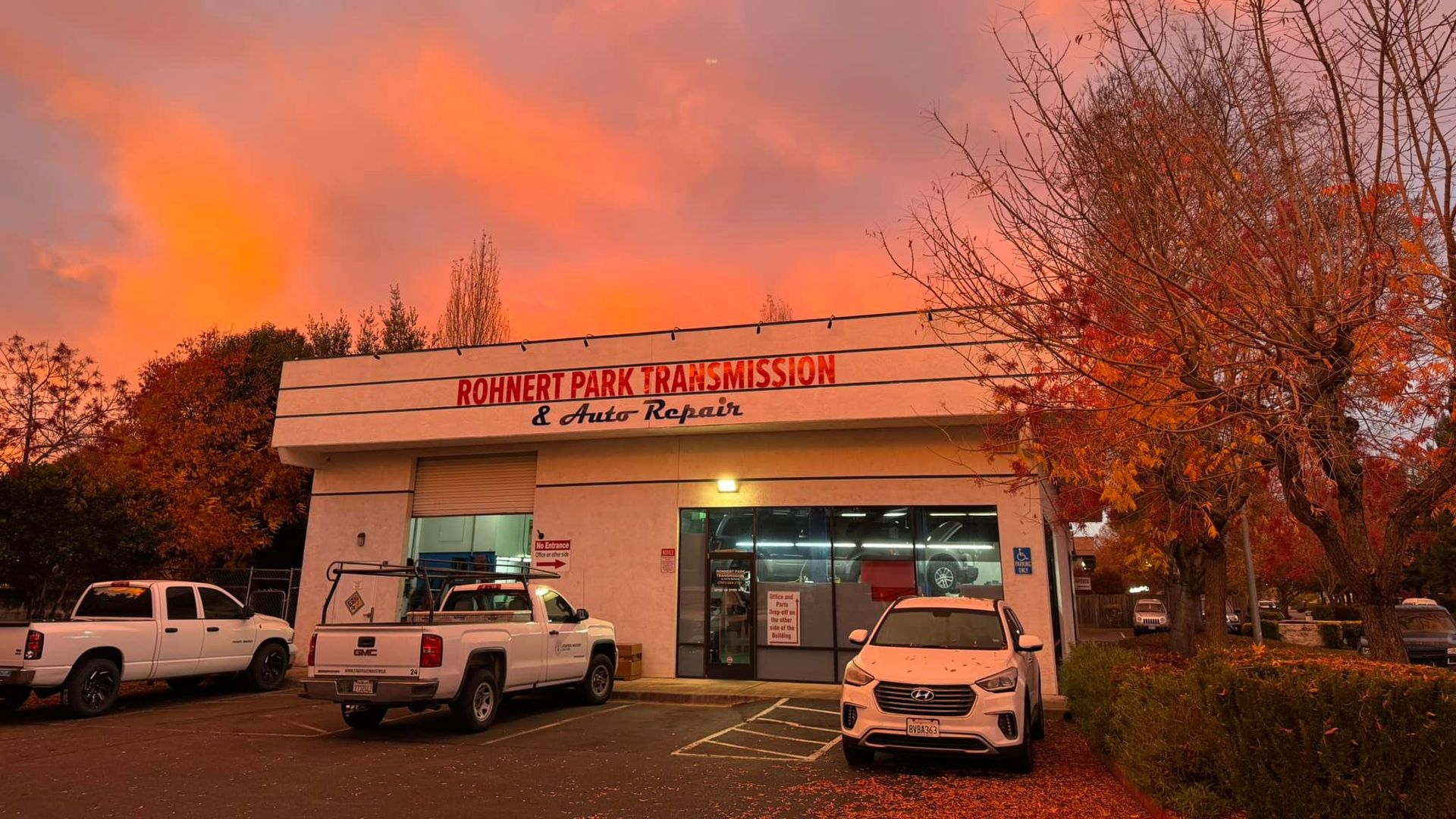
Rohnert Park Transmission & Auto Repair diagnoses automatic transmission valve body problems at 305 Laguna Dr for drivers from Rohnert Park, Cotati, Santa Rosa, Petaluma, Sebastopol, Windsor, and Sonoma County. If your car is banging into gear, slipping, stuck in limp mode, or losing drive or reverse, call (707) 584-7727 before you keep driving.
Quick Answer: What a Valve Body Problem Usually Feels Like
| What You Feel | Why the Valve Body Is Suspect | How Urgent It Is |
|---|---|---|
| Harsh 1-2 or 2-3 shifts | Pressure control, sticking valves, adaptive shift data, or solenoid response can be wrong. | High if new, worsening, or paired with codes. |
| Delayed drive or reverse engagement | Hydraulic pressure may not be reaching the clutch circuit quickly enough. | High, especially if the delay gets longer. |
| Slipping between gears | Pressure loss can keep clutch packs from applying firmly. | Urgent. Slipping creates heat and debris. |
| Limp mode or stuck in one gear | The control system may be protecting the transmission from a pressure or solenoid fault. | Urgent if speed is limited or shifting is disabled. |
| P0700 with solenoid or pressure codes | The transmission module sees a control fault, but the companion code tells the real story. | Needs enhanced transmission scan, not a generic code clear. |
Dealing with this issue in Sonoma County?
Our ASE and ATRA certified shop team diagnoses the real problem instead of guessing.
Serving the North Bay:
A table can help you describe the problem, but it is not the diagnosis. The valve body sits in the middle of the electrical, hydraulic, and mechanical systems, which is why symptoms overlap with so many other transmission failures.
What Is the Transmission Valve Body?
The valve body is the hydraulic control center inside an automatic transmission. Think of it as a precision fluid-routing block. It has passages, valves, springs, checkballs, solenoids, and pressure-control circuits that decide where transmission fluid goes and when it goes there.
When your transmission shifts from first to second, a clutch pack inside the transmission has to release while another clutch pack applies. The valve body directs pressurized fluid to those clutch circuits. If the timing or pressure is wrong, the shift can feel delayed, harsh, soft, flared, or completely missing.
Modern valve bodies are not purely mechanical. The transmission control module commands solenoids inside or attached to the valve body. Those solenoids open and close hydraulic paths based on vehicle speed, throttle position, engine load, fluid temperature, and gear command.
That mix of computer control and hydraulic precision is why valve body diagnosis can be tricky. A solenoid can be electrically good but mechanically stuck. The TCM can command the right shift, but contaminated fluid can block a passage. A pressure regulator valve can wear enough to leak pressure even though the scan data looks normal. A sensor can lie to the TCM and make a healthy valve body behave incorrectly.
Valve Body Repair vs Replacement vs Rebuild
The biggest mistake is treating every valve body symptom as the same repair. There are three very different paths.
1. Targeted valve body repair
A targeted repair makes sense when diagnosis proves the problem is limited to the valve body or its attached solenoids. That might mean cleaning varnish from passages, replacing failed solenoids, addressing worn valve bores with updated components, replacing separator plate or gasket issues, or correcting a known hydraulic weak point in that transmission family.
This path is most realistic when the fluid is not burnt, there is no heavy metal debris, the transmission still moves consistently, and the scan/pressure data points to one control area rather than widespread internal wear.
2. Valve body replacement
Replacement makes sense when the valve body is too worn, contaminated, damaged, or integrated to repair confidently. Some vehicles use valve body assemblies that include a solenoid pack or mechatronic unit. In those cases, replacement plus programming or adaptation relearn can be the cleanest fix.
A replacement still has to be diagnosed correctly. Installing a fresh valve body into a transmission full of clutch material or metal debris can ruin the new part quickly. The fluid and pan inspection matter before anyone approves the part.
3. Full transmission rebuild or replacement
A rebuild enters the conversation when the problem is no longer isolated. Burnt fluid, slipping under load, heavy clutch material, metal in the pan, no movement, pressure loss across multiple circuits, or repeated limp mode after targeted repairs can mean the internal transmission is already damaged.
At that point, a valve body alone may not hold. The valve body can be part of the rebuild, but it is not the whole story. The clutch packs, seals, pump, torque converter, bushings, bearings, and cooler path may all need to be evaluated.
Symptoms That Point Toward the Valve Body
Harsh shifting or bang into gear
A harsh shift often comes from pressure that is too high, too abrupt, or applied at the wrong time. The TCM may command high line pressure to protect a slipping transmission, or the valve body may be sticking and failing to regulate pressure smoothly. That is why harsh shifts need scan data and pressure context before a shop calls it a valve body.
Delayed engagement into drive or reverse
Delayed engagement means there is a pause after you shift from park into drive or reverse. The vehicle may sit still for a second, then clunk into gear. Low fluid, worn seals, pump problems, valve body leakage, or internal clutch wear can all create the delay. If reverse delay is worse than drive delay, that detail helps narrow the circuit being tested.
Slipping, flaring, or RPM rise between gears
When engine RPM rises but road speed does not follow, the transmission is not applying a clutch firmly enough. A valve body pressure leak can cause this, but so can worn clutch material. This is urgent because slipping creates heat and clutch debris. That debris can then travel through the valve body and make a targeted repair less likely.
Gear hunting or wrong-gear starts
If the transmission hunts between gears, starts in the wrong gear, or feels confused after a stop, the control system may be reacting to bad data, unstable pressure, or solenoid response problems. This is where an enhanced scan matters. A basic code reader may only show P0700, while the transmission module has the real companion code stored behind it.
Limp mode
Limp mode is the transmission protecting itself. The vehicle may stay in one gear, refuse to upshift, limit speed, or feel sluggish from a stop. Valve body pressure faults and solenoid faults can trigger limp mode, but so can speed sensors, wiring, a weak battery, or TCM communication problems. If your vehicle is in limp mode now, use our limp mode guide and call before driving far.
Trouble Codes That Often Come With Valve Body Problems
A code is a starting point, not a verdict. Since light-duty vehicles use standardized OBD-II emissions diagnostics, a basic scanner may show the warning, but it often misses the deeper transmission-module data. The EPA's OBD overview explains the broad system, but transmission diagnosis usually requires enhanced scan access beyond a free parts-store read.
Common code families that can lead a technician toward valve body testing include:
- P0700: the gateway code saying the transmission control system has stored a fault
- P0715 / P0720: input or output speed sensor faults that can mimic shift control problems
Get an accurate repair quote — not an internet estimate.
Every vehicle is different. Call for transparent, honest pricing.
Serving the North Bay:
- P0730: incorrect gear ratio, often tied to slipping, pressure loss, or sensor data problems
- P0740 through P0744: torque converter clutch control faults, sometimes involving the valve body and lockup solenoid circuit
- P0750 through P0770: shift solenoid and pressure-control solenoid code families
- Manufacturer-specific transmission codes: enhanced codes that a generic scanner may not display
If a shop gives you a major repair estimate from P0700 alone, slow down. P0700 tells you to scan the transmission module. It does not tell you to replace the valve body or rebuild the transmission by itself.
How a Transmission Specialist Diagnoses the Valve Body
1. Symptom pattern and road test
The first diagnostic tool is the story. Does it happen cold, hot, uphill, under light throttle, under heavy load, after a fluid service, or only after highway driving? Does it affect every shift or one shift? Does it happen in drive and reverse? A controlled road test lets the technician match the symptom to scan data.
2. Fluid level and condition
Transmission fluid is hydraulic fluid, coolant, lubricant, and friction-control fluid all at once. Low, burnt, aerated, contaminated, or wrong-spec fluid can make a healthy valve body act bad. Fluid inspection also tells whether the transmission has already created clutch material or metal debris.
If the problem started after a fluid service, the first checks are fluid type, fluid level procedure, filter seal, pan gasket, and whether debris was stirred into sensitive passages. See our low transmission fluid symptoms guide if your symptoms came with leaks, burning smell, or delayed engagement.
3. Enhanced scan and freeze-frame data
A transmission-capable scan tool reads the TCM, not just the engine computer. It shows stored codes, pending codes, freeze-frame context, commanded gear, actual gear, input and output speeds, solenoid commands, pressure-control data, and temperature. The scan tells whether the TCM is commanding the right thing and whether the transmission is responding.
4. Solenoid command and electrical testing
Solenoids can fail electrically, stick mechanically, or respond slowly because of contamination. Testing can include resistance checks, wiring and connector checks, bidirectional scan-tool commands, and comparison between commanded state and transmission behavior.
5. Pressure testing and pan inspection
When appropriate, line-pressure testing helps separate electrical control problems from hydraulic leakage. Pan inspection is equally important. Clean fluid with a single solenoid fault is a different repair than burnt fluid with clutch material and metal debris.
When a Valve Body Repair Is a Good Bet
A targeted valve body repair is most promising when the vehicle still drives, the problem is repeatable, the fluid is not heavily burnt, there is little or no metal debris, the scan data points to a specific pressure or solenoid circuit, and the transmission does not show signs of widespread internal slip.
This is also why early diagnosis matters. A sticky solenoid or valve can start as a control issue. If ignored, it can cause abnormal clutch apply timing. That abnormal timing creates heat and clutch wear. The worn clutch material contaminates the fluid. The contaminated fluid then clogs the valve body further. What started as a targeted repair can become a rebuild because the damage spread.
When It Is Probably Not Just the Valve Body
The valve body is probably not the whole repair if the vehicle has no forward or reverse movement, severe slipping under load, burnt fluid, metal in the pan, repeated overheating, grinding, a loud transmission whining noise, or the same fault returns quickly after a solenoid or valve body repair.
That does not automatically mean the vehicle is not worth fixing. It means the estimate needs to cover the full failure path instead of guessing at the easiest part to name.
CVT Valve Body Problems: Nissan, Subaru, Honda, and Toyota
CVTs use different hardware than conventional automatics, but the hydraulic control principle still matters. The valve body controls pulley pressure, ratio changes, torque converter apply, and fluid routing. When a CVT valve body or pressure-control solenoid acts up, symptoms may include hesitation, shudder, RPM flare, limp mode, overheating, or whining.
Rohnert already sees Google testing the site on vehicle-specific valve body searches because pages like the Nissan CVT problems guide and Subaru Forester CVT problems guide explain those patterns. This page ties the broader valve body topic together so a driver can understand the repair decision before choosing a shop.
Sonoma County Driving Patterns That Expose Valve Body Problems
A valve body issue may feel mild during a short cold start but show up clearly after real driving. Highway 101, Rohnert Park Expressway, Santa Rosa stop-and-go traffic, hills toward Sebastopol and Sonoma, and hot summer driving all load the transmission differently.
Get an accurate repair quote — not an internet estimate.
Every vehicle is different. Call for transparent, honest pricing.
Serving the North Bay:
If the shift gets harsher as the vehicle warms up, if a delay appears after a long drive, or if limp mode shows up after highway speed, tell the technician. Heat-sensitive symptoms often point to pressure, fluid, solenoid, or electrical behavior that will not show up from a quick parking-lot scan.
What to Ask Before Approving Valve Body Work
- What companion codes are stored in the transmission module, not just the engine computer?
- What did the fluid and pan inspection show?
- Did the shop verify solenoid command, wiring, and pressure behavior?
- Is the valve body being repaired, replaced, or included in a rebuild?
- Does this vehicle require programming, adaptation reset, or relearn after repair?
- What would make the repair recommendation change from valve body work to rebuild?
- How will the shop road-test and verify the fix before returning the vehicle?
Those questions protect you from both extremes: replacing a whole transmission when a targeted hydraulic repair would work, or replacing a valve body when the transmission is already too contaminated or worn for that repair to last.
Rohnert Park Transmission Valve Body Diagnosis
Rohnert Park Transmission & Auto Repair is a transmission-first shop. Our ASE and ATRA certified technicians diagnose automatic transmissions, CVTs, torque converter lockup issues, solenoid faults, pressure-control problems, and rebuild-level failures every week. Fernando Gomez is the owner, and the shop's repair recommendations come from diagnosis, not from a generic code printout.
If your vehicle has harsh shifts, delayed engagement, slipping, shudder, limp mode, a P0700-family warning, or a suspected valve body problem, call (707) 584-7727. We will tell you whether it sounds safe to drive in, whether towing is smarter, and what diagnostic path makes sense before parts get replaced.
For broader repair context, start with our transmission repair and rebuild hub, compare symptoms in the transmission shudder guide, and use the transmission repair cost guide to understand repair levels without relying on generic national averages.
FAQ: Transmission Valve Body Repair
What is a transmission valve body?
The valve body is the hydraulic control center inside an automatic transmission. It routes pressurized fluid through valves, passages, and solenoids so the correct clutch packs apply at the correct time.
What are symptoms of a bad transmission valve body?
Common symptoms include harsh shifts, delayed engagement, slipping, gear hunting, failure to move in drive or reverse, limp mode, and transmission codes such as P0700 with shift-solenoid or pressure-control companion codes.
Can a transmission valve body be repaired?
Sometimes. If the problem is limited to sticking valves, worn bores, contaminated passages, or failed solenoids, a targeted valve body repair or replacement may be possible. If metal debris or burnt clutch material has spread through the transmission, a rebuild may be the safer repair path.
Can you drive with a bad valve body?
Do not keep driving normally if the vehicle slips, bangs into gear, overheats, enters limp mode, has a burning smell, or loses forward or reverse movement. Those symptoms can turn a targeted hydraulic repair into internal transmission damage.
Does valve body repair require removing the transmission?
On many vehicles the valve body is accessed by removing the transmission pan, but some designs require deeper disassembly or include the control unit inside the transmission. The vehicle design and failure mode determine how involved the repair is.
How do you diagnose a valve body problem?
A proper diagnosis starts with symptom pattern, fluid inspection, enhanced scan data, freeze-frame data, solenoid command tests, line-pressure checks when appropriate, and a road test. The goal is to separate a valve body fault from a fluid issue, wiring problem, TCM issue, torque converter fault, or internal clutch failure.
Tags:
Written by
Fernando Gomez
Owner, Rohnert Park Transmission & Auto Repair
Fernando brings over 28 years of automotive repair experience to every diagnosis and repair. As the owner of Rohnert Park Transmission & Auto Repair, he leads a team of ASE-certified, ATRA-member technicians specializing in transmission diagnostics, complex drivability issues, and preventive maintenance — with a focus on getting it right the first time.
Need Professional Auto Service?
Trust your vehicle to Rohnert Park's transmission and auto repair experts. We offer comprehensive diagnostics and repairs with a commitment to quality and transparency.
Related Articles
Ford Recall 26V402: Park-Pawl Safety Guide
A current NHTSA-sourced guide to Ford and Lincoln park-pawl recall 26V402, affected models, VIN lookup, and dealer vs. diagnostic next steps.
P0700 Code: Transmission Problems Explained
P0700 is the gateway code that tells you the transmission module has stored a fault. Learn how the real diagnosis is found.
Transmission Repair Cost Guide
Understand the difference between targeted repairs, valve body work, rebuilds, and replacement without relying on national price guesses.
Transmission Shudder Guide
How shudder differs from harsh shifting, slipping, torque converter lockup, and valve body pressure problems.
Transmission Control Module Guide
How the TCM commands solenoids, pressure, shift timing, and torque converter lockup before a shop blames the module.