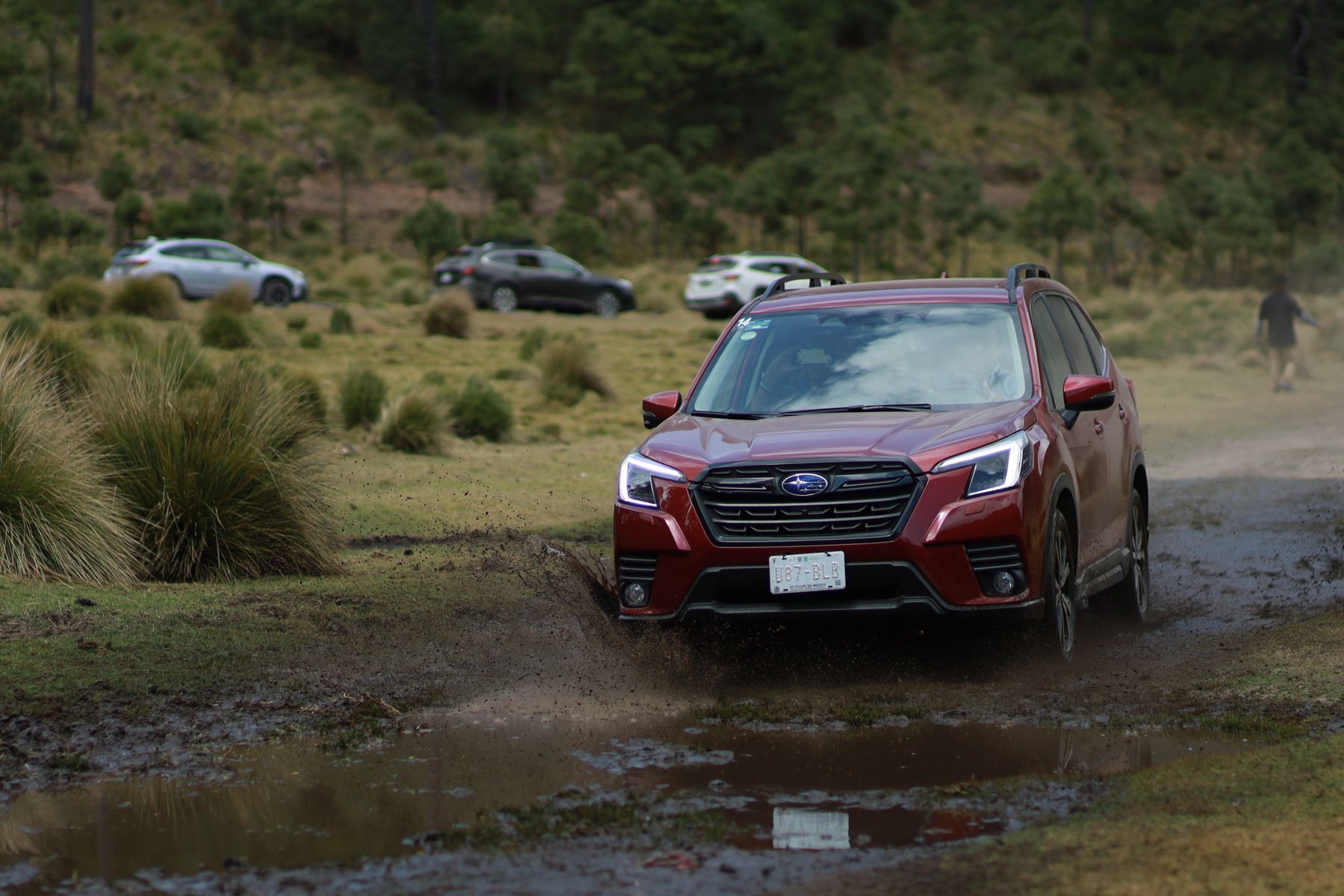
Photo by Andrés Chirrisco / Pexels
The Subaru Forester is a practical fit for many Sonoma County drivers. Available all-wheel drive, useful ground clearance, and flexible cargo space suit rainy commutes, rural roads, and weekend trips. Many 2014-and-newer Foresters use a Lineartronic CVT, so owners often have questions when shuddering, hesitation, noise, a leak, or a warning light appears.
Many Foresters in this guide's year range use Subaru's Lineartronic Continuously Variable Transmission, but transmission availability varies by model year and trim. Earlier fourth-generation Foresters included some manual-transmission configurations. Confirm the transmission by VIN or owner's manual before applying CVT-specific maintenance or repair advice.
This guide explains symptoms that warrant diagnosis, why model year and VIN matter, how towing and hilly driving can affect load, and how to find the correct maintenance instructions. For a broader look at CVT issues across the Subaru lineup, see our complete Subaru CVT transmission problems guide.
What Subaru Forester owners should verify
CVT coverage, maintenance, towing limits, and repair procedures are model- and VIN-specific. These primary sources establish the safe starting point.
- Warranty coverage is not a blanket year-range promise. Subaru's 2017 CVT warranty-extension notice included eligible 2014 and 2015 Foresters and listed program-specific time, mileage, and eligibility terms. Ask a Subaru retailer to check the VIN. Read the Subaru owner notice hosted by NHTSA.
- Shudder requires diagnosis, not a universal fluid prescription. Subaru service bulletin 16-156-25R covers specified 2014-2023 Forester 2.5L applications and describes diagnostic paths for shudder and related control-valve conditions. It does not publish a fluid-service success percentage. Read the Subaru service bulletin hosted by NHTSA.
- Maintenance varies by model year and use. Use the exact Subaru warranty and maintenance booklet for the vehicle. Severe-use notes can differ from the normal schedule, including for repeated trailer towing. See Subaru's 2015 warranty and maintenance booklet.
- Repair pricing requires a diagnosis. Valve-body, leak, electrical, software, internal-CVT, and replacement-assembly work are different repairs. Prices vary by vehicle, parts availability, warranty eligibility, and service complexity. Call for an accurate quote after inspection.
- Towing limits vary. Confirm the exact payload, trailer, tongue-weight, and severe-use instructions in the owner's manual for the model year and trim before towing.
Primary sources reviewed August 2, 2026. Always confirm current VIN-specific coverage and service information.
Dealing with this issue in Sonoma County?
Our ASE and ATRA certified shop team diagnoses the real problem instead of guessing.
Serving the North Bay:
How the Subaru Forester CVT Works
Before getting into what goes wrong, it helps to understand the basics of how a Forester CVT is fundamentally different from a traditional automatic transmission.
A conventional automatic transmission uses a set of fixed gears -- first, second, third, and so on -- and shifts between them. You can feel each shift as the transmission moves from one gear to the next. The Subaru Lineartronic CVT works completely differently. Instead of fixed gears, it uses a steel chain running between two variable-width pulleys. By changing the effective diameter of each pulley, the CVT can smoothly and continuously adjust the gear ratio without ever shifting.
Think of it like a bicycle with infinite gears. Instead of clicking from gear 1 to gear 2 to gear 3, the CVT slides seamlessly through every possible ratio in between. This is why a Forester CVT feels different from a conventional automatic -- there are no shift points, no distinct gear changes, just a smooth rise in speed as the engine and transmission work together.
A CVT can vary its ratio continuously instead of stepping through a fixed set of gears. That design helps the vehicle balance acceleration and fuel economy and can feel smoother than a conventional automatic during normal operation.
A CVT also has model-specific fluid, control, cooling, and service requirements. Heat, fluid condition, load, leaks, software, electrical faults, and mechanical wear can all matter, but mileage or a symptom alone cannot establish the cause or remaining service life.
Forester CVT by Generation: Why the Exact Configuration Matters
Forester transmission parts, control software, service procedures, campaigns, and maintenance instructions vary by model year and configuration. A broad year-range label cannot establish failure risk for an individual vehicle.
2014-2018 Forester (Fourth Generation)
This generation included multiple engines, trims, and transmission configurations. Some fourth-generation Foresters used a manual transmission, so confirm that the vehicle actually has a CVT before applying this guidance.
What the primary records establish:
- Subaru's 2017 CVT warranty-extension notice included eligible 2014 and 2015 Foresters under specific program terms
- Subaru service bulletin 16-156-25R includes specified 2014-2023 Forester 2.5L applications in a diagnostic procedure for shudder and related control-valve conditions
- Neither record establishes that every Forester in a broad generation will fail
- Warranty and campaign eligibility must be checked by VIN
- Symptoms and diagnostic codes must be matched to the correct service procedure before parts are replaced
Subaru's warranty notice is useful evidence of a model-specific coverage decision, but it is not a failure-rate table. A retailer can confirm whether a VIN was included and whether any coverage remains.
For an older Forester with incomplete service records, start by identifying the transmission, checking the exact maintenance booklet, scanning for applicable codes, and inspecting for leaks or abnormal fluid condition. Mileage alone does not diagnose a CVT problem.
2019-2024 Forester (Fifth Generation)
Later Foresters use different part revisions, calibrations, and trim-specific specifications. Newer does not mean maintenance-free, but it also does not justify applying an older model's warranty campaign or repair procedure without checking applicability.
What to verify on a later Forester:
- The VIN and exact transmission designation
- Open recalls, campaigns, warranty extensions, and applicable service bulletins
- The maintenance schedule for the model year and the vehicle's actual use
- Payload and towing limits for the exact trim
- Diagnostic codes and freeze-frame data when a warning or symptom appears
Do not use an internet failure-rate claim to decide whether a particular Forester is healthy. Service history, symptoms, codes, leaks, fluid condition, and a model-specific road test provide more useful evidence.
Sport and Wilderness are trim names, not proof that a Forester has a turbocharged engine. Use the VIN and owner's manual to identify the engine, CVT, cooling, towing, and maintenance specifications.
If the vehicle is used for towing, mountain driving, unpaved roads, or other demanding conditions, follow the severe-use instructions that actually apply to that model. Do not substitute a universal shortened interval for Subaru's model-specific schedule.
Common Subaru Forester CVT Problems
These are the specific symptoms we diagnose most frequently in Foresters that come to our shop with CVT complaints. For a detailed look at CVT fluid maintenance specifically, see our Subaru CVT fluid change guide.
Shuddering at Low Speeds
A Forester may shudder, judder, or vibrate during acceleration or deceleration. Record the speed, load, temperature, warning lights, and whether the symptom changes while turning or braking; those details help separate transmission, driveline, tire, brake, and engine-related causes.
What can cause the shudder: Subaru's service information recognizes more than one diagnostic path. Depending on the model and codes, technicians may need to evaluate control-valve operation, torque-converter behavior, fluid condition, software, mounts, driveline components, or internal CVT concerns. The symptom does not prove chain slip by itself.
When you notice it most:
- Accelerating gently from a parking lot onto a street
- Driving through residential neighborhoods at 20-25 mph
- Light throttle on a slight uphill grade
- During the first few minutes of driving before the CVT is fully warm
Why it matters: Continued driving with a worsening shudder, warning light, reduced-power condition, or fluid leak can turn a diagnosable concern into a larger repair. Do not assume a fluid change will cure the symptom; diagnose the cause and check warranty or campaign eligibility first.
Hesitation When Accelerating from a Stop
You press the gas pedal from a complete stop, and there is a noticeable delay before the vehicle moves. It may feel like the transmission is thinking, or like the engine revs but the car does not respond for a moment before lurching forward.
What can cause the hesitation: Delayed response can have transmission, engine, electrical, throttle, driveline, or control-system causes. Record when it happens and have the vehicle road-tested and scanned before choosing a repair.
Unexpected hesitation can be a safety concern when entering or crossing traffic. Avoid situations that require rapid acceleration until the cause has been diagnosed, especially if the symptom is worsening or a warning light is on.
Whining or Droning Under Acceleration
A new whine or drone can come from the transmission, wheel bearings, tires, engine accessories, or other driveline components. Note whether it changes with vehicle speed, engine speed, throttle, turning, or road surface; a road test is needed to isolate the source.
What to listen for:
- A high-pitched whine that gets louder as you accelerate
- A droning or humming at highway speeds that was not there six months ago
- A metallic buzzing noise during moderate acceleration
- A noise that disappears when you lift off the gas and returns when you get back on it
Do not diagnose from sound alone: A sound may be intermittent or gradual, but loudness and duration do not prove internal CVT wear. Have a new or worsening sound inspected before authorizing transmission work.
Overheating During Towing or Mountain Driving
Towing, steep grades, high ambient temperatures, speed, payload, and other operating conditions can increase drivetrain load. If a transmission-temperature warning appears, follow the exact owner's-manual instructions; the warning itself does not identify the failed component.
Signs of CVT overheating:
- A transmission temperature warning light on the dashboard
- The transmission goes into a reduced-power protection mode (limp mode)
- A burning smell from the transmission area
- The transmission feels sluggish or unresponsive after sustained high-load driving
- The shudder or hesitation symptoms become dramatically worse when the CVT is hot
Why overheating matters: Excessive heat can degrade fluid and reduce protection. If the transmission-temperature warning appears, follow the owner's manual, reduce load, and have the vehicle inspected before resuming demanding driving. The warning does not establish which component failed.
2014-2018 Forester: Diagnostic Issues to Watch For
Fourth-generation Foresters span different configurations, and some warranty or service information applies only to certain years, engines, transmissions, or symptoms. Check applicability before diagnosing by generation.
Mileage Is Context, Not a Diagnosis
Mileage helps frame likely wear and maintenance history, but there is no single mileage at which a Forester CVT becomes defective. Review the exact service schedule, prior invoices, warning history, codes, leaks, fluid condition, and road-test behavior together.
Valve Body Degradation
The valve body controls hydraulic operation inside the CVT. Subaru bulletin 16-156-25R describes specified Forester applications, symptoms, codes, and an updated control-valve-body design. That bulletin is a technician diagnostic reference; it does not mean every shudder requires a valve-body replacement.
A confirmed control-valve concern may be repairable without replacing the entire transmission, but the correct procedure depends on the transmission, codes, test results, and bulletin applicability. Check warranty eligibility before authorizing the work.
The Torque Converter Factor
The Forester CVT uses a torque converter between the engine and transmission. Torque-converter behavior can overlap with control-valve, fluid, engine, driveline, or internal-CVT symptoms, so a shudder should not be assigned to one component without model-specific testing.
Repair options depend on the diagnosed fault, applicable service information, parts availability, and warranty eligibility. Confirm the source of the symptom before authorizing component replacement.
2019-2024 Forester: What to Verify
Get an accurate repair quote — not an internet estimate.
Every vehicle is different. Call for transparent, honest pricing.
Serving the North Bay:
Later-model Foresters still require the correct maintenance schedule and model-specific diagnosis. Do not assume that an older warranty extension, bulletin, part number, or fluid interval applies.
Sport, Wilderness, and Other Trim Differences
Sport and Wilderness are trim designations with model-year-specific equipment; they are not blanket proof of a turbocharged engine or a shared CVT specification. Confirm the engine, transmission, payload, towing capacity, cooling equipment, and service schedule from the VIN and owner's manual.
If you use a Forester for demanding work:
- Tow a trailer or carry a hitch-mounted load
- Drive mountain roads regularly
- Use the vehicle for off-road trails or fire roads
- Carry heavy passengers or cargo
Then check which severe-use notes apply, stay within every published rating, and respond to warning lights as the owner's manual directs. Ask a qualified shop before adding equipment or changing the maintenance interval.
Check the Schedule for 2019-and-Newer Foresters
A later-model CVT is not maintenance-free, but the correct inspection or replacement schedule still comes from the model-year booklet and actual operating conditions. Service history and fluid specification matter more than a universal internet interval.
Bring the VIN and service history to the appointment so the technician can apply the correct Subaru schedule and fluid specification.
Forester vs Outback CVT: Same Unit, Different Stress
Forester and Outback vehicles may use related Lineartronic technology, but parts, ratios, control software, cooling, towing ratings, and service procedures can vary. For a separate model overview, see our Subaru Outback CVT problems guide.
Weight Advantage
Vehicle weight varies by model year, engine, trim, equipment, passengers, and cargo. Compare the exact curb-weight, payload, and towing specifications rather than assuming one model always puts less strain on the transmission.
Weight alone cannot predict which vehicle will develop a CVT concern first. Maintenance history, use, configuration, temperature, codes, and current symptoms are more useful diagnostic evidence.
Cooling Differences
Cooling hardware and towing ratings vary by year and configuration. Use the service manual and parts information for the VIN rather than assuming that Forester and Outback cooling systems are interchangeable.
Same Failure Patterns
The two models can produce similar symptoms, but similar symptoms do not prove identical causes or repair procedures. Diagnose the vehicle in front of you and use model-specific Subaru service information.
Towing With a Subaru Forester CVT
This section is especially relevant for Sonoma County Forester owners, but there is no single towing rating for every Forester covered by this guide. Capacity varies by model year, trim, equipment, trailer brakes, payload, and market. The exact owner's manual controls.
Why Towing Requirements Matter
Towing adds load and heat. Grades, speed, weather, passengers, cargo, tongue weight, and trailer configuration all affect the vehicle. Stay within the exact ratings and follow the manual's operating and severe-use instructions.
Towing changes vehicle load and can trigger model-specific operating, cooling, braking, and severe-use maintenance requirements. Use the exact owner's manual rather than a general CVT rule.
Real-World Towing Scenarios That Stress the Forester CVT
- Pulling a loaded trailer over the Sonoma Coast hills -- sustained grades add load and heat
- Hauling supplies to a Lake Sonoma campsite -- highway driving followed by steep grades
- Towing a small boat or personal-watercraft trailer -- actual loaded weight can differ from the advertised empty weight
- Loaded cargo trailer for a winery event -- passengers, cargo, tongue weight, and trailer load all count toward published limits
If You Tow With Your Forester
- Know the actual loaded weights. Include passengers, cargo, accessories, tongue weight, and the loaded trailer, not only the trailer's empty rating.
- Use the exact manual. Confirm capacity, trailer-brake requirements, operating instructions, and the severe-use maintenance schedule for the VIN.
- Watch the vehicle's warnings. If a temperature or transmission warning appears, follow the owner's manual and reduce load before continuing.
- Inspect before a demanding trip. Address leaks, warning lights, overdue maintenance, or new driveline symptoms before towing through mountain terrain.
- Do not improvise a universal fluid interval or additive. Use Subaru's specified fluid and model-specific procedure.
Sonoma County Driving and Your Forester CVT
Sonoma County driving can include grades, stop-and-go traffic, unpaved access roads, heavy cargo, and trailer use. Those conditions do not prove a CVT problem, but they are useful context when selecting the applicable operating and maintenance instructions.
Mountain Roads and Hilly Terrain
Sonoma County is not flat. Driving from Rohnert Park to Bodega Bay means sustained grades on Bodega Highway. Getting to the coast on Coleman Valley Road involves steep climbs and descents. Even daily commuting through the hills of eastern Santa Rosa or western Petaluma involves more climbing than the national average.
Long grades can increase drivetrain load. Stay within the vehicle's ratings, follow the owner's-manual guidance for grades, and respond to temperature or transmission warnings as directed.
Stop-and-Go Plus Hills
Highway 101 traffic may combine repeated starts with grade changes. If a symptom appears only when warm, in traffic, or on a grade, record those conditions for the technician instead of assuming the CVT is failing.
Gravel Roads and Fire Roads
On gravel or fire roads, follow Subaru's instructions for the exact vehicle, tires, traction systems, speed, load, and drive mode. A new warning, vibration, impact, or leak after rough-road use deserves inspection.
Dog Owners and Cargo Weight
Passengers, pets, accessories, and cargo count toward the vehicle's payload. Check the driver's-door label and owner's manual, distribute cargo safely, and include that load when calculating towing capacity.
Maintenance That Keeps Your Forester CVT Alive
Forester CVT inspection and fluid-replacement instructions depend on model year and operating conditions. Use the exact maintenance booklet rather than a one-size-fits-all schedule.
Use the Correct Schedule and Fluid
CVT fluid supports lubrication, hydraulic control, friction behavior, and heat management. The required fluid specification and service procedure depend on the transmission, so confirm them by VIN before adding or replacing fluid.
Fluid condition is one part of diagnosis; it does not prove the cause of every shudder or warning. For a broader maintenance overview, see our Subaru CVT fluid change guide, then confirm the exact procedure against current Subaru service information.
How to establish the correct maintenance plan:
- Identify the model year, engine, transmission, and VIN
- Review the exact Subaru warranty and maintenance booklet
- Check which severe-use notes apply to the way the vehicle is driven
Get an accurate repair quote — not an internet estimate.
Every vehicle is different. Call for transparent, honest pricing.
Serving the North Bay:
- Review prior service invoices and any open campaigns or bulletins
- Use the specified fluid and factory fill-level procedure
- Diagnose leaks, warning lights, shudder, or hesitation instead of treating them as routine maintenance
Use the fluid specification Subaru identifies for the exact transmission. Do not choose a fluid or additive only because a label says it is universally compatible. The shop should document the specification and fill procedure used.
Let the CVT Warm Up
On cold mornings, follow the owner's manual and drive gently until the vehicle reaches normal operating temperature. There is no universal idle-time prescription in this guide for every Forester model year.
Avoid hard acceleration or heavy loading immediately after a cold start, and investigate any warning light or abnormal operation rather than assuming temperature alone is the cause.
Gentle operation after a cold start is a practical way to follow the vehicle's warm-up guidance without inventing a universal idle time.
Driving Habits That Reduce CVT Stress
- Accelerate smoothly when conditions allow. Follow the owner's manual and avoid abrupt inputs when the vehicle is cold, overloaded, or showing a warning.
- Watch warnings on long grades. Stay within published limits and follow the manual if the transmission-temperature or another warning appears.
- Follow the owner's manual on grades. Use only the modes and engine-braking instructions provided for the exact vehicle.
- Stay within payload and towing limits. Include passengers, cargo, accessories, tongue weight, and trailer load.
Do Not Ignore Early Symptoms
An intermittent shudder, new hesitation, warning light, leak, or unusual noise deserves diagnosis. Note the conditions when it happens and avoid prescribing a fluid change before the cause and service information are checked.
Prompt inspection can preserve repair options and prevent continued operation with an active fault, but the diagnosis determines the repair and cost.
How Rohnert Park Transmission Services Forester CVTs
Subaru CVT work requires specialized knowledge and equipment. The Lineartronic CVT is not a generic transmission -- it has specific diagnostic procedures, fluid specifications, pressure testing requirements, and rebuild techniques that differ from conventional automatics.
What We Do Differently
Model-specific CVT diagnostics. We use vehicle-specific codes, available transmission data, a road test, service history, and current Subaru service information to narrow the cause before recommending work. Available data varies by model year and scan equipment.
Fluid and leak inspection. Fluid condition, level, leaks, and contamination are useful evidence, but they do not identify every internal or electronic fault by themselves. We interpret them with codes, symptoms, service information, and test results.
Correct fluid and fill procedure. We identify the transmission-specific fluid requirement and follow the applicable fill-level procedure. The specification and level must be confirmed for the vehicle rather than assumed from a universal label.
Honest assessment. Not every Forester CVT that shudders needs a rebuild. Some need a fluid change. Some need a valve body service. Some need a complete transmission replacement. We tell you what level of repair your specific situation requires and why, before we start any work.
When to Bring Your Forester In
- Any new shudder, vibration, or hesitation from the transmission
- A whining or droning noise that was not there before
- The transmission temperature warning light illuminates
- The CVT goes into reduced-power mode
- You are at or past the recommended fluid change interval
- You recently purchased a used Forester and want a baseline CVT health check
Frequently Asked Questions
What are the most common Subaru Forester CVT problems?
Symptoms that deserve professional diagnosis include shuddering, hesitation, unusual whining or droning, warning lights, leaks, and reduced-power operation. Those symptoms can have multiple causes, so check the vehicle's exact configuration, codes, service history, and fluid condition before recommending a repair.
Which Subaru Forester years were included in the CVT warranty extension?
Subaru's 2017 CVT warranty-extension notice included eligible 2014 and 2015 Foresters under program-specific time, mileage, and VIN terms. It did not establish that every Forester in a broader year range was covered or would fail. Ask a Subaru retailer to check the VIN.
Why does my Subaru Forester shudder at low speeds?
Low-speed shudder can come from more than one transmission or driveline condition, including control-valve, torque-converter, fluid, or internal CVT concerns. Subaru's service information directs technicians to diagnose the symptom and applicable codes before replacing parts or prescribing fluid service.
Can you tow with a Subaru Forester CVT?
Forester towing capacity varies by model year, trim, equipment, payload, and trailer configuration. Use the exact owner's manual, include passengers and cargo in the calculation, follow any trailer-brake requirements, and apply the severe-use maintenance notes that match the vehicle.
How often should I change the CVT fluid in my Subaru Forester?
There is no one interval for every Forester covered by this guide. Check the exact Subaru warranty and maintenance booklet, identify which severe-use notes apply, and use the fluid specification and fill procedure for the VIN. A shop can inspect service history, leaks, fluid condition, and diagnostic data before recommending service.
Is the Subaru Forester CVT the same as the Outback CVT?
They may use related Lineartronic technology, but parts, ratios, control software, cooling, towing ratings, and service procedures can vary by model year and configuration. Identify the transmission by VIN rather than assuming Forester and Outback units or repairs are interchangeable.
What does it sound like when a Subaru Forester CVT is failing?
A new whine, drone, buzz, rattle, or shudder can justify inspection, but sound alone does not identify a failed CVT. Wheel bearings, tires, engine accessories, driveline components, and transmission conditions can overlap, so road-test the vehicle before authorizing a transmission repair.
Does the Subaru Forester CVT warranty cover transmission problems?
Coverage depends on VIN, original warranty start date, mileage, model year, diagnosed condition, and applicable programs. Subaru's 2017 extension listed eligible 2014 and 2015 Foresters and extended qualifying CVT coverage to 10 years or 100,000 miles under the program terms. Ask a Subaru retailer to verify current VIN-specific eligibility before paying for a potentially covered repair.
Can a Subaru Forester CVT be repaired or does it need full replacement?
It depends on the diagnosed fault. A repair may involve software, wiring, a control-valve component, a leak repair, or internal CVT work; other conditions can require a replacement assembly. Use model-specific codes, Subaru service information, a road test, fluid and leak inspection, and applicable warranty checks to choose the repair.
How do I make my Subaru Forester CVT last longer?
Follow the exact maintenance booklet and fluid specification for the VIN, stay within payload and towing limits, drive gently after a cold start, respond to warning lights, and have new shuddering, hesitation, leaks, or unusual noise diagnosed promptly.
Protect Your Forester CVT Before Problems Start
A Forester CVT's condition depends on its exact configuration, maintenance history, operating conditions, current symptoms, and diagnostic results. No mileage or broad model-year claim can guarantee how long an individual transmission will last.
Whether you are experiencing symptoms now, approaching a fluid change interval, or recently purchased a used Forester and want to know the condition of the CVT, the smartest move is a professional assessment from a transmission specialist who works on Subaru CVTs regularly.
At Rohnert Park Transmission and Auto Repair, we diagnose and service Subaru Forester CVTs using model-specific service information and the correct fluid specification and procedure for the vehicle. Our CVT transmission repair service is a starting point for Forester owners dealing with shuddering, hesitation, a warning light, a leak, or unusual noise.
Call us at (707) 584-7727 or schedule an appointment online to have your Forester CVT inspected. Whether it is a fluid change, a diagnostic for a new symptom, or a health check on a used Forester you just purchased, we will give you an honest assessment you can trust.
*This guide provides general information, not a diagnosis or a promise about any model year. A Forester's condition and applicable service information depend on its VIN, configuration, history, mileage, use, symptoms, and test results. Confirm current warranty eligibility with Subaru and have the vehicle inspected before authorizing repair.*
Tags:
Written by
Fernando Gomez
Owner, Rohnert Park Transmission & Auto Repair
Fernando brings over 28 years of automotive repair experience to every diagnosis and repair. As the owner of Rohnert Park Transmission & Auto Repair, he leads a team of ASE-certified, ATRA-member technicians specializing in transmission diagnostics, complex drivability issues, and preventive maintenance — with a focus on getting it right the first time.
Need Professional Auto Service?
Trust your vehicle to Rohnert Park's transmission and auto repair experts. We offer comprehensive diagnostics and repairs with a commitment to quality and transparency.
Related Articles
Subaru CVT Transmission Problems: Complete Guide
Everything you need to know about Subaru CVT problems across all models, from shuddering and hesitation to overheating and failure patterns.
Subaru CVT Fluid Change: Complete Guide
How to identify the correct Subaru CVT fluid specification and maintenance instructions for the vehicle.
Subaru Outback CVT Problems: Complete Guide
Common Subaru Outback CVT problems by generation, towing stress, and how Outback CVT issues compare to the Forester.
Transmission Services
Full-service transmission diagnostics and repair for all makes and models from ASE certified technicians in Rohnert Park.