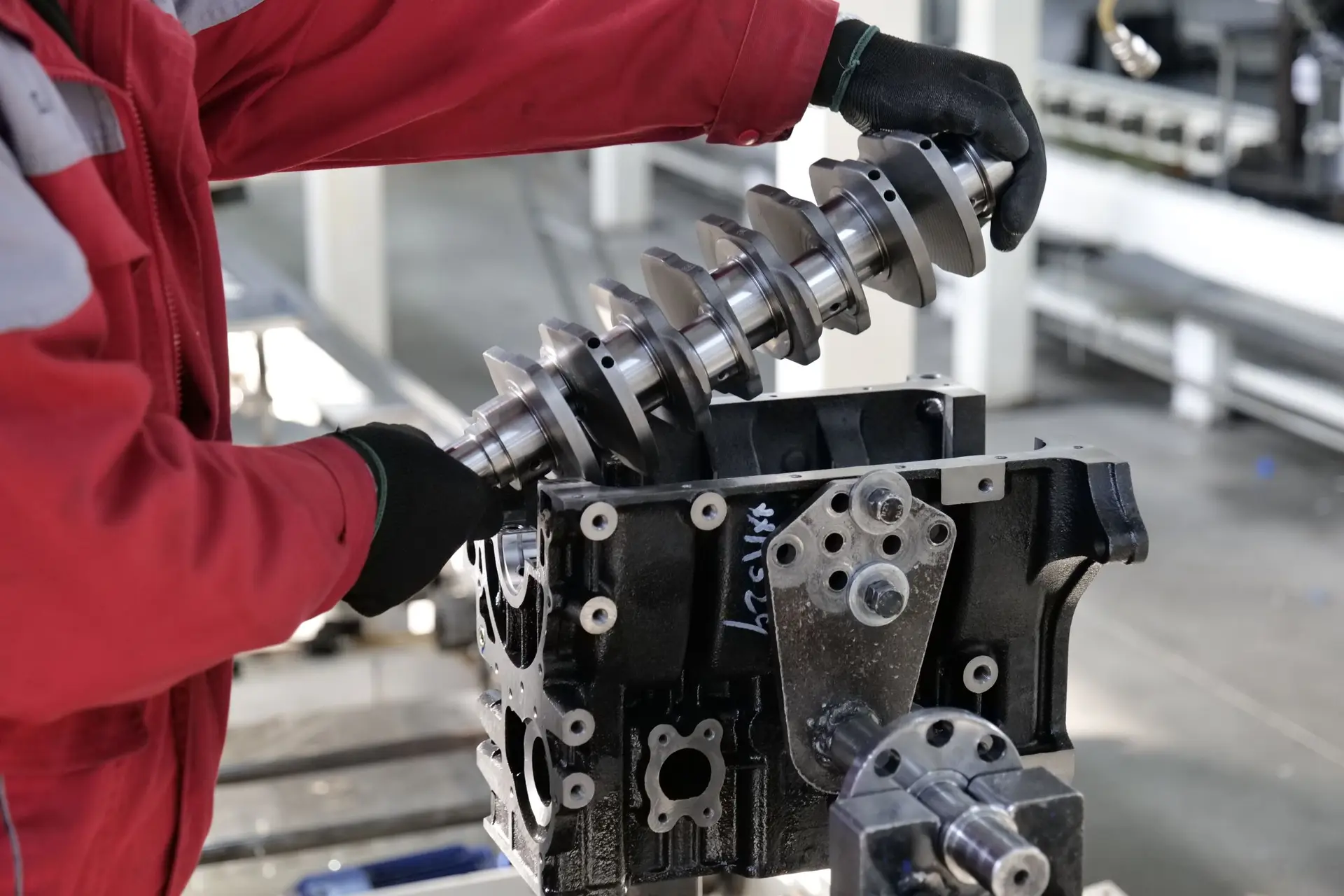
ENGINE REPAIR, REBUILDS AND REPLACEMENT
Engine rebuilds and replacement engines for Rohnert Park, Santa Rosa, Petaluma and the rest of Sonoma County. Subaru, Jeep and Acura engines are the ones we are known for.
CALL FOR SERVICE: (707) 584-7727Professional Engine Repair, Rebuilds and Replacement in Rohnert Park, CA
Key Takeaway: A knock that grows with engine speed, an oil pressure light, oil burning or an engine that stopped after a timing belt snapped are the signs of a big engine job. Shut it off and have it towed rather than driven. Testing decides the route: a repair if the damage is limited, a rebuild if the block and crankshaft can be saved, or a remanufactured or used replacement engine if they cannot. In California, a replacement from the same engine family with its emission controls needs no BAR Referee visit.
Rohnert Park Transmission & Auto Repair rebuilds engines in our shop and installs replacement engines when a rebuild does not make sense. Subaru, Jeep and Acura engines are the ones we are known for, and we work on other makes too.
Every engine job starts with finding out what actually failed. Tests such as an oil pressure reading, a compression or leak-down test, a look inside the cylinders and a check of the oil and filter for bearing material tell a failed sensor or a noisy accessory apart from a worn bearing, a dropped valve or a burned piston. That result decides whether the engine needs a repair, a rebuild or a replacement, and you get the options in writing before any work starts.
We also fix what killed the engine. An engine that overheated because of a radiator, water pump or thermostat, or ran low on oil because of a leak, will fail the same way again unless that cause is repaired in the same visit.
If the Engine Just Failed: What To Do Right Now
- Oil pressure light or a new knock: pull over and shut the engine off. Every minute it runs without oil pressure grinds the bearings and the crankshaft, and that is what turns a rebuild into a replacement engine.
- Temperature gauge in the red: stop and let it cool. Driving an overheating engine is how a head gasket becomes a warped or cracked cylinder head.
- It will not restart after a bang or a timing belt snap: do not keep cranking it. Have it towed.
- Before you call: note the year, make, model and mileage, what you heard or saw, any warning lights, and whether the engine still runs.
Repair, Rebuild or Replace: What Usually Decides It
The symptom points to the failure, and the failure decides the route. The test in the last column is what proves it before anyone quotes an engine.
Swipe the table sideways to see all four columns.
| What you notice | What it usually is | Usual route | How it is confirmed |
|---|---|---|---|
| Knock that gets louder with engine speed, oil pressure light on | Worn or spun connecting rod or main bearing | Rebuild if the crankshaft and block can be machined, otherwise a replacement engine | Oil pressure test with a mechanical gauge, oil filter and pan checked for bearing material |
| Blue smoke, oil level dropping between changes, oily spark plugs | Worn piston rings or valve seals | Rebuild (rings, bearings, seals) or a replacement engine | Compression and leak-down test, oil consumption measured over a set distance |
| Engine stopped after a timing belt or chain broke | Bent valves on an interference engine | Cylinder head repair if the pistons are undamaged, otherwise rebuild or replace | Compression or leak-down test and a borescope look into the cylinders |
| Overheated, white smoke, coolant disappearing or milky oil | Head gasket, warped or cracked cylinder head | Head gasket or head repair if caught early; engine if the bearings were damaged | Cooling-system pressure test, combustion-gas test, oil checked for coolant |
| Seized, a hole in the block, or a rod through the side | Catastrophic internal failure | Replacement engine, or a rebuild only if a usable block is available | Inspection with the oil pan off to see what is left |
Overheating, white smoke and milky oil have their own page: head gasket repair explains which way the gasket is leaking and how each leak is tested.
Three Ways To Replace a Failed Engine
Rebuild your engine in our shop
The engine comes out and apart. The block, crankshaft, connecting rods and cylinder heads are measured, machined where they are out of specification, and the engine goes back together with new bearings, piston rings, gaskets and seals, and the timing and oil pump parts the job calls for. It makes sense when the block and crankshaft are sound, when the engine is hard to find as a good replacement, or when you want to keep the engine that came with the car.
Install a remanufactured engine
A production remanufacturer rebuilds the engine to its own specification, and the engine carries that company's warranty. It makes sense when your block or crankshaft is beyond saving and you want a known starting point rather than an engine with an unknown history.
Install a used engine
An engine from another vehicle of the same engine family. It costs the least in parts, and its life depends on how the donor vehicle was treated, so the mileage and source matter. It makes sense on an older car where the value of the car sets a limit on the repair.
Whichever route you choose, the parts that killed the old engine get fixed too: a clogged radiator, a failed water pump or a stuck thermostat behind an overheat, or a neglected timing belt. And because we are a transmission shop as well, the transmission behind the new engine gets looked at while the car is here.
California Rules for Replacement Engines
California treats an engine swap in one of two ways, and the difference decides whether your car needs a trip to a BAR Referee before it can pass Smog Check.
- A replacement engine is a new, rebuilt, remanufactured or used engine of the same make, number of cylinders and engine family (test group) as the original, with the original emission controls reinstalled, or an engine configuration the manufacturer offered for that year, make and model with the matching emission controls connected. BAR states that engine replacements are not required to be inspected at the Referee.
- An engine change is any other engine. It must pass an initial inspection at a BAR Referee Center and carry a BAR Referee label inside the engine compartment. The inspection is based on the Smog Check requirements of the vehicle the engine came from.
- Emission equipment stays. State and federal anti-tampering laws prohibit changing the emission control configuration the manufacturer certified (California Vehicle Code section 27156).
In practice, matching the engine family on the replacement is what keeps an engine swap simple. We check it before an engine is ordered.
Your Paperwork on an Engine Job
California's Automotive Repair Act sets what you are owed on any repair, and on a job the size of an engine it matters:
- A written estimate before any work, with the total for parts and labor, the parts to be used and the method of repair.
- Machine work done at another shop noted on the estimate or work order.
- An invoice that lists every part replaced and says which parts are used, reconditioned or rebuilt.
- Your old parts back if you ask when you sign the estimate. On a remanufactured engine the old engine is usually returned to the supplier as a core, so keeping it can mean paying the core charge.
Subaru, Jeep and Acura Engines
These are the engines we are known for. Each has a documented problem worth knowing before you decide what to do with yours.
Subaru FB 2.0- and 2.5-liter: oil consumption
Subaru reached a proposed settlement of a class action over oil consumption in early FB engines. Its February 2016 retailer bulletin lists 2011 to 2014 Forester, 2012 to 2013 Impreza, and 2013 Crosstrek, Legacy and Outback with an automatic or CVT (with longer ranges for manual cars), and extends the powertrain warranty to 8 years or 100,000 miles for oil consumption. Every car in that group is now past 8 years, so an FB engine burning oil today is an owner-paid repair: new rings in a rebuild, or a replacement engine. A boxer engine has two cylinder heads and most major work is done with it out of the car. Older 2.5-liter EJ engines have their own head gasket pattern, covered on our head gasket page.
Jeep 3.6-liter Pentastar V6: the left cylinder head
In June 2014 Chrysler extended the warranty on the 3.6-liter left cylinder head to 10 years or 150,000 miles from the in-service date, covering the 2011 Grand Cherokee and the 2012 and select 2013 Grand Cherokee and Wrangler, along with Dodge and Chrysler models using the same engine (bulletin D-14-12). On every 2011 to 2013 vehicle those 10 years have now passed, so a failed left head on one of these engines is repaired at the owner's cost, as a cylinder head job if the rest of the engine is healthy.
Acura and Honda 3.5-liter V6: connecting rod bearings
On August 20, 2025 NHTSA opened Preliminary Evaluation PE25008 into connecting rod bearing failures leading to complete engine failure in the 3.5-liter V6 of the 2016 to 2020 Acura MDX, 2018 to 2020 Acura TLX, 2016 to 2020 Honda Pilot, 2018 to 2020 Honda Odyssey and 2017 to 2019 Honda Ridgeline, an estimated 1,410,806 vehicles. NHTSA found these failures fall outside Honda's 2023 crankshaft recall 23V-751. If one of these engines starts knocking, check the VIN at nhtsa.gov/recalls and ask a dealer about open campaigns before paying for an engine. The same V6 uses a timing belt and its cylinder deactivation system has been linked to oil burning; see our Acura timing belt and Acura oil consumption pages.
Engine Knocking, Burning Oil or Dead? Call Before You Decide
Call with the year, make, model and mileage and tell us what happened. If it is knocking with the oil light on or the gauge is in the red, have it towed rather than driven. We are at 305 Laguna Dr in Rohnert Park, Mon–Thu 7:30 AM – 5:00 PM, Fri 7:00 AM – 3:00 PM.
Sources
- California Bureau of Automotive Repair, "Engine Changes"
- California Bureau of Automotive Repair, "A Consumer's Guide to Auto Repair"
- NHTSA Office of Defects Investigation, Preliminary Evaluation PE25008 opening resume, August 20, 2025
- Chrysler Group LLC warranty bulletin D-14-12, "3.6L Left Cylinder Head - Select 2011-2013 Vehicles," June 10, 2014
- Subaru of America retailer bulletin, "Proposed Engine Oil Consumption Class Action Settlement," February 1, 2016
- NHTSA recall lookup by VIN
Why Choose Our Engine Repair, Rebuilds and Replacement?
- ✓Engines rebuilt in our shop, and remanufactured or used replacement engines installed when a rebuild does not make sense
- ✓Subaru, Jeep and Acura engines are the ones we are known for
- ✓The failure is confirmed by testing before an engine is quoted
- ✓Replacement engines matched to your car's engine family so the swap stays a replacement under California BAR rules
- ✓A written estimate listing the parts and method of repair before any work, as California law requires
- ✓The cause is repaired too: cooling system, oil leaks or timing parts that led to the failure
- ✓A transmission shop as well, so the transmission behind your engine is checked while the car is here
Vehicle-Specific Repair Guides
Book an Engine Diagnosis in Rohnert Park
Call with the year, make, model and mileage and what the engine is doing. We will book a diagnosis, find out what failed, and give you the repair, rebuild or replacement options in writing before any work starts.
CALL US NOW: (707) 584-7727Frequently Asked Questions About Engine Repair, Rebuilds and Replacement
Is it worth rebuilding my engine, or should I replace it?
It depends on what failed and on the parts of the engine that are still good. If the block and crankshaft can be machined back to specification, a rebuild keeps the engine that came with the car and replaces the wearing parts: bearings, rings, gaskets, seals and usually the oil pump and timing components. If the block is cracked, a rod has gone through the side of it, or the crankshaft cannot be saved, a remanufactured or used replacement engine is usually the better route. We test the engine first, then lay out the options that actually fit your car, in writing, before any work starts.
What is the difference between a rebuilt, a remanufactured and a used engine?
A rebuilt engine is your engine (or one like it) taken apart, inspected, machined where needed and reassembled with new wearing parts. A remanufactured engine is rebuilt by a production remanufacturer to its own specification and comes with that company's warranty. A used engine comes out of another vehicle as it is, so its condition depends on that vehicle's history and mileage. California repair law requires the invoice to flag any part that is used, reconditioned or rebuilt, so a used or rebuilt engine is named as one on your invoice.
Can I put a used engine in my car in California?
Yes, if it counts as a replacement engine under Bureau of Automotive Repair rules: a new, rebuilt, remanufactured or used engine of the same make, number of cylinders and engine family (test group) as the original, with the original emission controls reinstalled, or an engine configuration the manufacturer offered for that year, make and model with the matching emission controls connected. An engine that does not qualify is an engine change, which needs a BAR Referee inspection before it can pass Smog Check.
Do I need a BAR Referee inspection after an engine swap?
Not for a replacement engine. BAR states that engine replacements are not required to be inspected at the Referee. An engine change, meaning an engine that is different from the one originally installed and does not qualify as a replacement, must pass an initial inspection at a BAR Referee Center and get a Referee label in the engine compartment. After that, future Smog Checks can be done at a regular station. The Referee appointment line is (800) 622-7733.
How long does an engine rebuild or replacement take?
It depends on what the engine needs and on parts. A rebuild involves teardown, measuring, machine work on the block, crankshaft or cylinder heads, and reassembly, and machine-shop time can be the longest part. A replacement engine depends on how quickly the right engine for your car's engine family can be sourced. We give you the expected timeline with the estimate, and if any machine work is done at another shop, California law requires that to be noted on your estimate.
How much does an engine rebuild or replacement cost?
The price is set by what testing and, on a rebuild, the teardown find. The main drivers are the engine layout (an inline four is a smaller job than a V6, a V8 or a Subaru boxer with two cylinder heads), how much machining the block, crankshaft and heads need, whether a replacement engine is remanufactured or used, and what else failed with it, such as the radiator after an overheat. You get a written estimate with the parts and method of repair listed before any work starts.
What warranty comes with engine work?
Ask for the warranty on each option before you choose, because it differs by route. A remanufactured engine carries the remanufacturer's warranty, a used engine's coverage depends on its supplier, and for a rebuild done here, ask what coverage comes with it before you approve the estimate. Keep your invoice: it is your record of the work and the parts installed.
My Honda or Acura 3.5-liter V6 is knocking. Is it covered by a recall?
Check before you pay for an engine. Honda's 2023 recall 23V-751 covered a crankshaft manufacturing defect in this engine. In August 2025 NHTSA opened a separate investigation, PE25008, into connecting rod bearing failures in 2016 to 2020 Acura MDX, 2018 to 2020 Acura TLX, 2016 to 2020 Honda Pilot, 2018 to 2020 Honda Odyssey and 2017 to 2019 Honda Ridgeline, about 1.4 million vehicles. Enter your VIN at nhtsa.gov/recalls and ask an Acura or Honda dealer about open campaigns before deciding.
Do you rebuild Subaru boxer engines?
Yes. Subaru engines are one of the engine types we are known for. A boxer engine has two cylinder heads, one on each side, and most major work on it is done with the engine out of the car, so a rebuild or a head job covers both sides. If the problem is a leaking head gasket on an older 2.5-liter, our head gasket repair page explains how that leak is tested and repaired.
Why do engines fail?
Most engine failures trace back to oil or heat. Running low on oil or going too long between changes starves the bearings, which shows up as a knock that gets louder with engine speed. An overheat can warp a cylinder head or blow a head gasket. A timing belt or chain that breaks on an interference engine lets the pistons hit the valves. Worn piston rings and valve seals show up as oil burning. Finding which of these happened tells you whether a repair, a rebuild or a replacement engine is the right fix, and what to fix so it does not happen again.
Have more questions? We're here to help!
Call (707) 584-7727Get In Touch
Related Services
Serving Nearby Cities
We proudly serve customers from throughout Sonoma County
Our Certification

ATRA & ASE Certified for Expert Transmission Service