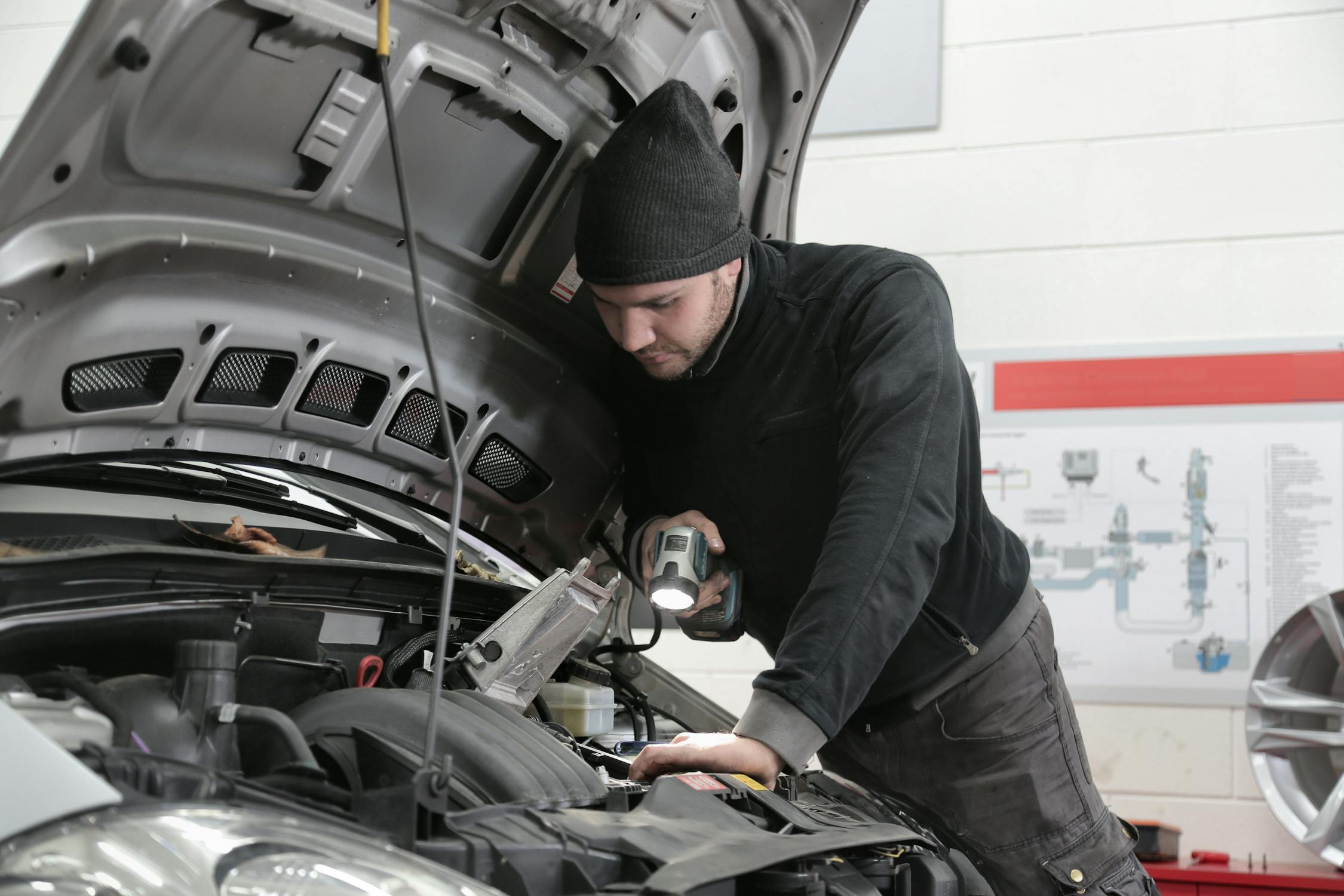
Photo by Andrea Piacquadio / Pexels
Your transmission depends on fluid the way your engine depends on oil. Transmission fluid lubricates, cools, and creates the hydraulic pressure that makes every gear shift happen. When the level drops, the transmission starts failing -- not suddenly, but through a predictable sequence of warning signs that most drivers miss until the damage is already done.
Low transmission fluid is one of the most common causes of transmission failure, and it is almost always preventable. The fluid does not burn off or evaporate during normal driving. If the level is low, there is a leak. And if there is a leak, adding more fluid treats the symptom while the actual problem keeps getting worse underneath your vehicle.
This guide covers the 7 warning signs of low transmission fluid, what causes fluid loss in the first place, what happens inside the transmission when you keep driving, why just topping off is not enough, how to read your transmission fluid color, and how we diagnose and fix the problem at RPT.
7 Warning Signs of Low Transmission Fluid
Dealing with this issue in Sonoma County?
Our ASE and ATRA certified shop team diagnoses the real problem instead of guessing.
Serving the North Bay:
These symptoms range from subtle early warnings to unmistakable emergencies. The earlier you catch them, the less expensive the fix.
1. Slipping Gears
This is the hallmark symptom of low transmission fluid, and often the first one drivers notice. Gear slipping feels like the engine suddenly revs higher without the car accelerating to match. You press the gas, the RPMs climb, but the vehicle hesitates or loses power for a moment before the gear catches again.
Here is what is happening inside the transmission: automatic transmissions use hydraulic pressure -- created by the fluid -- to engage clutch packs and bands that hold the correct gear in place. When fluid drops below the required level, there is not enough pressure to fully engage these components. The clutch packs slip instead of gripping, and the transmission momentarily loses its grip on the gear.
Slipping is most noticeable during acceleration from a stop, when shifting from second to third gear, and during highway passing when the transmission downshifts under load. In the early stages, you might only feel it occasionally. As the fluid continues to drop, slipping becomes more frequent and more severe.
What it feels like in practice:
- You press the accelerator and the engine revs up but the car hesitates before responding
- The RPM gauge jumps unexpectedly while cruising at a steady speed
- The transmission seems to lose a gear for a second, then catches and jerks forward
- Power feels inconsistent, especially going uphill or accelerating to merge
Why this matters: Every time the transmission slips, the clutch packs grind against each other without proper lubrication or clamping force. This friction generates extreme heat and wears down the clutch material rapidly. A transmission that is slipping due to low fluid is actively destroying itself with every shift. For a deeper look at transmission slipping specifically, see our transmission slipping repair guide.
2. Delayed or Hesitant Shifting
This symptom is closely related to slipping but distinct. Instead of the transmission briefly losing a gear, delayed shifting means there is a noticeable pause between when the transmission should shift and when it actually does.
The most common scenario: you put the vehicle in Drive from Park, and instead of engaging immediately, there is a one to three second delay before you feel the transmission engage and the car starts moving. Or while driving, you feel the transmission hesitate at shift points -- it hangs in one gear longer than it should before shifting up.
Why this happens with low fluid:
- The transmission pump needs adequate fluid volume to build sufficient line pressure
- When fluid is low, the pump draws in air along with fluid, creating aerated (foamy) fluid
- Aerated fluid compresses instead of transmitting pressure cleanly
- The shift solenoids receive the pressure signal, but the actual pressure at the clutch pack is delayed and weaker
- The result is a lag between the shift command and the shift execution
The progression pattern: Delayed engagement from Park to Drive is often the very first symptom of low fluid -- sometimes appearing before any slipping is noticeable. It starts as a half-second delay that you might not even register consciously. Over time, it stretches to one, two, three seconds. By the time the delay reaches three or more seconds, the fluid is significantly low and other symptoms are likely present as well.
3. Transmission Overheating
Transmission fluid is both a lubricant and a coolant. It circulates through the transmission, absorbs heat from the clutch packs, gears, bearings, and torque converter, then flows through a cooler (usually built into the radiator or a standalone cooler) before returning to the transmission. When fluid level drops, there is less fluid to absorb and transfer heat. The remaining fluid gets hotter, and the transmission temperature climbs.
How you will know the transmission is overheating:
- A transmission temperature warning light on the dashboard (not all vehicles have this -- mostly trucks and vehicles with tow packages)
- A burning smell from the center or underside of the vehicle
- The transmission shifts erratically or goes into "limp mode" -- a safety mode where the transmission locks into one gear (usually second or third) to prevent further damage
- On vehicles with a temperature gauge, the transmission temperature exceeds 200 degrees Fahrenheit under normal driving
The heat cascade: Once the transmission starts overheating, the problem feeds itself. High heat breaks down the remaining fluid faster, which reduces its ability to lubricate and cool, which generates more heat, which breaks down more fluid. This cycle can escalate from a warm transmission to a critically overheated one in a surprisingly short period -- especially in stop-and-go traffic, during towing, or on hot days.
Normal transmission operating temperature is 175-200 degrees Fahrenheit. Above 220 degrees, the fluid begins to break down rapidly. At 240 degrees, rubber seals harden and begin to leak, accelerating fluid loss. Above 260 degrees, clutch material glazes and stops gripping. At 295 degrees and above, internal seals fail completely and the transmission can suffer catastrophic damage.
If you see a transmission temperature warning or smell burning fluid, pull over and let the vehicle cool down. Continuing to drive an overheating transmission is the fastest path to a complete rebuild.
4. Grinding or Unusual Noises
A healthy transmission shifts quietly. When fluid drops too low, you start hearing sounds that should not be there.
Grinding during shifts: This is the sound of metal components engaging without adequate lubrication. The clutch packs and bands need a film of fluid between their contact surfaces. When that film is insufficient, metal-on-metal contact produces a grinding or gravelly sensation and sound during gear changes. You feel it through the shifter and floor as much as you hear it.
Whining or humming that changes with speed: The transmission pump and planetary gearset produce a low-level hum during normal operation that is typically inaudible inside the cabin. When fluid is low, the pump works harder to maintain pressure, and the gears run with less lubrication. The result is a whining or humming sound that increases with vehicle speed and changes pitch during shifts. For a full symptom map, see our transmission whining noise guide.
Buzzing or vibration at idle in gear: When you are stopped at a light with the transmission in Drive, you may feel a buzzing vibration or hear a low drone that goes away when you shift to Park or Neutral. This can indicate that the torque converter is not receiving enough fluid to operate smoothly.
Clunking or banging during shifts: In more advanced stages of fluid loss, shifts become harsh and abrupt rather than smooth. The transmission hunts between gears with a noticeable clunk or bang at each shift point. This happens because the low fluid pressure causes the clutch packs to engage suddenly rather than progressively.
Any new noise from the transmission area warrants immediate inspection. Grinding in particular means metal components are wearing against each other without proper lubrication -- damage is happening in real time.
5. Surging or Lurching
Transmission surging is an unsettling symptom. The vehicle accelerates or decelerates on its own without any change in your throttle input. You are driving at a steady speed, and the car suddenly lunges forward or falls back momentarily.
What causes surging with low fluid:
- Inconsistent fluid pressure causes the torque converter lockup clutch to engage and disengage erratically
- Air pockets in the low fluid create momentary pressure spikes and drops
- The transmission control module adjusts shift timing to compensate for abnormal pressure readings, creating jerky behavior
- The clutch packs grab and release unevenly due to insufficient clamping pressure
What surging feels like:
- The car speeds up for a second without you pressing the gas harder
- You feel a momentary lurch forward or backward while maintaining steady speed
- Cruise control struggles to hold a consistent speed
- The vehicle shudders or bucks at certain speeds, especially between 30-50 mph
Surging is particularly noticeable and concerning because the vehicle is not responding predictably to your inputs. This is both a mechanical symptom and a safety issue -- unexpected acceleration or deceleration in traffic is dangerous.
6. Burning Smell
Transmission fluid has a specific smell when it overheats. It is sharp, acrid, and often described as burnt toast or overheated rubber. This smell is distinct from burning engine oil (which has a heavier, oilier smell) and burning coolant (which has a sweet smell).
Where the smell comes from:
- Overheated fluid inside the transmission -- when the reduced fluid volume cannot keep temperatures in check, the remaining fluid thermally degrades and produces a burning odor that vents from the transmission case
- Fluid dripping onto the exhaust -- if the leak is from the transmission pan gasket, cooler lines, or any component on top of or near the exhaust system, even a small drip on a hot exhaust pipe produces a noticeable burning smell
- Clutch material overheating -- when clutch packs slip due to low fluid, the friction material overheats and produces a smell similar to a burnt manual clutch
When you are most likely to notice it:
- After stop-and-go driving or sitting in traffic (transmission works hardest at low speeds)
- After driving up long hills or mountain grades
- After towing or carrying heavy loads
- When you exit the vehicle and walk past the area near the center or rear of the undercarriage
Do not ignore a burning smell from the transmission area. It means the fluid is either critically low, severely overheated, or leaking onto the exhaust. All three scenarios require prompt attention. Check the fluid level immediately and look under the vehicle for signs of a leak.
7. Puddle Under the Car
This is the most obvious and most frequently ignored symptom of low transmission fluid. You walk up to your parked vehicle and see a stain or puddle on the ground underneath it.
Identifying transmission fluid by appearance:
- Color: Fresh transmission fluid is red or pink. Older fluid that is still functional is a darker reddish-brown. Severely degraded fluid is dark brown or nearly black. All of these are transmission fluid.
- Consistency: Transmission fluid is thinner than engine oil and has a slightly slippery feel. It is not as watery as coolant or power steering fluid.
- Location: Transmission fluid leaks typically appear under the center of the vehicle (roughly between the front seats and the rear seats) or toward the front-center (near the radiator if the cooler lines are leaking). Engine oil leaks tend to appear closer to the front of the vehicle directly under the engine.
What to do when you find a puddle:
- Place a piece of clean cardboard under the vehicle overnight to determine the exact drip location and the fluid color
- Check the transmission fluid level using the dipstick (if your vehicle has one)
- Note the size of the puddle -- a few drops means a slow seep, a palm-sized wet spot means an active drip, a large puddle means a significant leak
- Do not drive the vehicle with a large active leak without checking the fluid level first
The mistake most people make: They see a small stain, assume it is nothing, and keep driving. Transmission fluid leaks do not fix themselves. They only get worse. A small seep today becomes a steady drip next month and a puddle the month after that. Meanwhile, the fluid level drops progressively and the transmission starts showing the symptoms described above.
What Causes Low Transmission Fluid
Transmission fluid does not get consumed during normal operation the way engine oil does. A healthy, sealed transmission maintains the same fluid level indefinitely between service intervals. If the level is low, fluid is escaping from somewhere. Here are the most common leak sources.
Transmission Pan Gasket
The transmission pan is a stamped metal or cast aluminum reservoir bolted to the bottom of the transmission case. It holds the fluid and provides access to the filter. The gasket between the pan and the case is one of the most common leak sources because:
Get an accurate repair quote — not an internet estimate.
Every vehicle is different. Call for transparent, honest pricing.
Serving the North Bay:
- The gasket material ages, hardens, and shrinks over time, losing its seal
- The pan is the lowest point on the transmission and is vulnerable to road debris impact
- Pan bolts can loosen from vibration over years of driving
- Improper torque during a previous fluid change can cause uneven sealing
Pan gasket leaks tend to be slow seeps that gradually worsen. You may see a thin film of fluid on the bottom of the pan or small drips on the ground. This is one of the most affordable leak repairs since the pan is externally accessible.
Transmission Cooler Lines
Transmission fluid circulates through metal or rubber lines from the transmission to a cooler (usually built into the radiator or a separate cooler mounted nearby). These lines are a frequent leak source because:
- Metal lines corrode over time, especially in areas with road salt or coastal air
- Rubber sections of the lines age and crack
- Connection fittings at both the transmission and the cooler can loosen or develop leaks
- Cooler lines are exposed on the underside of the vehicle and are vulnerable to road debris
Cooler line leaks can range from a slow seep at a fitting to a sudden, significant fluid loss if a corroded line develops a hole. If you notice a sudden large puddle of transmission fluid, a cooler line failure is one of the most likely causes.
Front Pump Seal (Input Shaft Seal)
The front pump seal sits where the torque converter meets the front of the transmission case. This seal keeps fluid from leaking out of the junction between the spinning torque converter and the stationary transmission housing. When this seal wears out or hardens with age, fluid weeps or drips from the front of the transmission where it mates to the engine.
This is a more involved repair because accessing the front pump seal typically requires separating the transmission from the engine.
Output Shaft Seal (Rear Seal)
The output shaft seal sits where the driveshaft (on rear-wheel drive vehicles) or the axle shafts (on front-wheel drive vehicles) exit the transmission case. This seal prevents fluid from leaking past the spinning shaft. Worn output shaft seals drip fluid from the rear of the transmission or from the axle connections.
Axle Seals (Front-Wheel Drive and AWD)
On front-wheel drive and all-wheel drive vehicles, the CV axle shafts pass through seals on each side of the transmission. These seals wear over time and can leak fluid from either side of the transmission, often dripping onto the inner CV boot or the subframe.
Torque Converter
The torque converter itself can develop leaks through its external welds, its seal where it mates with the transmission, or through hairline cracks in the converter housing. Torque converter leaks are often intermittent -- they may only leak when the vehicle is running and the converter is pressurized. This makes them harder to diagnose because the vehicle may not drip when parked but loses fluid during driving.
Cracked Transmission Case
Less common but serious. The transmission case itself can crack from impact damage (hitting a large pothole or road debris), extreme thermal stress, or manufacturing defects. A cracked case typically produces a significant and sudden fluid loss.
What Happens if You Keep Driving With Low Transmission Fluid
This is where the real cost of ignoring low fluid symptoms becomes clear. The damage follows a predictable escalation. For a detailed look at all common transmission problems and their progression, see our common transmission problems guide.
Stage 1: Increased Friction and Heat (Fluid Slightly Low)
With the fluid a quart or so below the proper level, the transmission still functions but the internal components run hotter and with less lubrication than designed. You may notice occasional delayed shifting or subtle slipping. The remaining fluid works harder to do its job, and it degrades faster because it is running hotter. The existing leak continues, and the fluid level drops further.
At this stage, the fix is usually straightforward: identify the leak, repair it, and refill the fluid. Total cost depends on the leak source but is typically the least expensive transmission repair scenario.
Stage 2: Slipping, Harsh Shifting, and Overheating (Fluid Moderately Low)
With the fluid down a quart and a half to two quarts, the symptoms become obvious. The transmission slips regularly, shifts feel harsh or delayed, and you may notice the burning smell or a temperature warning. The clutch packs are now engaging with inconsistent pressure and insufficient lubrication. Every shift generates more heat and more friction material debris that contaminates the remaining fluid.
At this stage, the leak repair is still needed, but now you may also need a fluid and filter change to remove the contaminated fluid and the debris it carries. If the clutch packs have begun to glaze or wear significantly, you may be looking at internal transmission work.
Stage 3: Limp Mode, Failure, and Catastrophic Damage (Fluid Critically Low)
With the fluid severely low, the transmission may go into limp mode -- locking into a single gear and refusing to shift. This is the transmission control module's last-resort protection strategy. If you continue driving past limp mode, the transmission overheats beyond recovery. Clutch packs burn out, seals melt, bearings score, and the planetary gearset can be permanently damaged.
At this stage, you are looking at a transmission rebuild or replacement. The cost difference between catching a leak early and reaching this point is dramatic. For a comparison of rebuild vs replacement costs, see our transmission rebuild vs replace guide.
The timeline from Stage 1 to Stage 3 is unpredictable. It depends on the severity of the leak, your driving conditions, and how much demand you put on the transmission. Some leaks progress over months. Others can escalate in days, especially if a cooler line fails or a seal gives way suddenly. This is why any fluid leak deserves prompt attention -- you do not know how fast it will progress.
Can You Just Add Fluid? (Why Topping Off Is Not the Fix)
This is one of the most common questions we get, and the answer is important: you can add fluid as a temporary measure, but it is not a repair.
Why Topping Off Treats the Symptom, Not the Cause
Transmission fluid does not burn off, evaporate, or get consumed during normal driving (unlike engine oil, which every engine uses a small amount of between changes). If the fluid level is low, it went somewhere -- and that somewhere is out through a leak. Adding fluid brings the level back up temporarily, but the leak is still there. The fluid you just added will escape through the same leak, and in a week or a month you will be right back where you started.
When Topping Off Makes Sense
There is one legitimate reason to add fluid: to safely get the vehicle to a repair shop. If you check the fluid and it is low, and you cannot get to a shop immediately, adding the correct type of transmission fluid to bring the level to the proper mark is the right temporary move. It protects the transmission from further low-fluid damage while you arrange the repair.
When Topping Off Is Dangerous
It becomes dangerous when people use it as a long-term strategy. We have seen customers who checked the fluid every week and added a quart as needed for months, thinking they were managing the problem. Meanwhile:
- The leak continued to worsen
- Contaminated, degraded fluid stayed in the transmission because it was never fully changed
- Internal components wore progressively because the fluid quality was poor even when the level was correct
- By the time they came in, a leak that would have cost a few hundred dollars to fix had caused enough internal damage to require a rebuild
What Type of Fluid to Add
If you do need to top off temporarily, use the exact type of transmission fluid specified in your owner's manual. This is critical. Modern transmissions are designed for specific fluid formulations, and using the wrong type can cause shift quality problems, clutch material incompatibility, and accelerated wear. Common types include Dexron VI (GM vehicles), Mercon V or Mercon LV (Ford vehicles), ATF+4 (Chrysler/Dodge/Jeep/Ram), and various manufacturer-specific fluids (Toyota, Honda, Hyundai, Nissan each have their own specifications). For a detailed guide on transmission fluid types and when to change them, see our complete guide to transmission fluid changes.
Transmission Fluid Color Chart: What Your Fluid Is Telling You
Checking your transmission fluid color is one of the simplest diagnostic steps you can perform at home. The color tells you about the fluid's condition and health.
Bright Red or Pink (New / Excellent Condition)
This is what fresh, new transmission fluid looks like. It is translucent -- you can see through it on the dipstick. If your fluid looks like this, it is in good condition. Check that the level is correct and you are in good shape.
Dark Red (Normal / Good Condition)
After some miles and heat cycles, transmission fluid naturally darkens from bright red to a deeper red. This is completely normal. The fluid is still doing its job. It may be approaching its service interval, but there is no urgency.
Brownish-Red (Aging / Service Soon)
When the fluid starts taking on a brownish tint, it is losing its effectiveness. The heat-transfer and lubrication properties are diminishing. A fluid and filter change is recommended at this stage to keep the transmission healthy. The fluid may start to have a slight odor different from its original scent.
Dark Brown (Degraded / Service Now)
Dark brown fluid has been overheated or has exceeded its service life. It is not protecting the transmission as well as it should. The fluid may smell slightly burnt. A fluid and filter change should be done promptly. If the fluid is dark brown and the transmission is exhibiting symptoms (slipping, harsh shifts, delays), the degraded fluid may be contributing to the problem.
Black (Severely Degraded / Possible Internal Damage)
Black transmission fluid with a strong burnt smell indicates severe thermal breakdown. This fluid has been subjected to extreme heat -- either from chronic low fluid levels, heavy use without service, or internal transmission problems. The transmission should be inspected by a professional. A fluid change alone may not resolve the underlying issue if internal damage has occurred.
Milky Pink or Foamy (Coolant Contamination -- Emergency)
Get an accurate repair quote — not an internet estimate.
Every vehicle is different. Call for transparent, honest pricing.
Serving the North Bay:
If your transmission fluid looks like a strawberry milkshake -- milky pink, opaque, and foamy -- coolant has entered the transmission. This almost always means the internal transmission cooler inside the radiator has failed, allowing coolant and transmission fluid to mix. This is a serious emergency. Coolant destroys transmission clutch material rapidly. The vehicle should not be driven. The radiator, transmission cooler, and likely the transmission itself need immediate attention.
How RPT Diagnoses Low Transmission Fluid and Leaks
Finding the leak matters more than adding fluid. Here is how we approach transmission fluid loss at Rohnert Park Transmission and Auto Repair.
Step 1: Fluid Level and Condition Check
We start by checking the fluid level and condition on the dipstick (or through the fill plug on sealed transmissions). We note the level, the color, the smell, and whether the fluid shows any signs of contamination or aeration. This tells us how severe the fluid loss is and gives clues about the transmission's internal condition.
Step 2: Visual Leak Inspection
We put the vehicle on a lift and perform a thorough visual inspection of the entire transmission and all associated components -- the pan and gasket, cooler lines and fittings, front seal area, output shaft seal, axle seals, and the transmission case itself. Many leaks are visible as wet spots, drip trails, or fluid accumulation on components.
Step 3: UV Dye Test (If Needed)
Some leaks are slow enough that the source is not immediately obvious on visual inspection. In these cases, we add UV-fluorescent dye to the transmission fluid. The customer drives the vehicle for a short period, then returns. Under UV light, the dye glows brightly along the exact path of the leak, pinpointing the source even when the leak is very small.
Step 4: Pressure Test (If Needed)
For intermittent leaks or leaks that only occur under operating pressure (like torque converter leaks), we may perform a pressure test with the transmission at operating temperature to reproduce the leak condition and identify the source.
Step 5: Clear Diagnosis and Honest Estimate
We show you where the leak is, explain what is involved in the repair, and give you a written estimate before we do any work. We also assess the transmission fluid condition and advise whether a fluid and filter change should be included with the leak repair. If the fluid is degraded, fixing the leak but leaving the bad fluid in the transmission is not doing you a favor.
We check for signs of internal damage caused by running low on fluid. If the transmission has been slipping or overheating, we let you know whether additional work may be needed so there are no surprises after the leak is fixed.
How to Check Your Transmission Fluid at Home
Most vehicles with a transmission dipstick allow you to check the fluid level and condition yourself. Here is how to do it correctly.
The Proper Procedure
1. Warm up the vehicle. Drive for 10-15 minutes to bring the transmission to normal operating temperature. Fluid expands when hot, and the dipstick markings are calibrated for hot fluid.
2. Park on a level surface. An inclined surface gives an inaccurate reading.
3. Leave the engine running. Unlike engine oil, transmission fluid should be checked with the engine running and the transmission in Park (or Neutral on some vehicles -- check your owner's manual).
4. Pull the dipstick, wipe it clean, reinsert fully, and pull again. Read the level on the second pull. The fluid should be between the two marks ("Full" and "Add" or two dots/lines).
5. Check the color and smell. Rub the fluid between your fingers. It should be smooth, not gritty. Smell it -- it should have a mild petroleum scent, not a burnt smell.
6. Note the level. If it is between the marks, you are good. If it is below the lower mark, the transmission is low on fluid and you should add the correct type to bring it to the proper level -- and then find out why it is low.
Vehicles Without a Dipstick
Many newer vehicles (BMW, Mercedes, Audi, many late-model Toyotas, some Fords, and most CVT-equipped vehicles) do not have a transmission dipstick accessible to the owner. These transmissions are checked through a fill plug on the side of the transmission case, which requires the vehicle to be on a lift at a specific temperature. If your vehicle does not have a dipstick, a technician needs to check the fluid level for you.
Preventing Low Transmission Fluid
Prevention is far cheaper than repair. Here are the practical steps that keep your transmission fluid at the right level and in good condition.
Check the Fluid Regularly
If your vehicle has a dipstick, check the transmission fluid level and condition at least once a month. It takes two minutes and costs nothing. Catching a slow leak early -- before it causes symptoms -- can save thousands in transmission repairs.
Follow the Service Schedule
Change your transmission fluid and filter at the intervals recommended in your owner's manual. Fresh fluid protects internal components, maintains proper shift quality, and keeps operating temperatures in check. Neglected fluid breaks down, loses its protective properties, and allows accelerated wear. For a detailed look at when and how to change transmission fluid, see our transmission fluid change guide.
Fix Leaks Immediately
Do not adopt a top-off-and-hope strategy. The moment you notice a fluid stain under your vehicle, identify the source and repair it. A pan gasket replacement now prevents a transmission rebuild later. The economics are overwhelmingly in favor of early leak repair.
Pay Attention to Shifts
You know how your vehicle shifts. Any change in shift quality -- delays, slips, harshness, strange noises -- should prompt a fluid level check and a professional inspection. The transmission is telling you something. Listen.
Frequently Asked Questions
What are the first signs of low transmission fluid?
The earliest signs are delayed or hesitant shifting -- especially a pause when shifting from Park to Drive -- the transmission slipping out of gear momentarily, and a faint burning smell. You may also notice a small spot of reddish fluid on the ground where you park. These early symptoms are easy to dismiss, which is why many people do not catch low fluid until more obvious symptoms like grinding or surging appear.
Can you just add transmission fluid instead of fixing the leak?
You can top off as a temporary measure to protect the transmission while you arrange a repair, but adding fluid does not fix the problem. Transmission fluid does not burn off during normal operation. If it is low, there is a leak. The leak will continue regardless of how much fluid you add, and eventually the transmission will be damaged. Find the leak, fix it, then ensure the fluid level and condition are correct.
What color should transmission fluid be?
New transmission fluid is translucent bright red or pink. Healthy used fluid is a darker red but still somewhat translucent. Brownish-red fluid is aging and should be changed soon. Dark brown or black fluid with a burnt smell has degraded and needs immediate attention. Milky pink fluid (like a strawberry milkshake) means coolant has contaminated the transmission fluid -- this is a serious problem that requires immediate professional service.
How long can you drive with low transmission fluid?
There is no safe distance. Every mile on low fluid causes accelerated wear and heat buildup inside the transmission. How quickly damage occurs depends on how low the level is. Slightly low fluid may give you some time before noticeable damage, but severely low fluid can destroy a transmission in minutes. The moment you notice any low fluid symptoms, check the level and get to a repair shop.
What causes transmission fluid to leak?
The most common leak sources are the transmission pan gasket, cooler line fittings or corroded cooler lines, front pump seal (input shaft seal), output shaft seal, axle seals on front-wheel drive and AWD vehicles, and the torque converter seal. Road debris impact, age-related seal hardening, vibration-loosened pan bolts, and thermal cycling all contribute to leak development over time.
How do I check my transmission fluid level?
Start the engine and let it reach operating temperature. With the engine running and the transmission in Park, pull the transmission dipstick, wipe it clean, reinsert it fully, and pull it again. Read the level on the second pull -- it should be between the two marks. Also check the fluid color and smell. Some newer vehicles do not have an accessible dipstick and require a technician to check the level.
Is low transmission fluid an emergency?
It depends on severity. Slightly low fluid is not an immediate emergency but needs prompt attention. Severely low fluid -- where the dipstick shows nothing or the transmission is already exhibiting slipping, grinding, or overheating -- is urgent. Stop driving and have the vehicle towed to prevent catastrophic internal damage. When in doubt, treat it as urgent.
What does burnt transmission fluid smell like?
Burnt transmission fluid has a sharp, acrid smell often compared to burnt toast or overheated rubber. It is distinctly different from engine oil or coolant smells. You are most likely to notice it after stop-and-go driving, hill climbing, or towing -- any condition that makes the transmission work hard. The smell means the fluid has exceeded its safe operating temperature and is breaking down.
Can low transmission fluid cause the check engine light to come on?
Yes. Low fluid causes abnormal shift behavior, slipping, and overheating that the transmission control module detects and reports as diagnostic trouble codes. Common codes triggered by low fluid include P0700 (transmission control system malfunction), P0218 (transmission overheating), and various gear ratio and shift solenoid codes. If your check engine light comes on with any transmission symptoms, get the fluid checked along with the codes. For more on diagnostic trouble codes, see our P0700 transmission code guide.
How much does it cost to fix a transmission fluid leak?
The cost depends entirely on the leak source. A pan gasket replacement is one of the most affordable transmission repairs. Cooler line and axle seal replacements are moderately priced. A front pump seal or torque converter seal requires removing the transmission, making it a significantly more involved job. The only way to get an accurate estimate is to have the leak source properly diagnosed. For a broader look at transmission repair costs, see our transmission repair cost guide.
When to Get Your Transmission Fluid Checked
If you are experiencing any of these symptoms -- slipping gears, delayed shifting, overheating warnings, grinding or unusual noises, surging, burning smell, or fluid spots under your vehicle -- have your transmission fluid level and condition checked by a qualified technician. The inspection is quick, and it can reveal a simple leak repair before it becomes an expensive internal failure.
Transmission damage from low fluid is cumulative and irreversible. The clutch material that wears away, the bearings that score, the seals that harden from heat -- none of that repairs itself when you add fluid later. The only way to prevent that damage is to maintain proper fluid level and condition at all times.
At Rohnert Park Transmission and Auto Repair, transmission diagnostics are our core specialty. Our ASE-certified technicians pinpoint the exact source of fluid loss, explain what we find in plain language, and give you a written estimate before we start any work. We fix the leak, not just the symptom.
Call us at (707) 584-7727 or schedule an appointment online to have your transmission fluid checked. Catching a leak early is the single most cost-effective thing you can do for your transmission.
*This guide is based on decades of real-world experience diagnosing and repairing transmission fluid leaks across all vehicle makes and models. Every vehicle and every leak is different -- the best way to get an accurate diagnosis is a professional inspection by a qualified transmission specialist.*
Tags:
Written by
Fernando Gomez
Owner, Rohnert Park Transmission & Auto Repair
Fernando brings over 28 years of automotive repair experience to every diagnosis and repair. As the owner of Rohnert Park Transmission & Auto Repair, he leads a team of ASE-certified, ATRA-member technicians specializing in transmission diagnostics, complex drivability issues, and preventive maintenance — with a focus on getting it right the first time.
Need Professional Auto Service?
Trust your vehicle to Rohnert Park's transmission and auto repair experts. We offer comprehensive diagnostics and repairs with a commitment to quality and transparency.
Related Articles
Complete Guide to Transmission Fluid Changes
Everything you need to know about transmission fluid changes including when to do it, what fluid to use, and flush vs drain-and-fill.
Transmission Slipping: Causes and Repair Costs
Why transmissions slip, what it feels like, common causes, and what repairs cost for automatic and CVT transmissions.
5 Critical Transmission Warning Signs
The five most important signs that your transmission needs professional attention before a minor issue becomes a major repair.
Transmission Rebuild vs Replace: Complete Guide
Should you rebuild or replace your transmission? Compare costs, timelines, warranties, and which option makes sense for your situation.