A transmission whining noise is not a diagnosis by itself. The pattern is the diagnosis clue. A whine in park is different from a whine only when accelerating. A whine that changes with engine RPM is different from one that changes with vehicle speed. A CVT whine is different from a rear differential howl, a power steering whine, or a belt-driven accessory noise.
That is why the right move is not to guess, pour in an additive, or approve a transmission replacement from the sound alone. The right move is to map when the noise happens, check the fluid correctly, scan the transmission data, and isolate whether the sound is coming from the transmission, torque converter, differential, wheel bearings, belt drive, or power steering system.
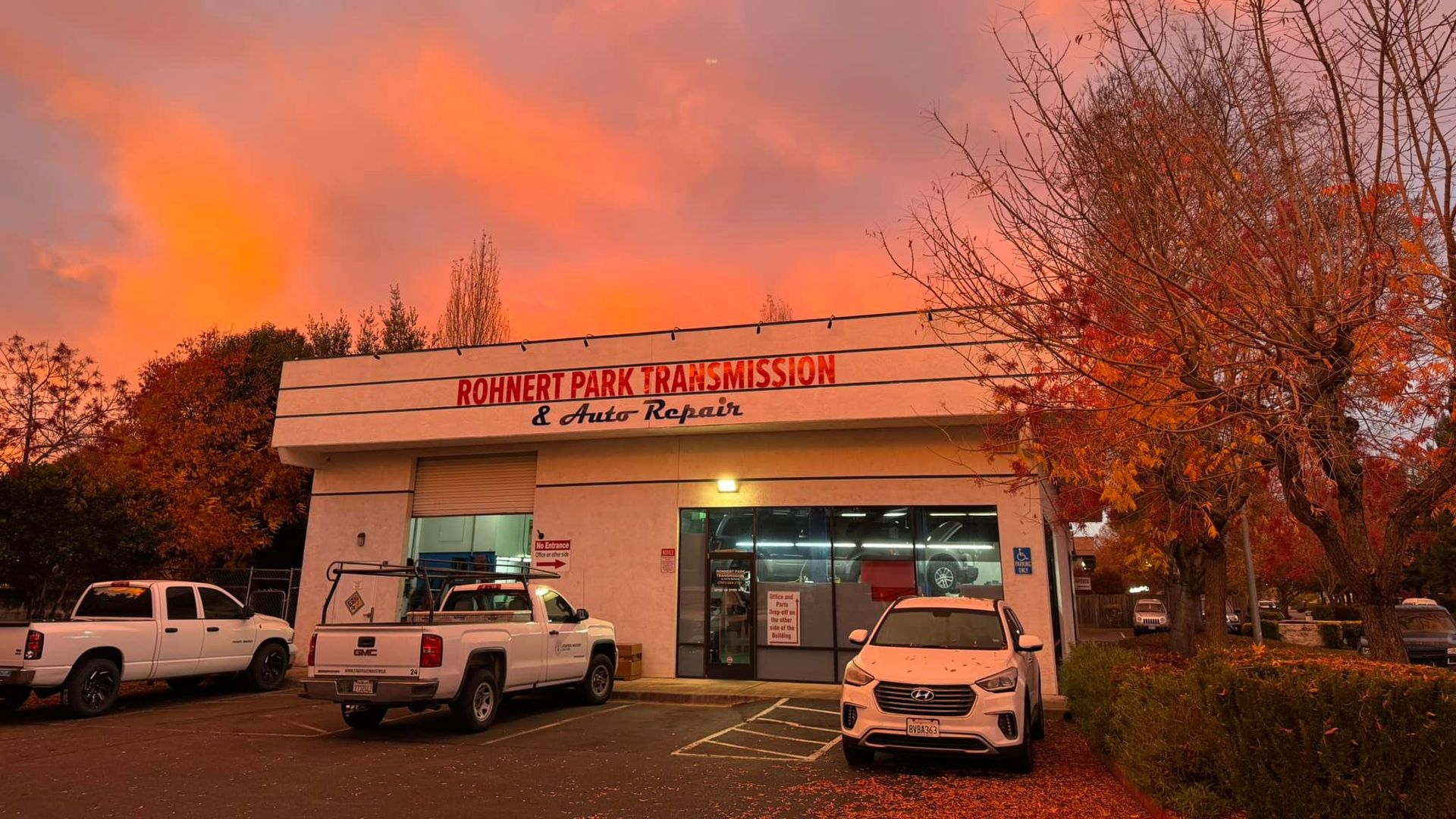
Rohnert Park Transmission & Auto Repair diagnoses transmission whining noise at 305 Laguna Dr in Rohnert Park for drivers from Cotati, Santa Rosa, Petaluma, Sebastopol, Windsor, and the rest of Sonoma County. If the whine started suddenly, got louder quickly, came with slipping, or showed up after a fluid service, call (707) 584-7727 before you keep driving.
Quick Answer: What Your Transmission Whine Pattern Usually Means
| When You Hear the Whine | Most Likely Direction | Urgency | Best Next Step |
|---|---|---|---|
| In park or neutral | Pump noise, torque converter, fluid aeration, or engine accessory noise | Medium to high | Check fluid level and isolate engine-speed noise |
| When shifting into reverse | Higher reverse pressure, pump load, valve body, or internal wear | High | Do not ignore if engagement is delayed or harsh |
| Only during acceleration | Low fluid, pump pressure, torque converter, bearing, gear, CVT, or differential load noise | High if new or getting louder | Road-test diagnosis before more highway driving |
| Only while coasting or decelerating | Output bearing, differential, final drive, transfer case, or gear wear | Medium to high | Separate speed-related drivetrain noise from engine RPM noise |
| When turning the wheel | Often power steering, wheel bearing, CV joint, or tire noise rather than transmission | Depends on steering feel | Inspect steering and suspension before blaming the transmission |
| After a fluid change | Incorrect level, wrong fluid, filter seal issue, air in fluid, or restricted flow | High | Recheck the service procedure and fluid specification immediately |
Dealing with this issue in Sonoma County?
Our ASE and ATRA certified shop team diagnoses the real problem instead of guessing.
Serving the North Bay:
The table is not a replacement for diagnosis. It is a triage map. The same sound can come from different parts depending on the vehicle, transmission type, fluid condition, mileage, and whether the whine follows engine RPM or road speed.
Is a Transmission Whining Noise Serious?
Sometimes it is a warning that the fluid is low, the filter is restricted, or the wrong fluid was used. Caught early, that may stay in the maintenance or targeted-repair lane. Other times, the whine means metal parts are already running hot, bearings are worn, a pump is struggling, or a CVT belt, chain, pulley, or bearing is beginning to fail.
The practical rule is simple: a new whine should be checked quickly, and a whine with slipping, delayed engagement, grinding, burning smell, leaks, overheating, or warning lights should not be driven normally. Transmission problems tend to compound. Low pressure creates heat. Heat damages fluid. Damaged fluid reduces lubrication. Reduced lubrication accelerates wear.
For Sonoma County drivers, this matters because a short errand can turn into sustained load quickly. Highway 101, Rohnert Park Expressway, the hills toward Sebastopol and Sonoma, and stop-and-go Santa Rosa traffic all load the transmission differently. If the noise gets louder under those conditions, the vehicle needs a professional check before the damage path gets wider.
First, Make Sure It Is Actually the Transmission
Drivers often describe any high-pitched sound as a transmission whine. That is understandable, but it can lead to the wrong repair if nobody isolates the source.
Common non-transmission causes include a serpentine belt, idler pulley, alternator bearing, water pump bearing, power steering pump, wheel bearing, differential, transfer case, tire pattern noise, or even an exhaust heat shield that vibrates at a narrow RPM range.
A quick clue: if the noise happens while the vehicle is stopped and you gently raise engine RPM in park, the sound may be engine accessory, pump, torque converter, or fluid-related. If it only happens while the vehicle is moving, the shop has to compare vehicle speed, engine RPM, gear selection, throttle load, and whether the sound changes while turning.
1. Low, Degraded, or Incorrect Transmission Fluid
Low fluid is one of the first things to rule out because it can cause noise and damage at the same time. Automatic transmissions and CVTs rely on fluid for lubrication, cooling, hydraulic pressure, clutch control, and torque transfer. When the fluid level is low, the pump can pull air, pressure can drop, and internal parts can make a whining or buzzing sound.
Fluid does not vanish on its own. If the level is low, the next question is where it went: pan gasket, axle seal, cooler line, case connector, front pump seal, or a prior service that was not filled correctly. Topping it off without finding the leak may only buy a little time.
Incorrect fluid is just as important. Modern automatics, dual-clutch units, and CVTs are picky about friction behavior. A universal fluid or wrong CVT fluid can create noise, shudder, pressure problems, and accelerated wear. That is why Rohnert Park Transmission verifies the fluid specification instead of treating every transmission fluid the same.
2. Clogged Filter, Restricted Cooler Flow, or Fluid Aeration
A clogged filter or restricted pickup can starve the pump even when the fluid level looks close. A restricted cooler line can also raise heat and pressure problems. The driver may hear a whine, feel delayed engagement, or notice the transmission acts worse after warming up.
Aerated fluid is another pattern. If the pump pulls air, the fluid can foam. Foamy fluid cannot carry pressure or lubricate correctly. That can create a whining or gurgling sound and make shifts inconsistent. This is one reason a proper fluid level check must follow the vehicle-specific temperature and procedure, not just a cold dipstick glance.
3. Transmission Pump or Line Pressure Problems
Get an accurate repair quote — not an internet estimate.
Every vehicle is different. Call for transparent, honest pricing.
Serving the North Bay:
The transmission pump creates the hydraulic pressure that applies clutches, moves valves, feeds the torque converter, and circulates fluid. A pump whine may follow engine RPM because the pump speed rises as the engine speed rises. It may be louder in gear, reverse, or under load depending on how the hydraulic circuit is being used.
Pump noise does not automatically mean the pump itself is the only failed part. Low fluid, a cracked filter neck, a bad seal, restricted cooler flow, worn pressure regulator components, or internal leakage can make the pump work harder or cavitate. A pressure test and scan data are how a specialist separates cause from symptom.
4. Torque Converter or Lockup Clutch Problems
In an automatic transmission, the torque converter sits between the engine and transmission. It transfers engine torque through fluid and uses a lockup clutch at cruise speed to reduce slip and heat. A worn converter, damaged converter bearing, contaminated fluid, or lockup clutch issue can create whining, shudder, vibration, or RPM flare depending on the failure mode.
If the whine appears at highway speed around the same time the converter should lock up, the diagnosis should include torque converter slip data and lockup command data. If the vehicle also has P0740, P0741, P0742, P0743, or P0744 codes, read our torque converter lock-up solenoid guide before assuming the converter itself is the only suspect.
5. Internal Bearings, Gears, Differential, or Final Drive Wear
A whine that rises with vehicle speed, even when engine RPM changes, often points deeper into the drivetrain. That could be an output shaft bearing, differential bearing, final drive gear wear, transfer case issue, or internal transmission bearing. These sounds may be louder under load, quieter while coasting, or the opposite, depending on which side of the gear teeth is loaded.
This is where a transmission specialist earns the diagnostic time. Replacing fluid may not quiet a worn bearing. Replacing a transmission may be unnecessary if the source is a differential or wheel bearing. The diagnosis has to localize the noise before the repair plan makes sense.
6. CVT Whining Noise
CVTs deserve their own section because they can have a different normal sound profile from a traditional automatic. Some CVTs have a light whir or whine during acceleration. The concern is a new sound, a louder sound, a whine paired with slipping or hesitation, or a whine that appears after fluid service.
Common CVT whine causes include degraded CVT fluid, incorrect fluid, belt or chain wear, pulley surface wear, bearing wear, pressure-control issues, overheating, or internal contamination. Nissan, Subaru, Honda, Toyota, and other CVTs all have specific fluid and diagnostic requirements. Generic fluid or a guess-based service can make the problem worse.
If your vehicle has a CVT and the whine is getting louder, schedule diagnosis before long highway trips or hill driving. CVTs can move from noise to drivability failure quickly once pressure control or belt/chain wear becomes severe.
7. Manual Transmission Whine
Manual transmission whine has a different diagnostic path. A whine that changes when the clutch pedal is pressed can point toward clutch release bearing, pilot bearing, input shaft bearing, or internal gear/bearing wear. A whine that changes by gear can point to gear-specific wear. A whine that follows road speed can point to output shaft, differential, or final drive issues.
Manual transmissions also need the correct lubricant. Old, low, or incorrect gear oil can make bearings and gears noisy. But if metal has already contaminated the oil, a fluid change alone may not be enough. A technician may need to inspect the fluid for metallic debris and evaluate whether internal wear has progressed.
When to Stop Driving
Get an accurate repair quote — not an internet estimate.
Every vehicle is different. Call for transparent, honest pricing.
Serving the North Bay:
Do not keep driving normally if the whining noise comes with any of these symptoms:
- Transmission slipping, RPM flare, or delayed engagement
- Grinding, banging, or harsh engagement into drive or reverse
- Burning smell or smoke
- Red, brown, or dark fluid leaking under the vehicle
- Transmission temperature warning or check engine light with transmission codes
- No movement in drive or reverse
- Whine that suddenly got much louder
- Whine after a recent fluid service, especially if shifting changed too
If the vehicle still moves normally but the whine is new, keep the driving conservative and schedule a diagnostic appointment. Avoid towing, mountain driving, aggressive acceleration, and long highway trips until the fluid level, codes, and noise source are checked.
What a Proper Transmission Whine Diagnostic Includes
A good diagnosis should not begin with a guess. At Rohnert Park Transmission & Auto Repair, the diagnostic path depends on the symptom, but a complete transmission whine inspection may include:
- Symptom interview: when the noise happens, hot or cold, in which gear, under what load
- Road test to compare engine RPM, vehicle speed, gear command, throttle, and coast conditions
- Fluid level and condition check using the correct vehicle-specific procedure
- Leak inspection around pan, seals, cooler lines, connectors, and case areas
- Scan tool review for transmission codes, pressure data, slip data, temperature, and solenoid commands
- Listening-tool inspection to separate transmission, converter, differential, wheel bearing, and accessory noises
- Line pressure or CVT pressure testing when the symptom points to hydraulic control
- Pan, filter, or fluid sample inspection when contamination is suspected
The goal is to answer four questions: Is the noise actually from the transmission? Is it fluid, pressure, converter, bearing, gear, CVT, or external drivetrain related? Is the vehicle safe to drive? What is the smallest repair that actually fixes the cause?
Repair Direction: What Usually Fixes a Whine
There is no single repair for a transmission whine. The fix depends on the cause. A low-fluid whine may need leak repair and the correct fill procedure. A wrong-fluid whine may need a careful fluid service using the correct specification. A filter or cooler restriction may need service and retesting. A pump, torque converter, valve body, bearing, differential, or CVT pulley problem may require a deeper repair plan.
A trustworthy shop should explain the evidence before asking you to approve work. That evidence may be contaminated fluid, pressure readings, scan data, code history, visible leaks, road-test behavior, or a localized noise source. Without that evidence, a whining noise is too easy to misdiagnose.
Why Local Diagnosis Matters in Sonoma County
Rohnert Park, Cotati, Santa Rosa, Petaluma, and Sebastopol drivers put transmissions through mixed conditions: short trips, freeway merging on 101, stop-and-go traffic, heat, hills, and occasional towing or loaded vehicles. A transmission that only whines under load may sound normal around the block but show up clearly on the right road test.
That is why we ask when the noise happens, not just what it sounds like. A whine climbing the grade toward Sonoma, a whine after a hot commute from Santa Rosa, and a whine only during parking-lot turns are three different diagnostic stories.
Bottom Line
A transmission whining noise is a warning, not a verdict. The sound may be as simple as fluid level, as specific as a torque converter or pressure-control problem, or as serious as internal bearing, gear, CVT, or differential wear. The fastest way to protect the vehicle is to diagnose the pattern before the problem spreads.
Rohnert Park Transmission & Auto Repair is an ATRA member shop with ASE certified technicians serving Rohnert Park and Sonoma County. Call (707) 584-7727 or schedule service online for a transmission noise diagnostic and a clear repair estimate before you keep driving on a worsening whine.
Tags:
Written by
Fernando Gomez
Owner, Rohnert Park Transmission & Auto Repair
Fernando brings over 28 years of automotive repair experience to every diagnosis and repair. As the owner of Rohnert Park Transmission & Auto Repair, he leads a team of ASE-certified, ATRA-member technicians specializing in transmission diagnostics, complex drivability issues, and preventive maintenance — with a focus on getting it right the first time.
Need Professional Auto Service?
Trust your vehicle to Rohnert Park's transmission and auto repair experts. We offer comprehensive diagnostics and repairs with a commitment to quality and transparency.
Related Articles
Low Transmission Fluid Symptoms Guide
How low or degraded fluid changes shifting, pressure, heat, and internal transmission wear.
Transmission Shudder Guide
How shudder differs from whining, slipping, vibration, and torque converter clutch problems.
Torque Converter Lock-Up Solenoid Guide
TCC lockup symptoms, converter slip, solenoid codes, and highway-speed transmission problems.
Transmission Repair Services
Transmission diagnostics and repair for automatic, manual, CVT, transfer case, and drivetrain issues.