SHIFT SOLENOID REPAIR & REPLACEMENT
Late, harsh or missing shifts and a P0750 to P0770 code usually mean a shift solenoid or valve body, not a new transmission. Find out how we prove which one before any part is replaced. For Rohnert Park, Cotati, Penngrove, Petaluma and Santa Rosa.
CALL FOR SERVICE: (707) 584-7727Professional Shift Solenoid Repair & Replacement in Rohnert Park, CA
Key Takeaway: A shift solenoid is a small electric valve that routes fluid to make a shift. When one sticks or fails, the car shifts late or hard, holds a gear, or drops into limp mode with a code between P0750 and P0773. Core Transmission Parts says most shift solenoids read 18 to 25 ohms, and that most shops replace the wrong one by skipping the fluid, scan-data and electrical checks. We run those checks first, then tell you whether it is one solenoid, a solenoid pack or the valve body.
Shift solenoid repair means proving which solenoid or hydraulic circuit is at fault, then replacing the solenoid, the solenoid pack or the valve body, with new fluid and a filter, and any programming the control module needs afterward. The transmission usually stays in the car.
Rohnert Park Transmission & Auto Repair is a transmission specialist with ATRA and ASE certified technicians. Under California law you get a written estimate listing the parts and the repair method before any work starts.
Call with the year, make, model and any codes, and tell us when the shifting changed. Drivers come to 305 Laguna Dr from Rohnert Park, Cotati, Penngrove, Petaluma, Santa Rosa and Sebastopol.
What a Shift Solenoid Does, and Why One Failing Feels So Bad
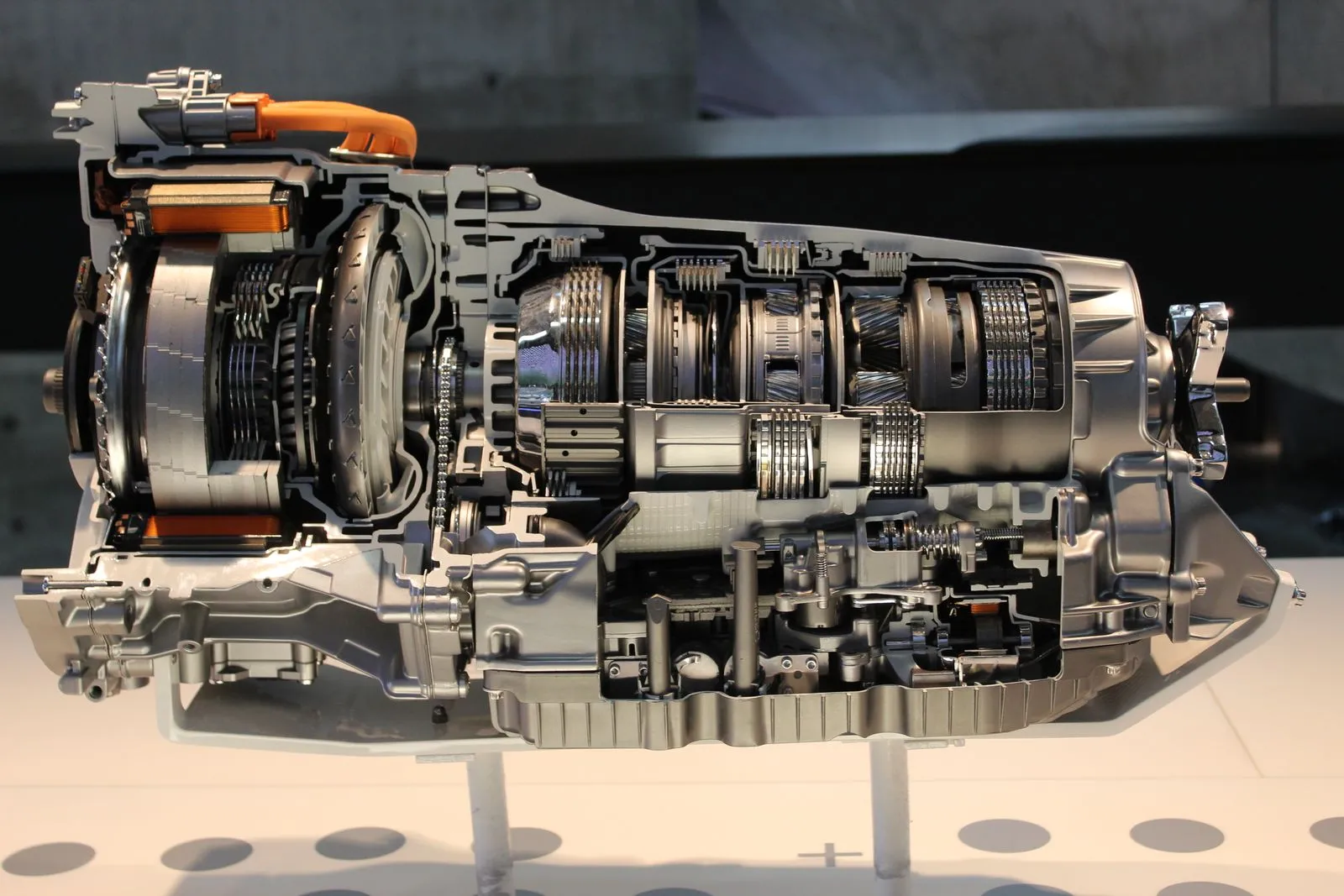
An automatic transmission shifts by sending fluid pressure to one clutch pack and releasing another. The shift solenoids are the small electric valves that open and close those fluid paths. The transmission control module tells them when. RepairPal describes a plunger inside a magnetic coil. When the module powers the coil, the plunger moves. Pressurized fluid then flows to the parts that make the shift. There are two or more shift solenoids, usually built into the valve body in the pan.
Core Transmission Parts counts anywhere from 4 to 12 solenoids in a modern automatic. Only some are shift solenoids. The others set line pressure and run the torque converter clutch. That last one, the TCC solenoid, gets its own codes and its own page: torque converter lockup solenoid guide. A shift interlock solenoid is a different part again. It locks the shifter in Park until you press the brake, and it is not covered here.
RepairPal notes that shift solenoids work submerged in transmission fluid and fail mostly from years of hot and cold cycling. Old fluid makes it worse. TroubleCodes.net says the usual fault is debris, not the electrical part. The debris blocks the solenoid's mechanical action or the fluid flow in the valve body.
Signs of a Failing Shift Solenoid
Most drivers feel it before the light comes on. Here is what to watch for, what it can mean, and what to do next:
Swipe sideways to see the whole table.
| What you notice | What it can mean | What to do |
|---|---|---|
| Shifts come late, or bang into second or third | RepairPal says a problem with one or more shift solenoids can cause a lack of pressure, giving hard, soft or delayed shifts. | Book a check soon. Note which shift it is and whether it is worse cold or hot. |
| Stuck in one gear, engine revving high on the highway | A solenoid that cannot route fluid to the next clutch, or the computer holding a gear to protect the transmission. | Have the codes read before anyone orders parts. Keep highway trips short. |
| Check engine light with a code between P0750 and P0773 | RepairPal says the control module watches the shift solenoids and asks for the light when it sees a solenoid or circuit problem. | Write down every code, not just the first one. Several at once point to a shared cause. |
| Car in limp mode: no upshifts, stuck in second or third | RepairPal says the control module may force second or third gear to limit speed when it sees a shift solenoid problem. | Drive straight home or to us. Do not keep commuting in limp mode. |
| Slipping: engine revs rise but the car does not pick up speed | RepairPal lists slippage as a bad-solenoid symptom, but worn clutches cause it too. | Stop driving and call. Slipping burns the fluid and the clutches fast. |
| No reverse, or a long pause before the car moves | Can be a solenoid, a valve body or low fluid. The scan data tells them apart. | Check the fluid level the way your owner's manual says, then call us. |
The Codes: P0750 Through P0773 and What They Say
Each shift solenoid has its own block of codes. The first code in each block is the circuit fault. The next three say how the solenoid misbehaved: performance or stuck off, stuck on, or electrical. The code names the circuit, not the part. It tells us where to look, not what to replace.
Swipe sideways to see the whole table.
| Codes | Solenoid | Shift it usually controls |
|---|---|---|
| P0750 / P0751 / P0752 / P0753 | Shift solenoid A | Usually the 1-2 shift (Core Transmission Parts) |
| P0755 / P0756 / P0757 / P0758 | Shift solenoid B | Usually the 2-3 shift |
| P0760 / P0761 / P0762 / P0763 | Shift solenoid C | Usually the 3-4 shift or overdrive |
| P0765 / P0766 / P0767 / P0768 | Shift solenoid D | Extra shifts on some models |
| P0770 / P0771 / P0772 / P0773 | Shift solenoid E | Extra shifts on transmissions with more gears |
- P0700 usually comes with them. It only says the transmission module has a fault stored. A basic code reader often shows P0700 and misses the P075x code behind it. Our P0700 code guide explains why.
- Several solenoid codes at once rarely mean several solenoids died together. Core Transmission Parts says the cause is often the internal wiring lead frame or the control module.
- A solenoid code with the solenoid testing fine points at the valve body, an accumulator or low fluid. Core Transmission Parts gives P0750 with a harsh 1-2 shift as the classic example. The solenoid is commanded correctly, but the hydraulics are not delivering.
How We Prove It Is the Solenoid Before Replacing Anything
Core Transmission Parts says most shops skip the checks and replace solenoids from the code. The result is comebacks. Our transmission diagnostic runs in this order:
- Codes and freeze-frame data. Every code, with the speed, temperature and throttle position when it set. We also check for factory bulletins and software updates, which GEARS Magazine puts before any teardown.
- Fluid level and condition. Low fluid sets electronic codes. Burnt fluid means a mechanical problem a solenoid will not fix. GEARS Magazine notes GM's 6T40 must be checked with the engine running and the fluid at 185 to 205°F, in Park. Half a quart too much can push fluid out of the vent.
- Live data on a road test. We watch each solenoid's command against what the transmission does. GEARS Magazine says scan data is the only way to examine solenoid commands.
- Electrical test. Resistance and continuity of the suspect solenoid against the maker's spec. Core Transmission Parts gives 18 to 25 ohms for most shift solenoids. On GM's 6T40 the shift solenoid should read 16 to 20 ohms, and the pressure control solenoids 3 to 5 ohms (GEARS Magazine). Out of range means the solenoid is bad. In range means we look elsewhere.
- Pressure and valve body. If the electrical side checks out, we test line and apply pressure and inspect the valve body for worn bores and sticking valves.
- Then the estimate, in writing, listing the parts and the method of repair.

Single Solenoid, Solenoid Pack or Valve Body?
This is the decision that matters most, and it depends on your transmission:
- One solenoid. Core Transmission Parts says a single solenoid code with a verified electrical fault calls for replacing just that solenoid. On GM's 6T40, GEARS Magazine says you may be able to replace just the solenoid in question.
- The whole pack. On some units the solenoids are sold and serviced only as a block. GEARS Magazine's 6T40/45 guidance when an air test fails is to replace the complete control solenoid assembly. Core Transmission Parts adds that an older transmission with several solenoid codes after a lot of hot running often needs the pack, not one part.
- The valve body. RepairPal says that in some cases the solenoid is built into the valve body and cannot be serviced on its own. Then the whole valve body is replaced. Worn valve body bores are a valve body fix, not a solenoid fix (Core Transmission Parts). Our valve body repair guide goes deeper.
- Fluid and filter come with the job. The pan is off, so the filter is replaced and the transmission is refilled with the fluid your maker specifies.
- Programming afterward. RepairPal says the control module may need to be reprogrammed after a solenoid or valve body replacement. On Ford six-speeds such as the 6F35, 6F50, 6R80 and 6R140, each solenoid has a strategy number the module must be told. GEARS Magazine warns that skipping it risks a mismatch between the computer control and the solenoid response.
What Decides the Cost of Shift Solenoid Replacement
We do not publish prices, because the same code on two cars can be very different jobs. These are the things that set the price:
- Vehicle and transmission family. Where the solenoids sit and how they are sold for your unit.
- One solenoid, a pack or the valve body. Core Transmission Parts puts labor at 2 to 6 hours for a single solenoid and 4 to 8 hours for a pack, depending on access.
- Whether the transmission has to come out. Most solenoid work is done through the pan with the transmission in the car. Some designs are not.
- Fluid type and quantity. CVT and some newer automatics use fluids that cost more than standard ATF.
- Programming. Strategy numbers or adaptive relearns after the repair, where the maker requires them.
- Damage already done. If slipping has burnt the fluid or the clutches, the job moves from a solenoid to transmission repair.
Call (707) 584-7727 with the year, make, model and the codes, and we will give you a free estimate before any work starts.
Can You Keep Driving With a Bad Shift Solenoid?
- Occasional late or firm shift, no light: book a check soon and avoid long highway trips.
- Limp mode: RepairPal says the module forces second or third gear to limit your speed. That protects the transmission, but it also means high revs and heat on the highway. Drive straight to us or home.
- Slipping, or a burnt smell: stop and call. RepairPal says to avoid highway use and have it towed if necessary, because an unchecked solenoid fault can damage the transmission.
- Before any repair, run your VIN through NHTSA's recall search to see whether a recall covers your transmission.
Our limp mode guide explains what the computer is protecting and how to get out of it safely.
Your Rights in California: A Written Estimate Before Any Work
California's Bureau of Automotive Repair says a repair shop must give you a written estimate before doing any work. It must show the total for parts and labor, list the parts and state the method of repair. The shop has to stick to it unless you agree to a change. You can ask for your old parts back when the work order is placed. Then you can see the solenoid or valve body that came out.
Shift Solenoid Repair in Rohnert Park, Cotati, Petaluma and Santa Rosa
Tell us the codes and when the shifting changed. We are at 305 Laguna Dr in Rohnert Park, a short drive from Cotati, Penngrove, Petaluma, Santa Rosa and Sebastopol. Hours: Mon–Thu 7:30 AM – 5:00 PM, Fri 7:00 AM – 3:00 PM.
Sources
- Core Transmission Parts, "Transmission Solenoid Replacement: When, Why, and How to Avoid Wrong Diagnosis" (May 31, 2026; read October 28, 2026)
- RepairPal, "Signs You've Got a Bad Shift Solenoid" (Mia Bevacqua, ASE Master L1-L3, April 10, 2018)
- TroubleCodes.net, "P0750 Shift Solenoid (SS) A Circuit Malfunction" (John Kershaw, updated January 17, 2016)
- GEARS Magazine (ATRA), "6T40/45 Diagnosis and Fixes" (Mike Brown, September 1, 2017)
- GEARS Magazine (ATRA), "Understanding GM 6T40 Solenoids" (Jarad Warren, June 5, 2017)
- GEARS Magazine (ATRA), "Ford Solenoid Strategy Numbers: Is It Necessary to Program?" (Keith Clark, March 1, 2019)
- NHTSA, Check for Recalls (search by VIN or license plate)
- California Bureau of Automotive Repair, A Consumer's Guide to Auto Repair (PDF)
Why Choose Our Shift Solenoid Repair & Replacement?
- ✓A transmission specialist, with ATRA and ASE certified technicians
- ✓Codes, fluid, live scan data and an electrical test before any solenoid is ordered
- ✓A straight answer: one solenoid, the pack or the valve body
- ✓Fluid and filter replaced with the job, and programming done where the maker requires it
- ✓A written estimate listing parts and the repair method before work starts, as California law requires
- ✓A free estimate by phone: call with the year, make, model and codes
Book a Shift Solenoid Check in Rohnert Park
Call with the year, make, model and any codes, and tell us when the shifting changed. We will confirm what is at fault and give you a free estimate before any work starts.
CALL US NOW: (707) 584-7727Frequently Asked Questions About Shift Solenoid Repair & Replacement
How do you diagnose a bad shift solenoid?
In this order: read the codes and the freeze-frame data, check the fluid level and condition, watch the solenoid commands against what the transmission actually does on a road test, then test the suspect solenoid electrically. Core Transmission Parts gives 18 to 25 ohms as the resistance range for most shift solenoids. GEARS Magazine says scan data is the only way to examine solenoid commands. If the solenoid tests good, the fault is somewhere else, often the valve body, and we keep looking before anything is replaced.
How many shift solenoids are in a transmission?
It depends on the transmission. RepairPal says there are two or more shift solenoids, usually built into the valve body. Core Transmission Parts puts the full solenoid count at anywhere from 4 to 12, counting the shift, torque converter clutch and pressure control solenoids. GM's 6T40 six-speed, for example, has six pressure control solenoids and one on/off shift solenoid (GEARS Magazine). Call with your year, make and model and we will tell you what yours has.
Can you change a shift solenoid without removing the transmission?
Often, yes. On many transmissions the solenoids sit on the valve body inside the pan, so the pan comes off and the transmission stays in the car. On some vehicles the solenoids are outside the case and even easier to reach. Core Transmission Parts puts the labor at 2 to 6 hours for a single solenoid and 4 to 8 hours for a solenoid pack, depending on which solenoid it is and how accessible it is. Some newer units have the control module built into the valve body, which changes the job.
Can a bad shift solenoid be fixed with a fluid change?
Sometimes, if the real problem is dirty fluid. TroubleCodes.net says a shift solenoid fault is usually debris blocking the solenoid's mechanical action or fluid flow in the valve body, not the electrical part. Fresh fluid and a filter, and on some GM units a scan-tool solenoid cleaning routine (GEARS Magazine), can clear it. If the solenoid is out of its resistance range, or the fluid is burnt, a fluid change will not fix it. We test before we recommend either.
Is it worth fixing a shift solenoid?
Usually, yes. A solenoid is a small part compared with a rebuild. The exception is a transmission with burnt fluid or clutch material in the pan, where a solenoid is only the first thing to fail. Our diagnosis tells you which case yours is before you spend anything on parts.
How much does shift solenoid replacement cost?
We do not publish prices. The things that set the cost are the vehicle and transmission family, whether one solenoid can be replaced or only a full pack is sold, whether the valve body itself is worn, whether the pan or the valve body has to come out, the fluid and filter that go with the job, and any programming the control module needs afterward. Call (707) 584-7727 with your year, make, model and the codes, and we will give you a free estimate.
Is a shift solenoid covered by a powertrain warranty?
Shift solenoids are part of the transmission, so many factory powertrain warranties cover them while the warranty is in force. Check your warranty booklet or ask your dealer, and run your VIN through NHTSA's recall search in case a recall or extended coverage applies. If your coverage has ended, call us for a free estimate.
Do you work on CVT solenoids?
Yes. CVTs use solenoids too, for line pressure, the ratio control and the torque converter clutch, and they set their own codes. Our CVT transmission repair page covers the Nissan, Honda, Toyota and Subaru units we see most. The diagnosis follows the same order as a conventional automatic: codes, fluid, scan data, then an electrical test.
Where can I get a shift solenoid replaced near Rohnert Park?
Rohnert Park Transmission & Auto Repair is at 305 Laguna Dr in Rohnert Park, a short drive from Cotati, Penngrove, Petaluma, Santa Rosa and Sebastopol. Call (707) 584-7727 or book online. Tell us the year, make, model, any codes you have, and when the shifting changed.
Have more questions? We're here to help!
Call (707) 584-7727Get In Touch
Related Services
Serving Nearby Cities
We proudly serve customers from throughout Sonoma County
Our Certification

ATRA & ASE Certified for Expert Transmission Service