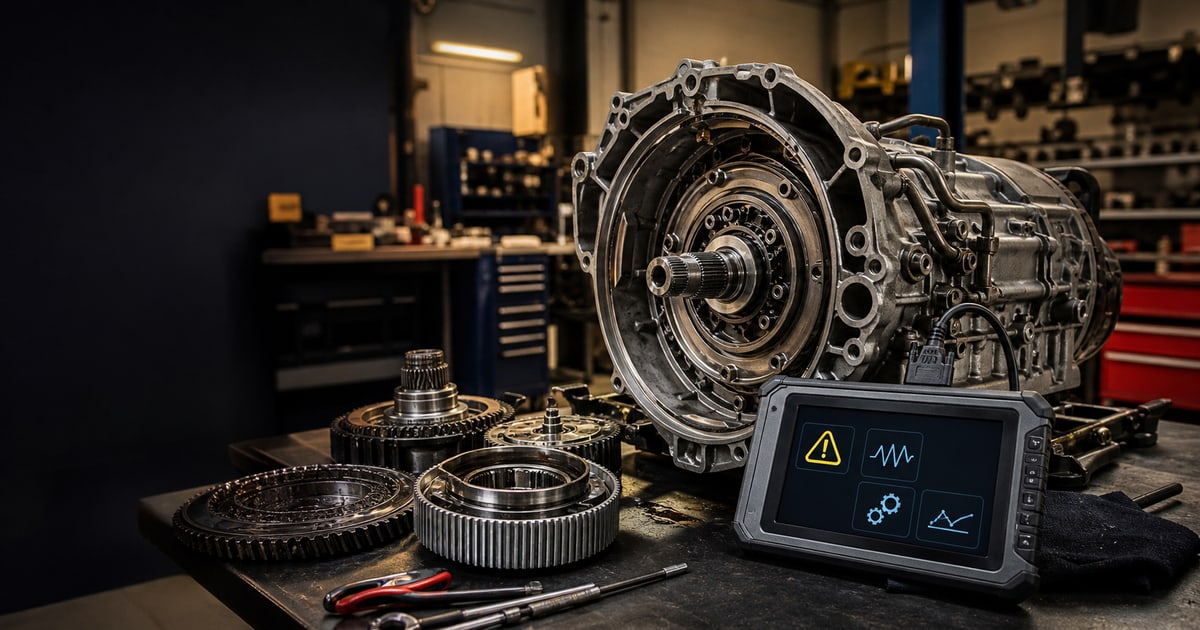
P0730 is one of the transmission codes you do not want to guess on. The official label is "Incorrect Gear Ratio," but that phrase does not tell a driver what is actually happening. In real shop terms, P0730 means the transmission computer asked for a certain gear and the transmission did not produce the speed relationship that gear should create. The vehicle may still move, but the computer can see that the transmission is slipping, applying the wrong ratio, losing hydraulic pressure, or reading bad speed data.
That is why P0730 matters. A loose gas cap code can wait. A transmission ratio code should not. If your vehicle is flaring RPM, shifting late, dropping into limp mode, smelling burnt, or struggling to move in Drive or Reverse, every extra mile can turn a repairable problem into a much larger transmission failure. At Rohnert Park Transmission & Auto Repair, we treat P0730 as a root-cause diagnosis, not a parts-guessing job.
Quick Answer: What P0730 Means
P0730 means the transmission control module detected an incorrect gear ratio. The module compares input speed, output speed, commanded gear, vehicle speed, throttle position, engine load, and torque converter behavior. When those numbers do not line up, it stores P0730.
In plain English: the transmission is not transferring engine power through the expected gear ratio. That can happen because the transmission is physically slipping, because hydraulic pressure is too weak to hold a clutch pack, because a solenoid or valve body circuit is not applying the right clutch, or because a speed sensor is feeding the computer bad information.
Dealing with this issue in Sonoma County?
Our ASE and ATRA certified shop team diagnoses the real problem instead of guessing.
Serving the North Bay:
Why Generic Code Explanations Are Not Enough
Most P0730 search results explain the code in generic OBD-II language. They define "incorrect gear ratio," list a few causes, and stop right where the driver actually needs help: deciding whether the vehicle is safe to drive and what a real transmission shop should test before recommending repair.
This guide goes further. It explains what P0730 feels like, what usually causes it, how it connects to P0700 and other transmission codes, why a free parts-store scan is not enough, and how a transmission specialist separates a sensor problem from a hydraulic or internal transmission problem.
Symptoms That Usually Come With P0730
A P0730 code can appear with mild symptoms at first, or it can show up when the transmission is already struggling badly. Pay attention to how the vehicle behaves before the code appeared, because the symptom pattern tells the story.
- Engine RPM rises but vehicle speed does not increase normally
- Harsh shift, delayed shift, or a flare between gears
- Vehicle starts in a higher gear or feels stuck in one gear
- Check engine light or transmission warning light
- Limp mode with reduced speed and limited shifting
- Burning smell from overheated transmission fluid
- No reverse, weak reverse, or delayed reverse engagement
- Shudder at highway speed or under light throttle
If the vehicle is slipping or burning fluid, do not keep driving it to "see what happens." Slipping creates heat. Heat breaks down fluid. Broken-down fluid carries friction material through the valve body and solenoids. That is how a smaller problem becomes a major repair.
Is It Safe to Drive With P0730?
The safe answer depends on the symptoms. If the vehicle drives normally and the light just appeared, keep the trip short, avoid hard acceleration, avoid towing, avoid steep grades, and schedule diagnosis quickly. Do not clear the code and assume it is gone.
If the vehicle is slipping, stuck in limp mode, overheating, clunking into gear, losing reverse, or smelling burnt, stop driving and arrange a tow. P0730 is not only a warning light. It is the computer saying the transmission is not matching the gear ratio it should be producing.
For Sonoma County drivers, that matters even more. Highway 101 traffic, rolling hills, hot summer commutes, and towing toward the coast all add heat and load. A transmission that is barely holding a ratio on flat roads can fail faster once it gets hot or has to climb a grade.
Common Causes of P0730
| Cause | What It Means | Typical Clue | Best Next Step |
|---|---|---|---|
| Low transmission fluid | The pump cannot build enough hydraulic pressure to hold the gear. | Delayed engagement, slipping, visible leak, or whining. | Find the leak before topping off and driving. |
| Burnt or contaminated fluid | Fluid has lost friction control and may be carrying clutch material. | Dark fluid, burnt smell, shudder, or debris in the pan. | Inspect fluid and pan before recommending repair. |
| Input or output speed sensor fault | The computer may be calculating the wrong ratio from bad data. | Erratic speed readings or companion P0715/P0720 codes. | Test sensor signal and wiring. |
| Shift solenoid or valve body issue | The commanded clutch is not applying with the right timing or pressure. | Harsh shifts, late shifts, stuck gear, or P0750-series codes. | Run solenoid tests and live pressure checks. |
| Worn clutch packs or bands | The gear is commanded, but internal friction parts cannot hold it. | RPM flare, slipping under load, burnt fluid, or debris. | Do not keep driving. Inspect for internal wear. |
| Torque converter clutch issue | Converter slip or lockup problems confuse ratio control and create heat. | Highway shudder, overheating, or P0740/P0741 codes. | Check converter slip data and TCC operation. |
Get an accurate repair quote — not an internet estimate.
Every vehicle is different. Call for transparent, honest pricing.
Serving the North Bay:
P0730 With P0700: The Code Pair That Confuses Drivers
P0730 often appears with P0700. P0700 is the messenger code. It tells the engine computer that the transmission control module stored a fault. P0730 is the more specific clue that the fault involves an incorrect gear ratio.
This is why a basic code reader can mislead you. Some scanners only show P0700 and hide the real transmission code inside the transmission module. A professional scan tool needs to read the transmission control module directly, pull freeze-frame data, and compare the code to live input and output speed readings.
Why P0730 Is Not Always a Rebuild
P0730 can be serious, but it does not automatically mean the transmission is finished. The same code can come from a sensor that lies, a solenoid that sticks, a valve body that leaks pressure, fluid that is too low, or internal clutch material that can no longer hold. Those are very different repairs.
The mistake is jumping straight to the most expensive assumption or, just as bad, replacing the cheapest part without proving it failed. A transmission specialist should prove whether the ratio error is electrical, hydraulic, or mechanical before recommending a repair path.
The Professional Diagnosis Process
1. Read Every Module, Not Just the Engine Computer
The scan starts with the transmission control module. We look for P0730, gear-specific codes like P0731 through P0736, sensor codes like P0715 and P0720, torque converter codes like P0740 and P0741, and shift solenoid codes like P0750 through P0770. The pattern matters more than one code by itself.
2. Check Fluid Level, Condition, and Evidence
Fluid tells the truth. Clean fluid at the correct level points us toward sensors, solenoids, wiring, or valve body control. Burnt fluid, clutch material, or metallic debris points toward heat and internal wear. Low fluid means there is a leak to find before anyone assumes a transmission part failed.
3. Road Test With Live Data
A proper P0730 road test watches commanded gear, actual gear ratio, input speed, output speed, slip speed, throttle position, line pressure commands, and torque converter lockup. The goal is to catch the exact moment the ratio goes wrong.
4. Separate Sensor Data From Real Slip
If the input or output speed sensor is wrong, the computer can calculate a fake ratio error. If the sensors are accurate and the ratio still falls out of range, the transmission is actually slipping or applying the wrong hydraulic circuit.
5. Inspect the Pan When Evidence Points Inside
Dropping the pan can reveal clutch material, metal, overheated fluid, or solenoid screen contamination. That evidence helps separate a targeted repair from an internal transmission failure. It also prevents selling a customer a repair that will not last.
What To Do Right Now
If you just scanned P0730, do these steps before driving more than necessary:
Get an accurate repair quote — not an internet estimate.
Every vehicle is different. Call for transparent, honest pricing.
Serving the North Bay:
- Write down every code, not only P0730
- Notice when the symptom happens: cold, warm, highway, hills, stop-and-go, or reverse
- Check for red or brown fluid under the vehicle
- Avoid towing, steep hills, hard acceleration, and long highway trips
- Call a transmission specialist if there is slipping, burning smell, limp mode, or delayed engagement
Do not clear the code before diagnosis. Freeze-frame data can show the speed, load, gear command, and temperature when the failure happened. Clearing the code can erase that evidence.
Chevy, Jeep, Honda, Ford, and Subaru P0730 Searches
Drivers often search P0730 with a make or model because the symptoms feel different depending on the transmission. A Chevy truck may show a hard shift or flare under load. A Jeep may go into limp mode. A Honda may show delayed engagement or harsh shifts. A Subaru CVT may feel like slipping, surging, or an RPM mismatch instead of a traditional gear change.
The important point is that the code definition stays the same, but the diagnostic path changes by transmission design. A conventional automatic, CVT, dual-clutch, and electronically controlled multi-speed transmission do not fail the same way. That is why make, model, mileage, fluid history, and companion codes all matter.
P0730 Repair Options Without Guessing
The right fix depends on what the test proves. Possible outcomes include correcting fluid level and leaks, replacing a failed speed sensor, repairing a wiring or connector issue, servicing a sticking solenoid, repairing valve body pressure loss, correcting torque converter clutch problems, or addressing internal clutch and gear wear.
Prices vary by vehicle, parts availability, and service complexity. Call (707) 584-7727 for an accurate quote after diagnosis. Publishing generic numbers before the vehicle is inspected creates bad expectations and leads to the wrong repair decision.
Why Rohnert Park Transmission Is Built for This Code
P0730 is exactly the kind of code that separates a transmission specialist from a parts-swap diagnosis. You need scan data, road-test evidence, fluid inspection, pressure logic, and experience with how different transmissions fail. Rohnert Park Transmission & Auto Repair has served drivers from Rohnert Park, Cotati, Santa Rosa, Petaluma, Sebastopol, Windsor, and Sonoma County for decades from our shop at 305 Laguna Dr.
We are not trying to sell every P0730 customer the same repair. We are trying to find the cause before the transmission gets worse. If the fix is targeted, we will tell you. If the evidence points to deeper internal damage, we will explain why and show you what led us there.
Bottom Line
P0730 means the transmission is not producing the gear ratio the computer expects. Sometimes that comes from bad sensor data. Sometimes it comes from weak hydraulic pressure. Sometimes it means the transmission is slipping internally. The only way to know is to diagnose the code with transmission-specific equipment and real evidence.
If your vehicle has P0730, especially with slipping, limp mode, delayed engagement, shudder, or burnt fluid smell, call Rohnert Park Transmission & Auto Repair at (707) 584-7727. For a broader explanation of the master transmission warning code, read our P0700 transmission code guide, and for symptom detail, see our transmission slipping guide.
Tags:
Written by
Fernando Gomez
Owner, Rohnert Park Transmission & Auto Repair
Fernando brings over 28 years of automotive repair experience to every diagnosis and repair. As the owner of Rohnert Park Transmission & Auto Repair, he leads a team of ASE-certified, ATRA-member technicians specializing in transmission diagnostics, complex drivability issues, and preventive maintenance — with a focus on getting it right the first time.
Need Professional Auto Service?
Trust your vehicle to Rohnert Park's transmission and auto repair experts. We offer comprehensive diagnostics and repairs with a commitment to quality and transparency.
Related Articles
P0700 Transmission Code: Complete Guide
Why P0700 appears with other transmission codes and why a basic scanner often misses the real fault.
Transmission Slipping: Expert Guide
How slipping feels, why it gets worse quickly, and what diagnosis should check first.
Low Transmission Fluid Symptoms
Low fluid can cause delayed engagement, slipping, overheating, and ratio codes like P0730.
Torque Converter Lock-Up Solenoid Guide
How torque converter lockup faults can create shudder, heat, and related transmission codes.