TPMS SENSOR REPLACEMENT & TIRE PRESSURE LIGHT REPAIR
Solid light means a tire is 25% low. Flashing means a sensor fault. TPMS sensor replacement, reprogramming and relearn for Rohnert Park, Cotati, Penngrove, Santa Rosa and Petaluma.
CALL FOR SERVICE: (707) 584-7727Professional TPMS Sensor Replacement & Tire Pressure Light Repair in Rohnert Park, CA
Key Takeaway: A solid tire pressure light means at least one tire is 25 percent or more below the pressure on your door-jamb placard. A light that flashes for 60 to 90 seconds at start-up and then stays on means a system fault, usually a dead sensor battery. Fill the tires cold first. If the light stays on or flashes, book a TPMS check. The sensors are tested, the one that failed is replaced, and the car relearns it.
Every passenger car, SUV and light truck built on or after September 1, 2007 has a tire pressure monitoring system (TPMS). Federal standard FMVSS 138 requires it. On most cars that means a small battery-powered sensor inside each wheel. The sensor reports pressure to the car. The car turns on the light when a tire falls 25 percent below its placard pressure. When a sensor dies, the car flashes the same light to say it can no longer watch that tire.
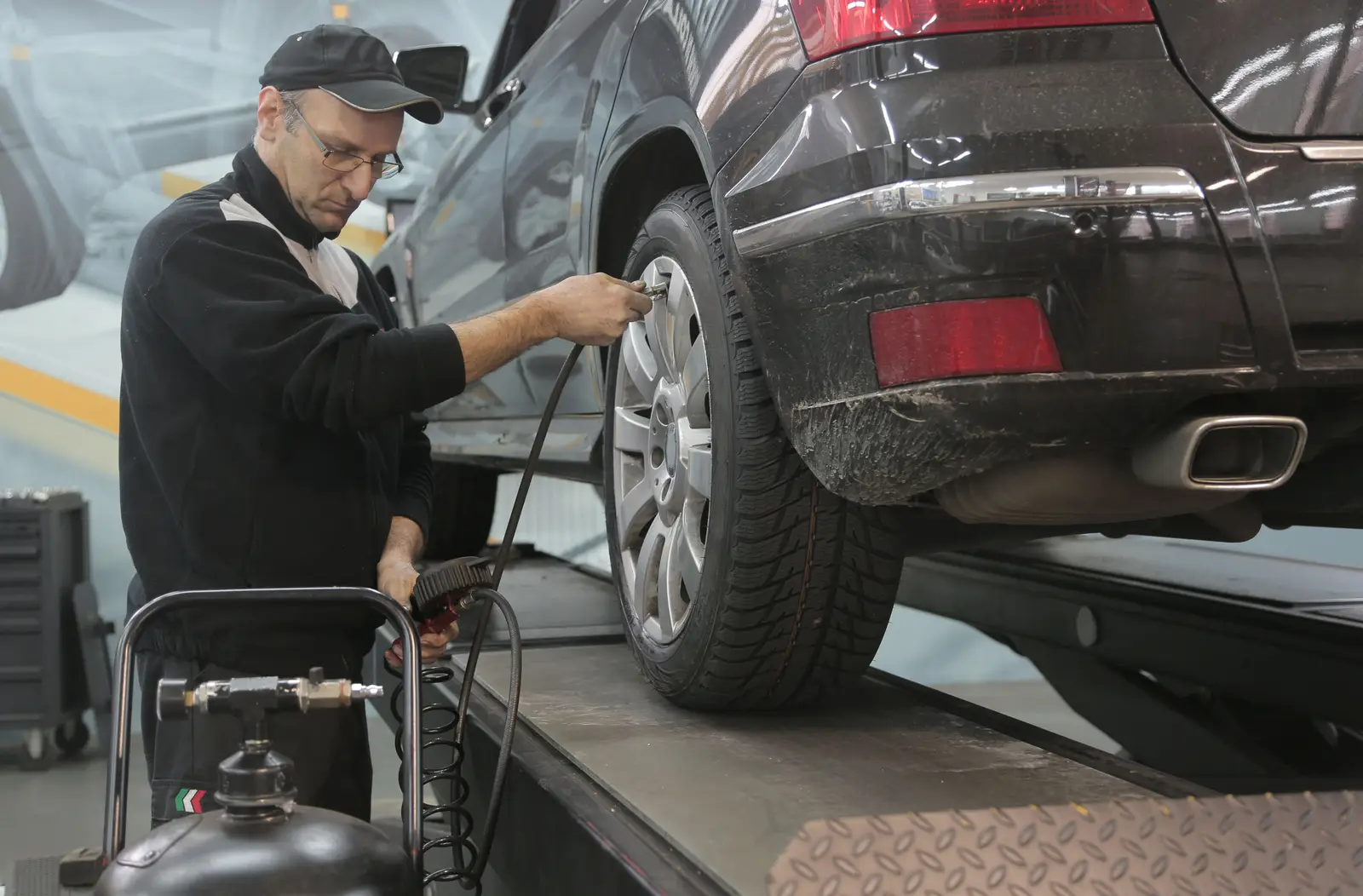
Rohnert Park Transmission & Auto Repair diagnoses and repairs tire pressure monitoring systems, including sensor replacement and reprogramming. Diagnosis starts with a TPMS tool. It triggers each sensor and reads its ID, pressure and battery state. The tires are checked for a leak at the same time. You find out whether you have a low tire, a dead sensor, or a system that was never relearned, before anything is replaced.
The job is more than the sensor. The wheel has to come off and be opened on the tire machine. The new sensor is fitted with a fresh seal and valve core and torqued. The tire is seated and balanced. Then the car has to learn the new sensor's ID with the relearn method its maker specifies. That is the service drivers from Rohnert Park, Cotati, Penngrove, Santa Rosa and Petaluma come to 305 Laguna Dr for.
Solid or Flashing? What the Tire Pressure Light Is Telling You
The federal TPMS standard, FMVSS 138, sets two rules every car built since September 2007 has to follow. The low pressure light must come on within 20 minutes of a tire falling to 25 percent below the placard cold pressure. And on cars that use one combined light, a system fault must flash that light for 60 to 90 seconds at start-up and then leave it on. So the light itself tells you which problem you have.
Swipe sideways to see the whole table.
| What the light does | What it means | What to do |
|---|---|---|
| Solid light on a cold morning | At least one tire is at or below 25% under the placard cold pressure (FMVSS 138 S4.2). Cold air shrinks, so this is common in November to January. | Fill all four tires cold to the door-jamb placard. The light should go out after a short drive. |
| Solid light that stays on after filling | A tire is still losing air (nail, valve, bead), the system needs a reset, or a sensor is reading wrong. | Recheck pressures the next morning. A tire that keeps dropping goes to tire repair. Steady pressures with a lit light is a TPMS check. |
| Flashes 60 to 90 seconds at start-up, then stays on | A TPMS malfunction (FMVSS 138 S4.4): usually a sensor with a dead battery, a damaged sensor, wheels without sensors, or sensors never learned to the car. | The system cannot warn you of a low tire. Check pressures by hand and book TPMS service. |
| Light after new tires or wheels | The new sensors were not relearned, a sensor was damaged on the tire machine, or the new wheels have no sensors. | A relearn with the right procedure for the make, or sensors fitted to the new wheels. |
| Light with a flat or a fast leak | The system did its job. This is a tire problem, not a sensor problem. | Put the spare on if you have one and come in for tire repair. |
A tire that keeps losing air is a tire job, not a sensor job. Our tire repair page covers nails, slow leaks and valve stems. This page covers the sensors and the light.
Why the Light Comes On in Sonoma County From November to January
Two things happen at once here each winter. The air in the tires gets cold, and the oldest sensors run out of battery.
Cold mornings lower the pressure
NOAA's 1991 to 2020 climate normals for Santa Rosa put the average October afternoon high at 78.9°F. The average morning low is 38.2°F in December and 38.4°F in January. That is a 40-degree fall between a warm October fill and a December start. Continental Tires says a 10°C (18°F) change in outside temperature moves tire pressure by 1.6 psi. In some winter climates, it says, tires can drop as much as 5 psi. A tire filled a little low in the fall can reach the 25 percent trigger on the first cold morning.
The sensors are running out of battery
FMVSS 138 required TPMS on every passenger car, SUV and light truck built on or after September 1, 2007. Continental, which makes REDI-Sensor TPMS sensors, says the batteries last anywhere from 5 to 10 years. So any car five or more years old, and especially one built before 2016, is in the window where a sensor goes quiet. The light starts flashing on the same cold morning the pressure drops.
Put the two together and the tire pressure light is a November to January problem across Rohnert Park, Cotati, Penngrove, Santa Rosa and Petaluma. Fill the tires cold first. If the light comes back or flashes, the sensor is the next thing to test.
Direct or Indirect TPMS: Does Your Car Even Have Sensors?
Direct TPMS (most cars)
A battery-powered sensor sits inside each wheel, usually on the back of the valve stem. It measures the real pressure and temperature and sends it by radio to the car. Continental Tires calls this the most common and most accurate type. These are the sensors that wear out and get replaced. Newer cars show each tire's pressure on the dash; older ones only show the light.
Indirect TPMS (no sensors in the wheels)
The car uses its ABS wheel speed sensors instead. A low tire is slightly smaller, so it turns faster than the other three, and the car flags it. There is no sensor in the wheel to replace. After you fill the tires, the system has to be reset from the dash or a button, or the light stays on. Not sure which system your car has? Tell us the year, make and model and we will check before you book anything.
Why a New Sensor Still Needs a Relearn
Each sensor has its own ID. The car only listens to the IDs it has been taught, so a new sensor is silent until the car learns it. Autel, which makes TPMS tools and sensors, describes three relearn methods. The make of the car decides which one applies.
Swipe sideways to see the whole table.
| Relearn type | How it works | Common on |
|---|---|---|
| Auto relearn | The car learns the new sensor IDs while it is driven. Some makes need a reset step first. | Chrysler, Fiat, VW, Porsche, Mercedes-Benz, BMW, Audi, Land Rover, Jaguar |
| Stationary relearn | Done with the car parked. Each sensor is triggered in turn after the car is put in learn mode. | GM, Ford, and some Japanese makes such as Nissan |
| OBD relearn | A TPMS scan tool writes the sensor IDs straight into the car's computer through the OBD port. | Most Japanese and Korean makes, plus Chrysler, Fiat, Land Rover, Jaguar |
This is the step a parts-store sensor swap usually misses. The sensor is fine, the car just does not know it is there, and the light keeps flashing.
What TPMS Sensor Replacement Involves
- Test before replacing. A TPMS tool triggers each sensor and reads its ID, pressure and battery state. The tires are checked for a leak too, because a steady low tire looks like a sensor fault from the driver's seat.
- Match the sensor to the car. OE sensors or programmable aftermarket sensors set to the car's frequency and protocol. The wrong sensor will never learn.
- Open the wheel. The wheel comes off and the bead is pushed off the rim at the valve. The old sensor comes out. The new one goes in with a fresh seal, nut and valve core, torqued to specification.
- Seat, inflate, balance. The tire is seated and set to the placard pressure, then the wheel is balanced before it goes back on.
- Relearn and prove it. Auto, stationary or OBD relearn for that make, then a check that every wheel reports and the light is off.
What Changes the Cost
- OE or programmable sensor. The factory part costs more than a programmable aftermarket sensor set to your car.
- One sensor or all four. The one that failed is replaced. If the others show weak batteries on the tool, doing them in the same visit saves a second mount-and-balance later.
- Whether the tire has to be opened. On a direct system the sensor is inside the wheel, so each wheel comes off and goes on the tire machine.
- Which relearn the car needs. A drive-to-learn make is quicker than one that needs a stationary procedure or a scan-tool relearn through the OBD port.
- Whether a tire is also leaking. A nail or valve stem found during the test is a separate repair.
Call (707) 584-7727 with the year, make and model and we will give you a free estimate before any work starts.
Tire Pressure Light On? Book a TPMS Check in Rohnert Park
Tell us whether the light is solid or flashing, and whether it stayed on after you filled the tires. We are at 305 Laguna Dr in Rohnert Park, Mon–Thu 7:30 AM – 5:00 PM, Fri 7:00 AM – 3:00 PM, a short drive from Cotati, Penngrove, Santa Rosa and Petaluma.
Sources
- 49 CFR 571.138, Federal Motor Vehicle Safety Standard No. 138, Tire pressure monitoring systems (eCFR, read October 17, 2026; current as of October 15, 2026)
- NOAA National Centers for Environmental Information, U.S. Climate Normals 1991-2020, monthly, station USC00047965 Santa Rosa, CA
- Continental Tires, "Tire pressure" (tire knowledge)
- Continental Tires, "Tire Pressure Monitoring System (TPMS)"
- Continental REDI-Sensor, "TPMS FAQs for Drivers"
- Autel, "How many types of TPMS relearns are there and what are they?"
Why Choose Our TPMS Sensor Replacement & Tire Pressure Light Repair?
- ✓TPMS diagnosis before any sensor is ordered: which sensor, which fault
- ✓The failed sensor replaced on its own, with the tool's reading on the others so you can decide
- ✓Replacement sensors matched to the car's frequency and protocol so they can be learned
- ✓The seal, nut and valve core renewed with the sensor, then the tire seated and balanced
- ✓Relearn done the way the car's maker specifies: auto, stationary or OBD
- ✓Tires checked for a leak in the same visit, so a slow nail is not mistaken for a sensor
- ✓Straight answer on indirect systems that have no sensors to replace
Book a TPMS Check in Rohnert Park
Call with the year, make and model and tell us what the light is doing. We will test the sensors, check the tires, and give you a free estimate before any work starts.
CALL US NOW: (707) 584-7727Frequently Asked Questions About TPMS Sensor Replacement & Tire Pressure Light Repair
What does it mean when the tire pressure light is solid?
A solid low tire pressure light means at least one tire is at or below 25 percent under the cold pressure on your door-jamb placard. That is the trigger set by the federal TPMS standard, FMVSS 138. Check all four tires cold, fill them to the placard pressure, and the light normally goes out after a short drive. If it stays on, a tire may still be losing air or a sensor may be reading wrong.
What does it mean when the tire pressure light flashes?
A light that flashes for 60 to 90 seconds after start-up and then stays on means a malfunction, not low air. FMVSS 138 requires that flashing sequence on cars that use one combined light. The usual causes are a sensor with a dead battery, a damaged sensor, wheels fitted without sensors, or new sensors that were never learned to the car. In that state the system cannot warn you about a low tire. Check pressures by hand and book TPMS service.
How do I reset the TPMS light?
Start by filling every tire, including the spare if it has a sensor, to the placard pressure while the tires are cold. Most cars then clear the light on their own after a short drive. Some makes have a reset button or a menu step in the owner's manual. If the light is still on after that, a sensor has failed or the car needs a relearn. The relearn depends on the make. Some cars learn while driving, some in a stationary procedure, and some only with a scan tool through the OBD port.
How do I know if my TPMS sensor is bad?
Three signs point at a sensor rather than the tires. The light flashes at start-up and then stays on. The light stays on after every tire has been filled cold to the placard pressure and holds that pressure overnight. Or the dash shows one tire with no reading or a reading that never changes. A TPMS tool confirms it. The tool triggers each sensor and reads its battery state, pressure and ID, so only the failed sensor gets replaced.
How long do TPMS sensors last?
Continental, which makes REDI-Sensor TPMS sensors, says the batteries last 5 to 10 years. How much and where you drive decides where in that range a sensor lands. When one sensor fails from an old battery, Continental notes the others are likely close to failing too. Every passenger vehicle built on or after September 1, 2007 has TPMS under FMVSS 138. The oldest sensors on the road are now well past that range.
Can TPMS sensors be replaced without removing the tire?
On most direct systems the sensor sits inside the wheel, on the back of the valve stem. The tire bead has to be pushed off the rim on that side to reach it. The wheel comes off the car and goes on the tire machine. The tire does not always need to come fully off the rim. After the new sensor is torqued and the tire is seated and inflated, the sensor still has to be learned to the car.
Do I need to replace all four TPMS sensors at once?
No. Each sensor is tested and the one that failed is replaced. If the car is 8 to 10 years old and the others show weak batteries, ask about doing them at the same time. That saves a second visit and a second mount-and-balance later. You see what the tool shows and decide.
How much does it cost to replace a TPMS sensor?
It depends on the sensor the car takes, how many have failed, and what the car needs afterward. OE sensors cost more than programmable aftermarket sensors. Each wheel has to come off and be opened on the tire machine. Some cars relearn new sensors by driving, others need a stationary procedure or a scan tool through the OBD port. Call (707) 584-7727 with the year, make and model and we will give you a free estimate.
Have more questions? We're here to help!
Call (707) 584-7727Get In Touch
Related Services
Serving Nearby Cities
We proudly serve customers from throughout Sonoma County
Our Certification

ATRA & ASE Certified for Expert Transmission Service