HEATER CORE REPLACEMENT & REPAIR
No heat, a sweet smell inside, or a windshield that keeps fogging? Find out whether it is the heater core or something cheaper, and what each fix involves. For Rohnert Park, Cotati, Penngrove, Petaluma and Santa Rosa.
CALL FOR SERVICE: (707) 584-7727Professional Heater Core Replacement & Repair in Rohnert Park, CA
Key Takeaway: Three signs point to a failing heater core: a sweet coolant smell inside the car, fog on the inside of the windshield that keeps coming back, and a wet passenger floor. Replacing one is mostly labor, three to ten hours in AutoZone's two guides, because the core sits behind the dashboard. Cold air alone is often something cheaper: low coolant or trapped air, a thermostat stuck open, a blend door, or the blower. A clogged core can sometimes be flushed. A leaking one usually needs replacing.
The heater core is a small radiator inside the dashboard. Hot coolant from the engine flows through it, and the blower pushes cabin air across its fins to warm the car and clear the windshield. It fails in two ways: it clogs, so the vents blow cold, or it leaks, so coolant ends up as a sweet smell, a fogged windshield or a wet floor on the passenger side.
Rohnert Park Transmission & Auto Repair diagnoses car heater problems and lists heater core service and replacement among its AC and heat repairs. Because a heater core is often a dashboard-out job, the first step is ruling out the cheaper causes of no heat. Under California law you get a written estimate listing the parts and the repair before any work starts.
Call with the year, make and model and what you are noticing, and we will tell you whether your car's heater core is a job we take on and what it involves. Drivers come to 305 Laguna Dr from Rohnert Park, Cotati, Penngrove, Petaluma, Santa Rosa and Sebastopol.
Is It the Heater Core? Match What You Notice to the Likely Cause
The heater core is a small radiator behind the dashboard. Hot coolant from the engine runs through it, and the blower pushes cabin air across its fins, as AutoZone explains. That same warm, dry air is what clears your windshield. Three signs point to the core itself: a sweet smell, fog that keeps coming back on the inside of the glass, and a wet passenger floor. No heat on its own is often something cheaper.
Swipe sideways to see the whole table.
| What you notice | Likely cause | What to do |
|---|---|---|
| Sweet, syrupy smell inside the car with the heat on | Coolant leaking from the heater core. AutoZone describes coolant's smell as distinct and sickly-sweet. | Check the coolant level when the engine is cold. Book a heater check soon. |
| Fog on the inside of the windshield that keeps coming back | Warm coolant escaping into the vents and condensing on the cold glass (TechShop magazine calls this a classic sign). | Do not just turn the fan up. Get the leak traced before winter driving. |
| Wet carpet or floor mat on the passenger side | A leaking heater core (AutoZone). | Blot it up and keep kids and pets away from it. Coolant is poisonous. |
| Cold air, engine temperature gauge sitting low | Thermostat stuck open, not the heater core (AutoZone, Haynes). | A thermostat is a much smaller job. Have it tested first. |
| Weak or patchy heat after a leak or a coolant change | Low coolant or air trapped in the system (Haynes). | Find out why it is low. The system needs filling and bleeding. |
| Cold air, engine fully warm, one heater hose hot and one cool | A clogged heater core (AutoZone's hose test). | Ask about a flush before a replacement. |
| Moving the temperature dial does not change the air | Blend door or its actuator (AutoZone, Haynes). | A door or actuator repair, not a heater core. |
| Warm air, but very little of it | Blower motor side, not the heat source (Haynes). | Blower motor, resistor or control check. |
Four Cheaper Problems That Look Like a Bad Heater Core
On many cars a heater core is a dashboard-out job, so it is worth ruling these out first. AutoZone and Haynes list the same suspects.
1. Low coolant or an air pocket
If the coolant is low, the water pump cannot push enough through the heater core and the vents blow cold. After a leak or a coolant change, a trapped air bubble can do the same thing (Haynes calls it an air lock). The system has to be filled and bled with the heater on full. If the level keeps dropping, there is a leak to find, at a hose, the radiator, the water pump or the heater core itself.
2. A thermostat stuck open
A thermostat stuck open lets coolant run to the radiator all the time, so the engine never gets hot enough to make good cabin heat. The sign is a temperature gauge that sits lower than usual. AutoZone notes a scan tool may show code P0128, coolant temperature below the regulating temperature.
3. A blend door or blend door actuator
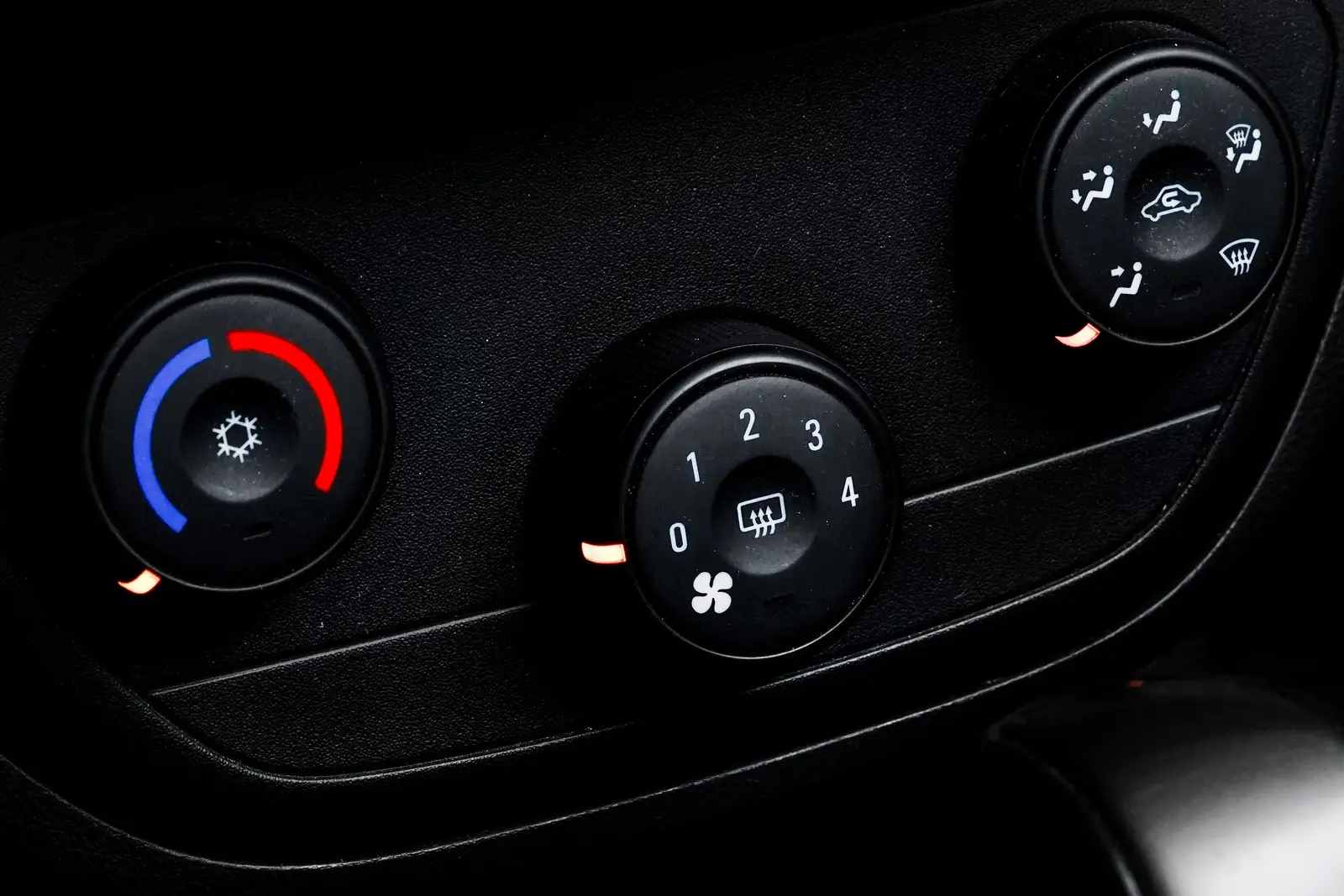
The blend door is a flap inside the heater box that decides how much air passes through the hot core. On many cars a small motor, the actuator, moves it. When it sticks, you can get cold air no matter where the dial is set. Haynes also lists the heater control valve on cars that have one.
4. The blower motor side
If the air that comes out is warm but there is very little of it, Haynes points to the blower, not the heat source. That is a blower motor, resistor or control problem, and the heater core is fine.
A quick test AutoZone describes: with the engine fully warm, carefully feel the two heater hoses at the firewall. Both should be hot. One hot and one cool points to a clogged core. Never open a hot radiator cap. For more no-heat causes, see auto heat repair and our car heater troubleshooting guide.
Flush, Stop-Leak, Bypass or Replace: Which Fix Fits
Flush: for a clogged core that is not leaking
Deposits and rust from old coolant can block the core's thin tubes. When the hose test points to a clog and there is no leak, a flush can restore the flow. Haynes adds that a bad blockage may not fully clear, and that a cooling system flush about every 30,000 miles or two years helps prevent it.
Stop-leak: a gamble, not a repair
Pour-in sealers are sold for small leaks. A TechShop magazine tech tip, sponsored by the sealer maker K-Seal, presents one as a quick, low-cost alternative on older vehicles. The catch: Rick Muscoplat of Rick's Free Auto Repair Advice lists leak sealer among the things that plug heater cores. A sealer that stops a pinhole can also cut your heat.
Bypass: stops the leak, loses the heat and defrost
A bypass loops the two heater hoses together so coolant skips the core. Dorman, which sells a bypass kit, says it disables the cabin heat and can make an otherwise undrivable vehicle drivable again. Its instructions also tell installers not to disable any vehicle safety feature. Federal Motor Vehicle Safety Standard 103 requires passenger cars, trucks and buses to be built with a windshield defrosting and defogging system, and AutoZone explains that the heater core is what helps defrost the windshield. If you drive for hire, California Vehicle Code 26712 requires a defrosting device that can remove fog and internal moisture from the windshield. Treat a bypass as a short-term fix.
Replace: the fix for a leaking core
A new core stops the leak and brings back full heat and defrost. AutoZone says it is a good time to replace aging heater hoses and clamps, flush the coolant, and change worn blend door actuators and the cabin air filter while the dash is apart.
What a Heater Core Replacement Involves
AutoZone's how-to guide puts the job at three to eight hours, and its cost guide says four to ten. The range is that wide because the core sits deep behind the dashboard. The usual order:
- Let the engine cool and drain the coolant.
- Disconnect the battery. AutoZone stresses this so the airbags cannot go off while the dash is apart.
- Disconnect the two heater hoses at the firewall.
- Remove the trim, glove box, dash sections, wiring and, on some models, the steering column, to reach the heater box.
- Open the heater box and swap the core, seated correctly.
- Reassemble and check every connector and safety system.
- Refill with the coolant type the manufacturer calls for and bleed the air out. AutoZone warns that trapped air can cause overheating and no heat.
- Test for leaks, full heat and a clear defrost.
Our AC and heat repair service list includes heater core service and replacement. Access is very different from one car to the next, so call with the year, make and model and we will tell you whether your heater core is a job we take on here and what it involves.
What Changes the Cost of a Heater Core Replacement
- How the dash comes apart. AutoZone notes that a modular dash comes out far faster than one where everything is packed in and the whole dash has to come out. Labor is most of the bill.
- The vehicle. Compact cars tend to be simpler. Trucks, SUVs and luxury cars with complex climate control take longer, and some need the steering column removed.
- Original or aftermarket core. Both are sold. Ask which one your estimate lists.
- Parts replaced while it is apart. Hoses, clamps, coolant, a blend door actuator or a cabin filter.
- Damage from the leak. An engine that ran low on coolant or overheated may need more than a heater core.
- Whether it is the core at all. A thermostat, an air pocket or a blend door is a much smaller job, which is why the diagnosis comes first.
Call (707) 584-7727 with the year, make and model and what you are noticing, and we will give you a free estimate before any work starts.
Can You Drive With a Bad Heater Core?
- No heat, no leak, glass stays clear: usually fine to drive in for a check.
- Sweet smell, wet carpet or falling coolant: AutoZone does not recommend driving with a leaking heater core, because the engine can lose coolant and overheat. Check the level cold and book soon.
- Windshield you cannot clear: do not drive until you can see. AutoZone calls fogged-up windows you cannot clear unsafe.
- Temperature gauge climbing: pull over when it is safe and turn the engine off. Never open the radiator cap on a hot engine.
Coolant on the floor is not just a mess. CDC's toxic substances agency says antifreeze is a sweet-tasting, brightly colored liquid, which is why people swallow it by accident, and that large amounts of ethylene glycol, the clear liquid used to make it, can damage the kidneys, nervous system, lungs and heart. Keep children and pets out of a wet footwell until it is fixed.
Why Heater Cores Show Up Now in Sonoma County
Most heater problems hide all summer because nobody turns the heat on. Then the mornings turn cold and wet at the same time. NOAA's 1991-2020 normals for Santa Rosa put the average low at 38.2°F in December and 38.4°F in January, and December through February are the wettest months, at 5.78 to 6.47 inches of rain each, against 0.01 inches in July. That is when the heater and the defroster work hardest, and when a weak or leaking core gets noticed. A heater check before the rain sets in beats a foggy windshield on the 101.
Your Rights in California: A Written Estimate Before Any Work
California's Bureau of Automotive Repair says a repair shop must give you a written estimate before doing any work. The estimate must show the total for parts and labor, list the parts, and state the method of repair, and the shop has to stick to those unless you agree to a change in advance. You can also ask for your old heater core back, as long as you ask before the work is done.
No Heat or a Sweet Smell? Book a Heater Check in Rohnert Park
Tell us what you notice: cold air, a sweet smell, fog on the glass or a wet floor. We are at 305 Laguna Dr in Rohnert Park, Mon–Thu 7:30 AM – 5:00 PM, Fri 7:00 AM – 3:00 PM, a short drive from Cotati, Penngrove, Petaluma, Santa Rosa and Sebastopol.
Sources
- AutoZone, "Heater Core Replacement Cost" (January 15, 2026; read October 25, 2026)
- AutoZone, "How to Replace a Heater Core" (June 5, 2025)
- AutoZone, "Car Heater Blowing Cold Air" (June 5, 2025)
- Haynes Manuals, "Why Is My Car's Heater Not Working and How to Fix It" (January 10, 2024)
- TechShop magazine, "Tech Tip: Heater Core Leak Repair" (November 13, 2013; sponsored by K-Seal)
- Rick Muscoplat, "Why There's No Heat in Your Car and How to Fix It"
- GoodCar, "Heater Core Replacement Guide: Costs and Signs of Failure" (updated June 13, 2024)
- Dorman Products, 626-001 Engine Heater Core Bypass Kit
- Dorman, 626-001 installation instructions (PDF)
- 49 CFR 571.103, Federal Motor Vehicle Safety Standard No. 103, Windshield defrosting and defogging systems
- California Vehicle Code Section 26712
- CDC ATSDR, Ethylene Glycol ToxFAQs
- NOAA NCEI, 1991-2020 monthly climate normals, Santa Rosa station USC00047965
- California Bureau of Automotive Repair, A Consumer's Guide to Auto Repair (PDF)
Why Choose Our Heater Core Replacement & Repair?
- ✓Car heater diagnosis: coolant level and air, thermostat, blend door, blower and heater core
- ✓Heater core service and replacement are on our AC and heat repair service list
- ✓A straight answer on flush, bypass or replacement for your car
- ✓A written estimate listing parts and the repair method before work starts, as California law requires
- ✓305 Laguna Dr, Rohnert Park, near Cotati, Penngrove and Petaluma
- ✓A free estimate by phone: call with the year, make and model
Book a Heater Check in Rohnert Park
Call with the year, make and model and tell us what you notice: cold air, a sweet smell, fog on the glass or a wet floor. We will find the cause and give you a free estimate before any work starts.
CALL US NOW: (707) 584-7727Frequently Asked Questions About Heater Core Replacement & Repair
What happens if a heater core goes out?
It fails one of two ways. A clogged core stops hot coolant from flowing through it, so the vents blow cold even with a warm engine. A leaking core lets coolant out inside the car: AutoZone lists a sweet coolant smell, windows that fog up again and again, wet passenger floor mats and a dropping coolant level as the signs. A leak can also let the engine run low on coolant and overheat.
Can I drive with a bad heater core?
A clogged core that only costs you heat is mostly a comfort and visibility problem, but you still need the defroster to clear the glass. A leaking core is different. AutoZone does not recommend driving with one, because the engine can lose coolant and overheat, and a windshield you cannot clear is unsafe. Watch the temperature gauge and the coolant level, and do not keep driving if the gauge climbs.
What could cause a heater core to fail?
AutoZone names corrosion, clogging and skipped coolant maintenance. Old coolant leaves deposits and rust in the core's thin tubes, which is why Haynes recommends a cooling system flush about every 30,000 miles or two years to prevent it. The core itself is made of aluminum or brass and, by AutoZone's account, often lasts the life of the vehicle when the coolant is looked after.
Can a heater core be fixed without replacing it?
Sometimes. A core that is clogged but not leaking can often be flushed to restore flow. A leaking core is usually replaced. Pour-in sealers are sold for small leaks, but the same sealer can end up plugging the core's tubes, so treat it as a gamble rather than a repair. A bypass stops the leak by routing coolant around the core, and you lose cabin heat. Call and describe the symptoms, and we will tell you which one fits your car.
Will bypassing the heater core cause overheating?
A bypass is meant to keep coolant flowing through the engine while it skips the core. Dorman, which sells a bypass kit, says it disables the cabin heat. The risk is what is left behind: Dorman's own instructions end with topping off the coolant and bleeding the air out, and AutoZone warns that trapped air can cause overheating. You also lose the warm air the defroster uses, which matters in a wet Sonoma County winter.
How long does a heater core replacement take?
It depends almost entirely on the car. AutoZone's how-to guide puts it at three to eight hours, and its cost guide says mechanics need four to ten hours, because the core sits behind the dashboard and parts of the dash, wiring and sometimes the steering column have to come out first. Call with the year, make and model and we will tell you what your car involves.
Where is the heater core located?
On most cars it is inside the dashboard, in the heater box behind the glove box area on the passenger side. Two heater hoses run to it through the firewall from the engine. A few vehicles have the core where it can be reached from under the hood, which makes the job much shorter.
How much does it cost to replace a heater core?
Most of it is labor, and the labor depends on how much of the dashboard has to come apart to reach the core. A car with a modular dash is a shorter job than a truck or luxury car with a packed dash, airbags and the steering column in the way. The part, any hoses or clamps replaced while it is apart, and fresh coolant are the rest. Call (707) 584-7727 with the year, make and model and we will give you a free estimate.
Have more questions? We're here to help!
Call (707) 584-7727Get In Touch
Related Services
Serving Nearby Cities
We proudly serve customers from throughout Sonoma County
Our Certification

ATRA & ASE Certified for Expert Transmission Service