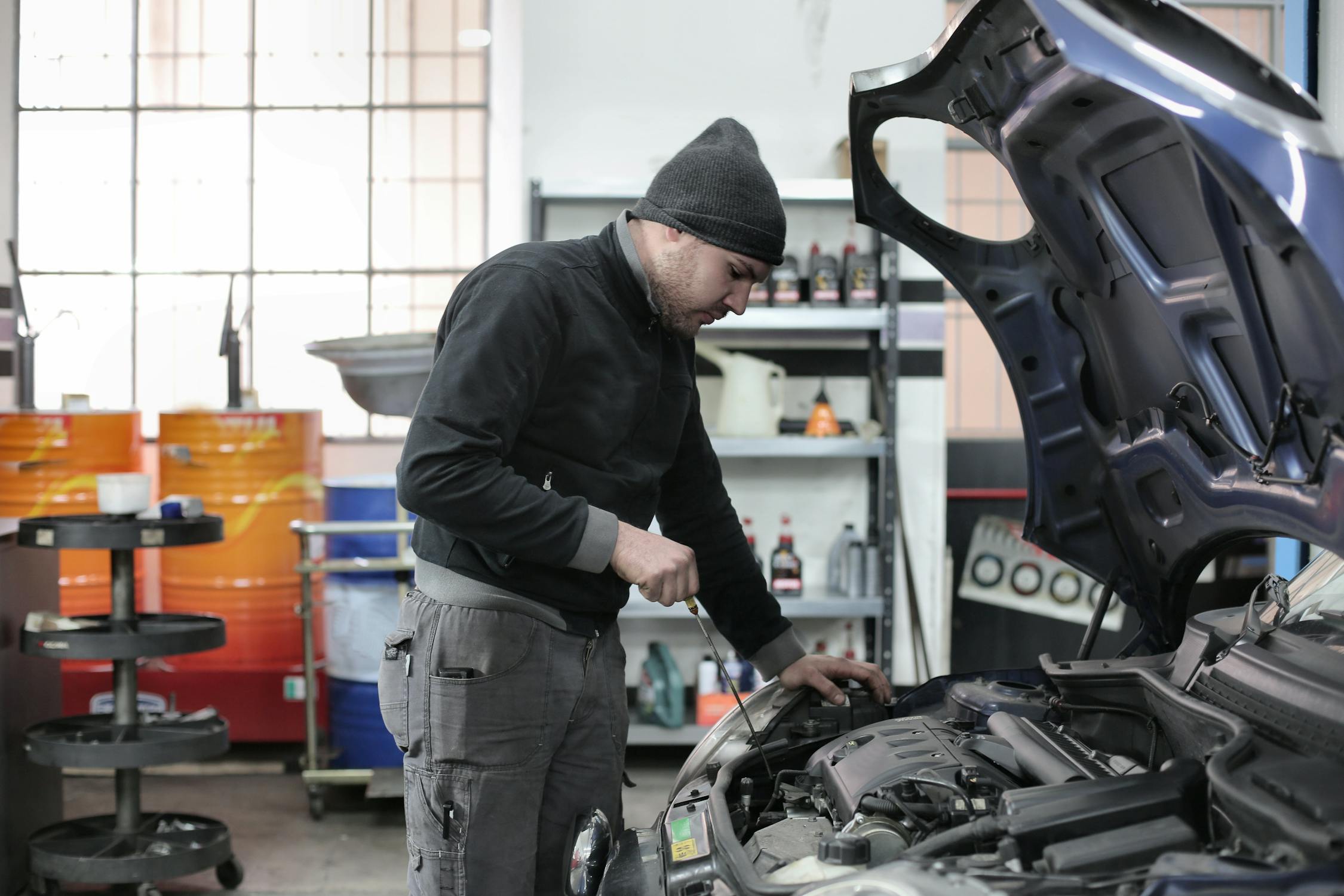
Photo by Andrea Piacquadio / Pexels
Sonoma is the heart of California wine country -- a valley of vineyards, historic charm, and winding roads that draw tourists from around the world. But for the people who actually live and work here, Sonoma is also a place where your car earns its keep. Highway 12 grades, vineyard dirt roads, harvest season truck loads, and tourist traffic that turns the plaza into a parking lot every weekend -- your vehicle deals with a lot.
This guide covers what Sonoma drivers actually need to know about vehicle maintenance: what your local driving conditions do to your car, when to get specific services, and how to avoid the kind of expensive surprises that come from ignoring wine country wear and tear. Whether you run a vineyard operation with a fleet of trucks, commute to Santa Rosa on Highway 12, or just navigate the plaza on a busy Saturday, this is the practical information that keeps your vehicle running.
What Sonoma Driving Conditions Do to Your Car
Every area has its own driving conditions. Sonoma has more variety than most -- mountain grades, agricultural operations, tourist traffic, and seasonal extremes that test every system in your vehicle.
Dealing with this issue in Sonoma County?
Our ASE and ATRA certified shop team diagnoses the real problem instead of guessing.
Serving the North Bay:
Highway 12 Through Sonoma Valley: Mountain Grades and Wine Country Traffic
Highway 12 is the Sonoma Valley's main artery. It connects Sonoma to Kenwood, Glen Ellen, and Santa Rosa to the north and west. It carries commuters, tourists, wine trucks, and everyone in between. And it is not flat.
Transmission stress from grade changes. The sections of Highway 12 between Sonoma and Kenwood and between Kenwood and Santa Rosa include real elevation changes. Climbing hills puts your engine and transmission under sustained load -- the transmission stays in lower gears, generating more heat and more wear. If you commute this route daily, your transmission fluid works harder and degrades faster than it would on flat Highway 101.
Brake wear from descending grades. What goes up must come down, and coming down means braking. Sustained downhill braking heats brake pads and rotors. If you ride the brakes on the downhill sections rather than engine braking, you will wear through pads faster and may develop warped rotors -- leading to that pulsing feeling when you brake.
Cooling system load. Climbing hills in warm weather is the hardest thing you can ask of your cooling system. The engine runs hotter, the AC compressor adds load, and the radiator has to dissipate more heat. If your cooling system is marginal -- old coolant, a partially clogged radiator, a weak water pump -- the hills on Highway 12 in July or August will reveal it. Usually by overheating.
Tourist traffic speed variation. Wine tasting groups moving between vineyards create constant speed changes on Highway 12 -- slow down behind a tasting tour van, speed up when they turn off, slow down again for the next group. This variation wears your transmission and brakes in ways that steady highway cruising does not.
Sonoma Plaza Tourism Traffic
The historic Sonoma Plaza draws visitors year-round, with peak traffic from May through October. For Sonoma residents, this means regular exposure to some of the worst stop-and-go traffic in the valley.
What plaza traffic does to your car:
- Low-speed [transmission](/services/transmission) wear. Crawling through plaza traffic at 5-10 mph with constant stops keeps your transmission in first and second gear -- the gears that generate the most heat. Over time, this degrades transmission fluid faster than highway driving.
- [Brake](/services/brake-repair) pad wear from constant stops. Tourist traffic means stopping every few car lengths. While each individual stop is light, thousands of light stops still wear brake pads. If you live near the plaza and deal with this daily, factor in more frequent brake inspections.
- Overheating risk in summer. Idling and low-speed driving in Sonoma's summer heat -- regularly exceeding 100 degrees -- is the perfect combination for overheating. Your cooling system works hardest when airflow over the radiator is minimal (low speed or stopped) and ambient temperature is high.
Arnold Drive Curves
Arnold Drive between Sonoma and Glen Ellen is one of the prettiest drives in the valley -- and one of the most demanding on your vehicle's steering and suspension. The winding two-lane road follows the valley floor through vineyards and estates, with curves that keep your steering system constantly working.
What Arnold Drive does to your car:
- Lateral [suspension](/services/steering-suspension-repair) stress. Every curve puts lateral force on your tie rod ends, ball joints, control arm bushings, and wheel bearings. Unlike straight highway driving where these components carry mostly vertical loads, winding roads add side-loading that accelerates wear.
- Uneven tire wear. Constant curves cause different wear patterns on inner and outer tire edges. If you drive Arnold Drive daily, rotate tires every oil change and check for uneven wear patterns monthly.
- [Brake](/services/brake-repair) wear from curve-then-stop patterns. Arnold Drive has curves followed by intersections and slow zones. Braking while turning or immediately after turning loads brake components differently than straight-line braking, accelerating pad and rotor wear.
Broadway and Napa Road Corridors
Broadway (Highway 12 through town) and Napa Road are the main routes connecting Sonoma to Highway 121 and points south and east toward Napa. These roads see a mix of local traffic, tourist traffic, and commercial vehicles.
- Speed transitions. Going from Sonoma's 25 mph zones to the highway speed sections and back creates constant acceleration and deceleration cycles that wear your transmission and brakes.
- Truck traffic. Wine barrel haulers, delivery trucks, and agricultural vehicles share these corridors with passenger cars. Slowing for trucks and then accelerating past them adds wear cycles.
- Intersection wear. The signalized intersections along Broadway -- especially during tourist season -- create stop-and-go patterns that are particularly hard on transmissions and brakes.
Wine Barrel Hauling and Vineyard Truck Maintenance
If you operate trucks for vineyard or winery work, your vehicles face conditions that are significantly harder than normal passenger vehicle driving. Wine country truck maintenance is its own category:
Transmission strain from heavy loads on grades. A truck hauling a load of wine barrels or grape bins up a vineyard road is operating under maximum drivetrain stress. The transmission, differential, and transfer case (on 4WD trucks) are all working at or near capacity. Under these conditions, fluid breaks down faster, bearings wear faster, and heat buildup is constant.
Vineyard road dust. Unpaved vineyard roads generate dust that clogs engine air filters, coats radiator and condenser fins (reducing cooling efficiency), and works its way into every seal and gasket. If your trucks run on dirt roads regularly, replace engine air filters at least twice as often as the manufacturer recommends and blow out radiator fins periodically.
Short-trip patterns. Many vineyard and winery operations involve short trips between locations -- from one block of vines to another, from the vineyard to the crush pad, from the winery to the warehouse. These short trips never let the engine and transmission reach full operating temperature, which is one of the hardest patterns on a powertrain. Moisture accumulates in oil and transmission fluid, accelerating wear.
Brake wear from loaded descents. Vineyard roads often involve grades. A loaded truck descending a vineyard road puts enormous stress on brakes. If the vehicle's brakes are marginal, a loaded downhill can mean the difference between stopping and not stopping. Inspect brakes more frequently on work vehicles that handle loaded hill descents.
The Essential Maintenance Schedule for Sonoma Drivers
Here is what to stay on top of, adjusted for wine country driving conditions:
Every 5,000-7,500 Miles (or Every 6 Months)
- Oil change. Most modern vehicles can go 7,500 miles on full synthetic. If you drive Highway 12 grades daily, do short vineyard trips, or sit in plaza tourist traffic regularly, lean toward 5,000 miles. Trucks under heavy load may need even more frequent changes.
- Tire rotation and pressure check. Winding roads like Arnold Drive and Highway 12 curves cause uneven tire wear. Rotate every oil change.
- Multi-point inspection. Have the shop check fluids, belts, hoses, brakes, and suspension during your oil change. Catching small problems early is especially important for vehicles operating under wine country stress.
Every 15,000-30,000 Miles (or Annually)
- [Brake inspection](/services/brake-repair). Sonoma drivers on Highway 12 grades and winding roads wear brakes faster than average. Annual inspection is the minimum -- more frequently for trucks and work vehicles.
- [Transmission fluid](/blog/transmission-fluid-change-cost) check. If you commute on Highway 12 with its grades and traffic, or operate work vehicles under load, have the fluid condition checked annually. Dark, burnt-smelling fluid needs to be changed regardless of mileage.
- Alignment check. Winding roads cause alignment drift. Check annually, or twice a year if Arnold Drive or vineyard roads are part of your regular driving.
- Engine air filter. Replace annually, or twice a year if your vehicle operates on unpaved vineyard roads. A clogged air filter reduces engine performance and fuel economy.
Get an accurate repair quote — not an internet estimate.
Every vehicle is different. Call for transparent, honest pricing.
Serving the North Bay:
Every 30,000-60,000 Miles
- Coolant flush. Critical for vehicles that climb Highway 12 grades in summer heat. Old coolant loses its ability to protect against overheating -- exactly when you need it most.
- [Transmission service](/services/transmission). Full fluid exchange with filter replacement. Critical for vehicles with 50,000+ miles, especially those operating on Highway 12 grades or hauling loads.
- [Differential service](/services/differential-service-and-repair). Often overlooked, but essential for trucks and 4WD vehicles. Differential fluid breaks down faster under heavy loads and hill driving.
- Brake fluid flush. Brake fluid absorbs moisture over time, lowering its boiling point. In Sonoma's conditions -- heavy braking on grades in summer heat -- old brake fluid can actually boil, causing brake fade. That is as dangerous as it sounds.
Seasonal Maintenance Calendar for Sonoma
Spring (March-May)
- Inspect tires for winter road damage
- Check alignment after winter pothole season
- Test AC system before summer heat -- much easier to get appointments in April than July
- Replace wiper blades if they streak
- For work vehicles: pre-season inspection before the busy vineyard season begins
Summer (June-August)
- Check coolant level and condition -- this is critical for Highway 12 hill driving in summer heat
- Inspect belts and hoses -- heat accelerates rubber deterioration, and a failed belt on a Highway 12 grade is a tow-truck situation
- Check AC performance -- Sonoma regularly hits 100+ degrees
- Monitor tire pressure -- heat increases pressure, overinflated tires have less traction on winding roads
- For work vehicles: check transmission fluid mid-summer if hauling heavy loads
Fall (September-November) -- Harvest Season
This is the busiest and hardest season for Sonoma vehicles, especially work trucks.
- Test battery -- summer heat weakens batteries, and the first cold morning reveals it
- Check [brakes](/services/brake-repair) before the wet season -- good brakes are critical on wet, winding roads
- Check tire tread depth -- minimum 4/32" for wet weather safety on curves
- For work vehicles: inspect transmission, differential, and brakes before harvest. Harvest season puts maximum stress on drivetrain components. A breakdown during crush is costly in more ways than repair bills
- Check heater and defroster -- you will need both for foggy valley mornings by late October
Winter (December-February)
- Verify tire tread and consider all-season tires if yours are worn
- Check all fluid levels -- cold weather thickens fluids and reveals weak seals
- Test all lights -- shorter days mean more headlight use on dark valley roads
- Keep wiper fluid full -- winter rain and vineyard mud mean constant wiper use
- Post-harvest work vehicle inspection -- after the hardest season, a thorough checkup catches issues before they become spring emergencies
When to Get Help vs. DIY
Some maintenance you can handle yourself. Some you should leave to a professional.
Get an accurate repair quote — not an internet estimate.
Every vehicle is different. Call for transparent, honest pricing.
Serving the North Bay:
DIY-friendly:
- Checking and topping off tire pressure
- Checking oil level
- Replacing wiper blades
- Replacing cabin air filter
- Replacing engine air filter
- Topping off washer fluid
- Blowing dust off radiator fins (compressed air)
Leave to a professional:
- Oil changes (unless you have tools, space, and proper disposal)
- Brake work (safety-critical on Sonoma's hills -- do not risk it)
- Transmission service (requires specialized equipment and knowledge)
- Differential and transfer case service (specialized fluid and procedure)
- Anything involving the cooling system under pressure
- Electrical diagnostics (modern vehicles are too complex for guesswork)
Frequently Asked Questions
How often should Sonoma drivers get an oil change?
Every 5,000 to 7,500 miles or every 6 months. If you drive Highway 12 grades regularly, do short vineyard trips, or sit in tourist traffic, lean toward 5,000 miles. Trucks under heavy load may need changes even more frequently. Check your owner's manual for your specific vehicle.
Does vineyard and winery truck driving require special maintenance?
Yes. Trucks hauling wine barrels, grape bins, and equipment face accelerated wear on transmissions, differentials, transfer cases, and brakes. Check transmission fluid at least every 15,000 miles or annually. Replace air filters more frequently due to vineyard dust. Inspect brakes before and after harvest season.
Does driving Highway 12 through the valley affect my car differently than Highway 101?
Yes. Highway 12 includes mountain grades that stress your transmission and cooling system more than flat Highway 101. The climbing generates more heat; the descending requires more braking. Combined with tourist traffic speed variation, Highway 12 is harder on your drivetrain. Have transmission fluid and coolant checked more frequently if Highway 12 is your daily commute.
Where is the closest transmission specialist to Sonoma?
Rohnert Park Transmission at 305 Laguna Dr is the nearest ATRA-certified transmission specialist to Sonoma -- about 25 minutes via Highway 12 and Highway 101. They handle transmissions on both passenger vehicles and trucks. Call (707) 584-7727.
What seasonal car maintenance do Sonoma drivers need?
Spring: check for winter damage, test AC. Summer: check coolant and belts for hill driving, monitor tire pressure. Fall (harvest season): inspect drivetrains on work vehicles, check brakes before wet season, verify tire tread. Winter: check all fluids, test lights, post-harvest vehicle inspection. Sonoma's hot summers and busy harvest season are the hardest periods for vehicles.
Keep Your Car Running Right in Sonoma
Vehicle maintenance may not be as romantic as winemaking, but it is just as important to daily life in the valley. The difference between a routine fluid change and a major drivetrain rebuild is usually just paying attention and staying on schedule.
Sonoma's combination of mountain grades, agricultural operations, tourist traffic, and temperature extremes means your car -- or your work truck -- works harder than it would almost anywhere else in Sonoma County. Stay on top of the basics, address warning signs promptly, and find a shop you trust.
If you need help with anything from a routine oil change to a complex transmission diagnosis on a work truck, we are about 25 minutes from Sonoma Plaza and we have been doing this since 1997.
Call (707) 584-7727 or stop by 305 Laguna Dr, Rohnert Park. Monday through Thursday 7:30AM-5PM, Friday 7AM-3PM.
Tags:
Written by
Fernando Gomez
Owner, Rohnert Park Transmission & Auto Repair
Fernando brings over 28 years of automotive repair experience to every diagnosis and repair. As the owner of Rohnert Park Transmission & Auto Repair, he leads a team of ASE-certified, ATRA-member technicians specializing in transmission diagnostics, complex drivability issues, and preventive maintenance — with a focus on getting it right the first time.
Need Professional Auto Service?
Trust your vehicle to Rohnert Park's transmission and auto repair experts. We offer comprehensive diagnostics and repairs with a commitment to quality and transparency.
Related Articles
Best Auto Repair Shops Near Sonoma CA: 2026 Guide
Compare the best auto repair shops in and near Sonoma. Honest reviews of local mechanics by specialty.
Transmission Fluid Change Cost Guide (2026)
What a transmission fluid change costs, when you need one, and why it matters for Sonoma Valley hill driving.
Check Engine Light Flashing: What It Means
A flashing check engine light means stop driving. Here is what is happening and what to do next.