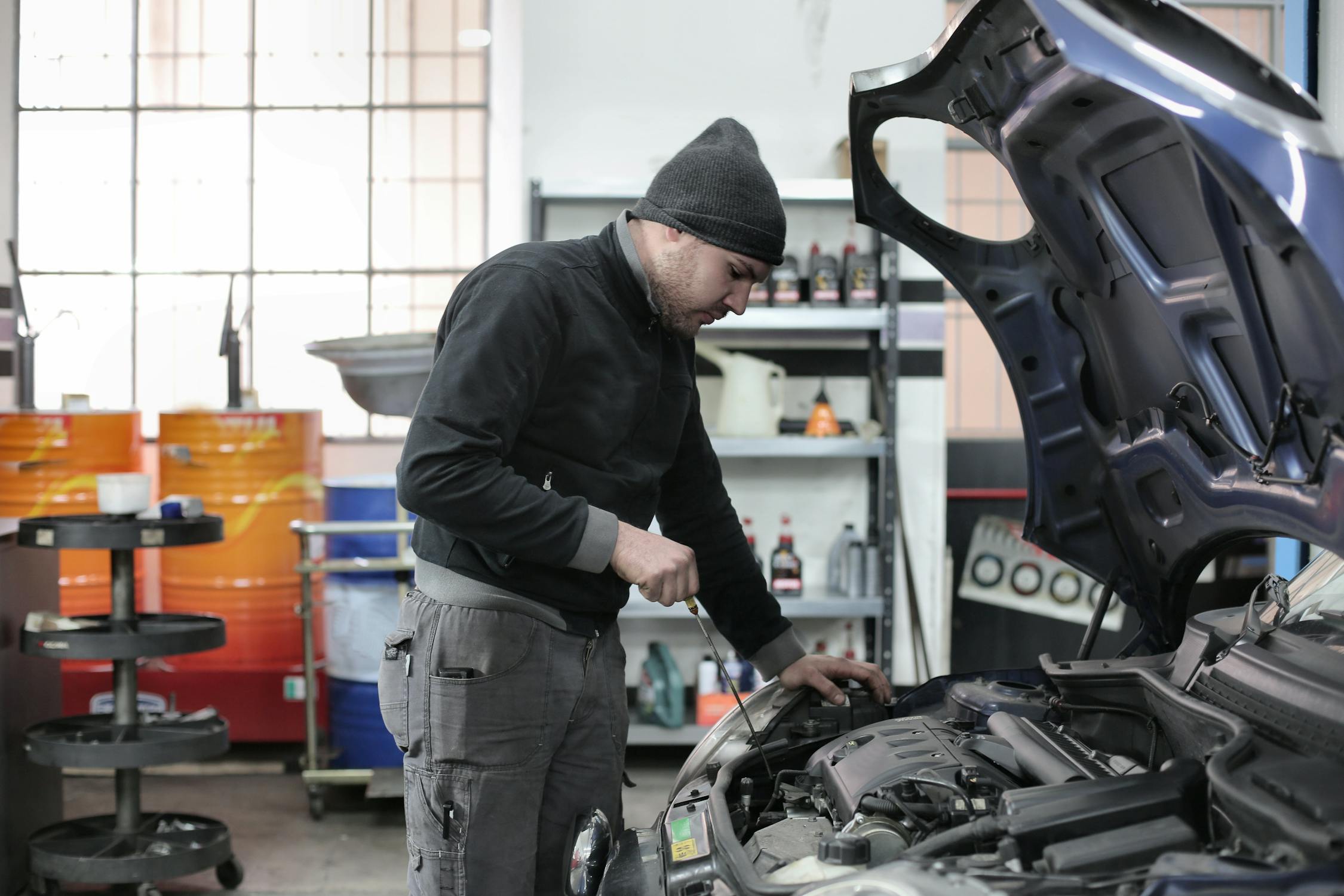
Photo by Andrea Piacquadio / Pexels
Sebastopol is west Sonoma County's hub -- a small town surrounded by apple orchards, vineyards, and winding roads that eventually lead to the coast. It is a beautiful place to live, but your car works harder here than you might think. Between Bodega Highway's tight curves, the coastal fog that settles in most mornings, and the farm traffic on every back road, west county driving puts unique demands on your vehicle.
This guide covers what Sebastopol drivers actually need to know about vehicle maintenance: what your local driving conditions do to your car, when to get specific services, and how to avoid expensive surprises. Whether you have lived in Sebastopol for decades or just moved to west county, this is the practical information that keeps your vehicle running and your repair bills manageable.
What Sebastopol Driving Conditions Do to Your Car
Every area has its own driving conditions that affect vehicle maintenance. Sebastopol has more than most -- coastal influence, winding rural roads, agricultural traffic, and temperature swings that test every system in your vehicle.
Dealing with this issue in Sonoma County?
Our ASE and ATRA certified shop team diagnoses the real problem instead of guessing.
Serving the North Bay:
Bodega Highway to the Coast: Tight Curves and Ocean Air
Bodega Highway is one of the defining west county drives. Whether you commute to the coast for work, head to Bodega Bay for dinner, or just enjoy the scenic route, this road puts specific stress on your vehicle that flat highway driving simply does not.
Brake wear from descending curves. Bodega Highway climbs through rolling hills and then descends toward the coast through a series of tight turns. Every descent means brake use -- and not gentle highway braking, but sustained downhill braking through curves. This wears brake pads and rotors significantly faster than flat driving. If you drive Bodega Highway weekly, expect to replace brake pads more frequently than the manufacturer's average estimate.
Steering and suspension stress from constant curves. Straight-line driving puts minimal lateral stress on your suspension. Winding roads like Bodega Highway put constant lateral load on tie rod ends, ball joints, control arm bushings, and wheel bearings. West county drivers often need suspension work 20-30% sooner than drivers who stick to straight highways.
Salt air and coastal corrosion. The closer you get to the coast, the more salt-laden the air becomes. Even on the Sebastopol side, fog carrying salt particles settles on your vehicle overnight. Over years, this accelerates corrosion on brake rotors, exhaust components, and undercarriage metal. An undercarriage wash after coastal trips is cheap insurance against long-term rust damage.
Gravenstein Highway (Highway 116) to Guerneville
Highway 116 runs right through Sebastopol and connects the town to both the Russian River area (north/west toward Guerneville) and Highway 101 (east toward Cotati and Rohnert Park). It is the road Sebastopol drivers use most.
Mixed traffic and constant speed changes. Highway 116 through Sebastopol and toward Graton sees a mix of local traffic, tourists heading to the Russian River, cyclists, and farm vehicles. The posted speed changes multiple times, and the traffic variation means your transmission and brakes are constantly working -- accelerating, decelerating, downshifting, stopping for turns.
Transmission stress from low-speed zones. The sections through Graton and Forestville have low speed limits and frequent stops. If you commute this route daily, your transmission spends more time in the low gears that generate the most heat and wear. Have your transmission fluid checked annually if Highway 116 is your daily route.
Cyclist traffic. Highway 116 is one of the most popular cycling routes in Sonoma County. Slowing for cyclists, passing safely, and then accelerating back to speed adds wear cycles to your transmission and brakes. It is not dramatic on any single trip, but over thousands of commutes, it adds up.
Apple Orchards and Farm Vehicle Traffic
Sebastopol is still apple country, and the agricultural character of the area means sharing the road with farm equipment. Tractors on Graton Road, produce trucks on Occidental Road, and slow-moving equipment on the narrow lanes between orchards -- this is part of west county life.
What farm traffic does to your car:
- Low-speed [transmission](/services/transmission) stress. Crawling behind a tractor at 15 mph for a mile, then accelerating when you can pass, then slowing again -- this pattern works your transmission harder than steady highway cruising. Automatic transmissions are constantly hunting for the right gear in these conditions.
- Clutch wear (manual transmissions). If you drive a manual, farm country is hard on clutches. The constant low-speed engagement and disengagement in stop-and-go agricultural traffic wears clutch plates faster.
- Patience-related habits. When you finally get past slow traffic, the temptation to accelerate hard is real. Aggressive acceleration after periods of slow driving is one of the hardest things on a transmission. Smooth, steady acceleration protects your drivetrain.
West County Coastal Fog and Moisture
Sebastopol sits squarely in the fog belt. From late spring through early fall, morning fog is a near-daily occurrence. The fog burns off by midday most days, but the moisture it leaves behind affects your vehicle in ways that accumulate over time.
- [Electrical system](/services/auto-electrical-repair) concerns. Persistent moisture can cause issues with electrical connections, sensors, and wiring harnesses. Corrosion on battery terminals is more common in fog belt areas. If your car develops intermittent electrical gremlins -- a warning light that comes and goes, a sensor that reads intermittently -- moisture intrusion may be the cause.
- Wiper blade wear. Fog driving means more wiper use than inland areas. Replace wiper blades at least once a year. Streaking or skipping wipers in fog reduce visibility at exactly the wrong time.
- Rust prevention. The combination of fog moisture and coastal proximity makes Sebastopol vehicles more susceptible to undercarriage rust than vehicles in dry inland areas. If you park outside, consider periodic undercarriage treatments or at minimum regular undercarriage washes.
- Headlight clarity. Fog and UV exposure degrade headlight lenses over time. Cloudy headlights reduce visibility significantly during fog -- something that matters a lot on dark west county roads. Headlight restoration is an inexpensive fix that makes a real safety difference.
Highway 12 Connector to Santa Rosa
Highway 12 connects Sebastopol to Santa Rosa and is the fastest route east for many west county residents. The road is relatively straight compared to other Sebastopol routes, but the traffic volume -- especially during commute hours -- creates its own maintenance considerations.
- Stop-and-go at intersections. The signalized intersections between Sebastopol and Santa Rosa create stop-and-go patterns that wear brakes and transmissions.
- Highway speed transitions. Going from Sebastopol's 25-35 mph zones to Highway 12's 55 mph sections and back creates constant speed variation that works your drivetrain.
The Barlow District Traffic
The Barlow has transformed Sebastopol's traffic patterns. The popular marketplace brings visitors from across the Bay Area, especially on weekends. For Sebastopol residents, this means more stop-and-go traffic on Sebastopol Avenue, McKinley Street, and Morris Street -- areas that used to be quiet.
Weekend Barlow traffic is mostly a brake-wear and patience issue. But if you live near The Barlow and deal with this traffic daily, the constant low-speed stops and starts do add wear to your transmission and brakes over time.
The Essential Maintenance Schedule for Sebastopol Drivers
Here is what to stay on top of, adjusted for west county driving conditions:
Every 5,000-7,500 Miles (or Every 6 Months)
- Oil change. Most modern vehicles use full synthetic oil and can go 7,500 miles. If you do a lot of winding road driving (Bodega Highway, Occidental Road) or stop-and-go on Highway 116, lean toward 5,000 miles.
- Tire rotation and pressure check. Winding west county roads cause uneven tire wear. Rotating tires every oil change evens out the pattern and extends tire life.
- Multi-point inspection. A good shop will check fluids, belts, hoses, brakes, and suspension components during your oil change. This catches small problems before they become expensive ones.
Every 15,000-30,000 Miles (or Annually)
- [Brake inspection](/services/brake-repair). Sebastopol drivers on Bodega Highway and other winding roads wear brakes faster than average. Annual inspection catches pad wear, rotor thickness issues, and caliper problems early.
- [Transmission fluid](/blog/transmission-fluid-change-cost) check. If you drive Highway 116 daily with its speed variations and mixed traffic, have the fluid condition checked annually. Dark, burnt-smelling fluid needs to be changed regardless of mileage.
- Alignment check. Twice a year if you drive rural roads with rough surfaces regularly. Winding roads also cause subtle alignment shifts over time.
Get an accurate repair quote — not an internet estimate.
Every vehicle is different. Call for transparent, honest pricing.
Serving the North Bay:
- Undercarriage inspection. More important for Sebastopol than most areas due to fog moisture and coastal salt air. Check for early signs of rust or corrosion annually.
Every 30,000-60,000 Miles
- Coolant flush. Sebastopol's temperature range -- cool foggy mornings to hot inland afternoons -- works your cooling system hard. Old coolant loses its protective properties.
- [Transmission service](/services/transmission). Full fluid exchange with filter replacement. Critical for vehicles with 50,000+ miles, especially with winding road and mixed-traffic driving.
- Brake fluid flush. Brake fluid absorbs moisture over time. In Sebastopol's high-moisture environment, this happens faster. Moisture in brake fluid lowers its boiling point -- dangerous during heavy braking on Bodega Highway descents.
- [Spark plug](/services/tune-up) replacement. Modern iridium plugs last 60,000-100,000 miles. Worn plugs cause rough running, poor fuel economy, and can trigger a check engine light.
Seasonal Maintenance Calendar for Sebastopol
Spring (March-May)
- Inspect tires for damage from winter rain-soaked roads
- Check alignment -- winter potholes and rough roads cause drift
- Replace wiper blades worn from winter and fog season
- Test AC system before summer heat -- easier to get an appointment in April than July
- Check undercarriage for any winter corrosion from road moisture
Summer (June-August)
- Check coolant level and condition -- overheating risk increases when fog burns off and temperatures spike
- Inspect belts and hoses -- heat accelerates rubber deterioration
- Check AC performance -- Sebastopol can hit 100+ degrees when the fog clears
- Monitor tire pressure -- heat increases pressure, overinflated tires wear unevenly
- Battery test -- summer heat actually weakens batteries more than cold does
Fall (September-November)
- Test battery before the first cold snap reveals summer damage
- Check heater and defroster -- you will need both for foggy mornings by October
- Inspect brake condition before the wet season
- Check tire tread depth -- minimum 4/32" for wet weather safety
- Apple harvest season means more farm traffic -- check transmission fluid if your commute involves a lot of low-speed driving
Winter (December-February)
- Verify tire tread and consider all-season tires if yours are worn
- Check all fluid levels -- cold weather thickens fluids and reveals weak seals
- Test all lights -- shorter days and fog mean more headlight use
- Keep wiper fluid full -- winter rain plus fog means constant wiper use
- Undercarriage wash after storms -- road grime plus moisture accelerates corrosion
When to Get Help vs. DIY
Some maintenance you can handle yourself. Some you should leave to a professional.
Get an accurate repair quote — not an internet estimate.
Every vehicle is different. Call for transparent, honest pricing.
Serving the North Bay:
DIY-friendly:
- Checking and topping off tire pressure
- Checking oil level
- Replacing wiper blades
- Replacing cabin air filter (usually behind the glove box)
- Replacing engine air filter
- Topping off washer fluid
- Headlight lens cleaning/restoration
Leave to a professional:
- Oil changes (unless you have tools, space, and proper oil disposal)
- Brake work (safety-critical -- not worth the risk)
- Transmission service (requires specialized equipment and fluid)
- Anything involving the cooling system under pressure
- Electrical diagnostics (modern vehicles are too complex for guesswork)
- Undercarriage corrosion treatment
Frequently Asked Questions
How often should Sebastopol drivers get an oil change?
Every 5,000 to 7,500 miles or every 6 months. If you drive winding roads like Bodega Highway regularly or deal with stop-and-go on Highway 116, lean toward 5,000 miles. Full synthetic oil can often go 7,500-10,000 miles. Check your owner's manual for your specific vehicle.
Does coastal fog damage my car in Sebastopol?
Over time, yes. The persistent moisture combined with salt particles carried inland from the coast accelerates corrosion on brake components, exhaust systems, and undercarriage parts. Regular undercarriage washes help prevent long-term rust damage. Check wiper blades frequently since fog driving wears them faster than inland driving.
Does driving Bodega Highway regularly affect my car's maintenance needs?
Yes. Bodega Highway's tight curves and elevation changes put extra stress on brakes, steering and suspension components. The descending sections toward the coast mean sustained braking that wears pads and rotors faster. If Bodega Highway is part of your regular route, inspect brakes more frequently and get alignment checked every 6 months.
Where is the closest transmission specialist to Sebastopol?
Rohnert Park Transmission at 305 Laguna Dr is the nearest ATRA-certified transmission specialist to Sebastopol -- about 10 minutes via Highway 116 and Highway 101. Call (707) 584-7727.
What seasonal car maintenance do Sebastopol drivers need?
Spring: check for winter road damage, test AC. Summer: check coolant, inspect belts, test battery. Fall: test battery again, check brakes before wet season, verify tire tread. Winter: check all fluids, test lights, keep wiper fluid full, wash undercarriage after storms. Sebastopol's coastal fog influence means more moisture-related maintenance than inland areas.
Keep Your Car Running Right in Sebastopol
Vehicle maintenance is not glamorous, but it is a lot cheaper than vehicle repair. The difference between a routine fluid change and a major rebuild is usually just paying attention and staying on schedule.
Sebastopol's combination of winding coastal roads, persistent fog moisture, farm traffic, and temperature swings means your car works harder than it would in a flat, dry, urban environment. Stay on top of the basics, address warning signs promptly, and find a shop you trust -- whether that is in Sebastopol or a few minutes down the road.
If you need help with anything from a routine oil change to a complex transmission diagnosis, we are about 10 minutes from downtown Sebastopol and we have been doing this since 1997.
Call (707) 584-7727 or stop by 305 Laguna Dr, Rohnert Park. Monday through Thursday 7:30AM-5PM, Friday 7AM-3PM.
Tags:
Written by
Fernando Gomez
Owner, Rohnert Park Transmission & Auto Repair
Fernando brings over 28 years of automotive repair experience to every diagnosis and repair. As the owner of Rohnert Park Transmission & Auto Repair, he leads a team of ASE-certified, ATRA-member technicians specializing in transmission diagnostics, complex drivability issues, and preventive maintenance — with a focus on getting it right the first time.
Need Professional Auto Service?
Trust your vehicle to Rohnert Park's transmission and auto repair experts. We offer comprehensive diagnostics and repairs with a commitment to quality and transparency.
Related Articles
Best Auto Repair Shops Near Sebastopol CA: 2026 Guide
Compare the best auto repair shops in and near Sebastopol. Honest reviews of local mechanics by specialty.
Pothole Damage Repair Cost Guide (2026)
What pothole damage costs to repair and how to prevent it. Relevant for Sebastopol drivers on rural west county roads.
Check Engine Light Flashing: What It Means
A flashing check engine light means stop driving. Here is what is happening and what to do next.