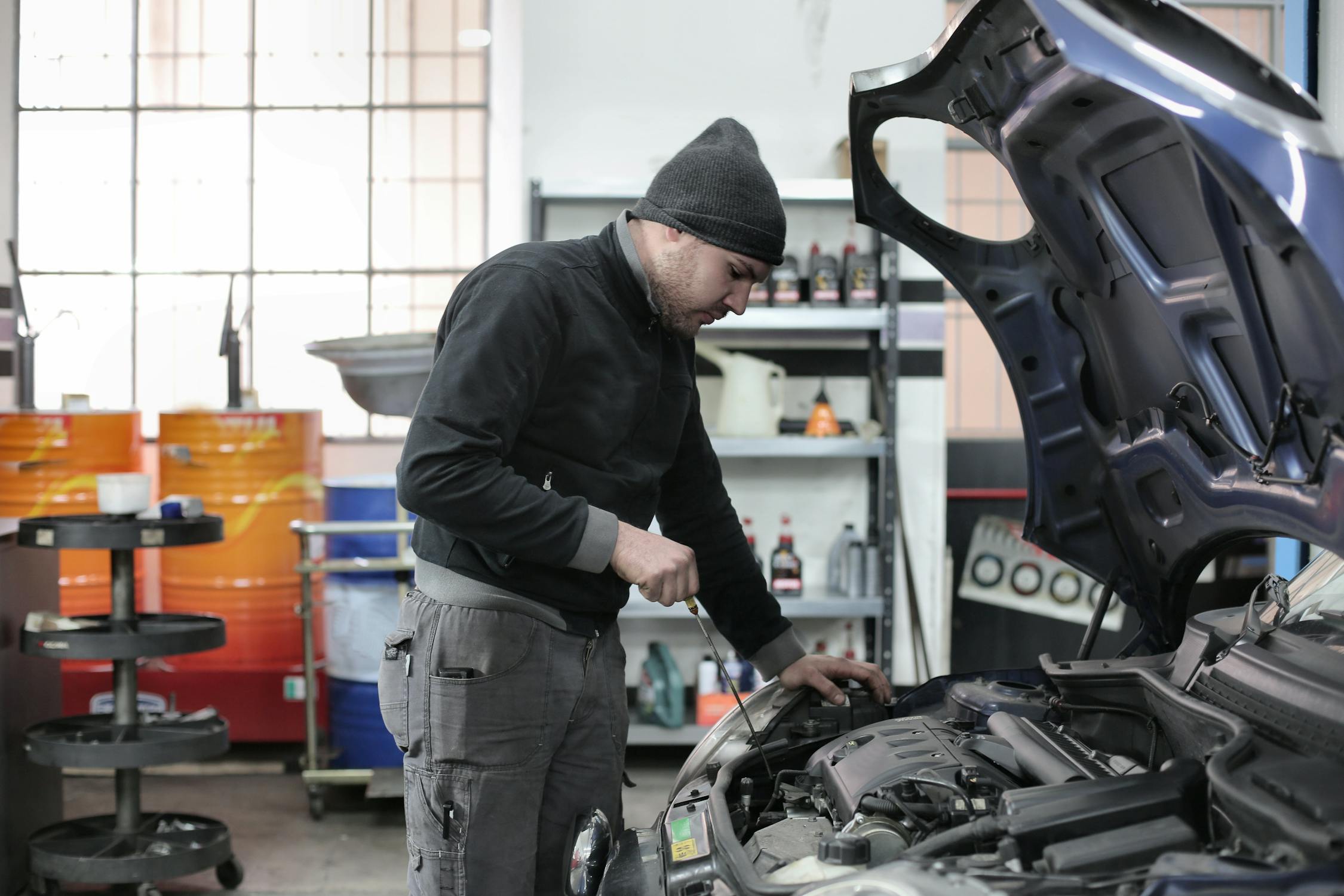
Photo by Andrea Piacquadio / Pexels
Santa Rosa is the largest city in Sonoma County, and its drivers deal with everything from Highway 101 gridlock to mountain roads and wildfire smoke. Between the College Ave corridor, the Highway 12 interchange, Mark West Springs Road, and downtown congestion around Railroad Square, your car works harder than you might realize.
This guide covers what Santa Rosa drivers actually need to know about vehicle maintenance: what your local driving conditions do to your car, how wildfire smoke season affects your vehicle, when to get specific services, and how to avoid expensive surprises. Whether you have been in Santa Rosa for decades, you are an SRJC student, or you just moved to the area, this is the practical information that keeps your vehicle running and your repair bills manageable.
What Santa Rosa Driving Conditions Do to Your Car
Every area has its own driving conditions that affect vehicle maintenance. Santa Rosa has more variety than most cities its size. Here is what matters.
Dealing with this issue in Sonoma County?
Our ASE and ATRA certified shop team diagnoses the real problem instead of guessing.
Serving the North Bay:
Highway 101: The Santa Rosa Gauntlet
Highway 101 through Santa Rosa is one of the busiest stretches of road in Sonoma County. The College Ave to Steele Lane corridor sees heavy commuter traffic morning and evening, and construction projects seem to be a permanent fixture. This daily 101 grind creates specific maintenance needs:
Transmission stress from constant stop-and-go. The 101 corridor through Santa Rosa is not highway driving -- it is an extended stop-and-go zone during commute hours. Your transmission works hardest during acceleration and deceleration cycles, not steady cruising. If you are in this traffic daily, your transmission fluid degrades faster and should be changed more frequently than the manufacturer recommends.
Brake wear from unpredictable traffic. The 101 through Santa Rosa mixes highway-speed sections with sudden slowdowns at the College Ave exit, the Downtown/Railroad Square area, and the Steele Lane interchange. This constant variation -- cruise, brake, cruise, brake -- wears pads faster than either pure city driving or true highway driving alone.
Engine stress from idling. Sitting in 101 traffic with your engine running but not moving is hard on your motor. Extended idling causes carbon buildup, dilutes oil faster, and puts extra load on the cooling system. If you commute through the Santa Rosa 101 corridor daily, factor that idle time into your oil change schedule.
Highway 12: East-West Crossroads
Highway 12 is Santa Rosa's east-west artery. Take it east toward Sonoma Valley wine country or west toward Sebastopol and the coast. Both directions create specific vehicle wear:
12 East toward Sonoma Valley. The winding sections between Santa Rosa and Kenwood include elevation changes, curves, and sections of rough pavement. This is harder on brakes (downhill sections), steering and suspension (curves and road surface), and tires than straight highway driving.
12 West toward Sebastopol and the coast. This direction carries fog from the coast into Santa Rosa, especially in summer mornings and fall evenings. The moisture affects visibility and creates damp road conditions that test your wipers, defrosters, headlights, and tire traction even when it is not raining.
The 101/12 interchange. One of the busiest intersections in Sonoma County. The merge zones, lane changes, and speed transitions at this interchange create heavy brake and transmission demand during peak hours.
Mark West Springs Road: Mountain Curves and Fire Recovery
If you live in the Mark West area or commute on Mark West Springs Road, your car faces conditions that most Santa Rosa drivers do not experience:
Mountain grades and curves. Steep grades mean your brakes work overtime on the way down and your transmission works harder on the way up. If you drive this road daily, get brake inspections every six months instead of annually. Listen for any grinding, squealing, or pulsing when you brake -- these are signs that pads or rotors need attention.
Post-fire road reconstruction. Large sections of Mark West Springs Road were rebuilt after the 2017 fires, and ongoing construction continues in parts of the corridor. Construction zones mean uneven pavement, gravel, temporary surfaces, and debris -- all of which stress tires, suspension, and alignment.
Debris and wildlife. The wooded and semi-rural sections of Mark West Springs Road bring falling branches, gravel washout after rains, and wildlife crossings. Keep your headlights in good working order, maintain good tire tread for sudden stops, and inspect your undercarriage periodically if you hear any contact with road debris.
Fountaingrove Area: Post-Fire Rebuilt Roads
The Fountaingrove neighborhood was heavily impacted by the 2017 Tubbs Fire, and road rebuilding and new construction have been ongoing. Driving in Fountaingrove means:
- Construction zones with uneven surfaces. New pavement meeting old pavement creates seams and elevation changes that stress suspension and knock wheels out of alignment.
- Construction debris. Nails, screws, gravel, and other debris from building sites increase the risk of tire punctures and windshield chips.
- Frequent stops and detours. Construction flaggers and temporary road patterns increase brake and transmission wear from constant stopping and starting.
If you live in or regularly drive through Fountaingrove, check your tires more frequently for punctures, get alignment checked every six months, and inspect your cabin air filter -- construction dust clogs filters faster than normal.
Farmers Lane, 4th Street, and Downtown Congestion
Santa Rosa's main surface streets create their own vehicle wear patterns:
Farmers Lane is one of the most congested surface streets in Sonoma County. The signal timing creates a stop-and-go rhythm that is particularly hard on brakes and transmission. If Farmers Lane is part of your daily commute, expect to replace brake pads more frequently than average.
4th Street carries heavy traffic between downtown and the east side of town, with frequent stops at signals and crosswalks. The combination of traffic lights, pedestrians, and the SMART train crossing creates constant acceleration and deceleration.
Railroad Square and downtown. Tight turns, parallel parking, pedestrian traffic, and the SMART train crossings around the downtown transit mall all contribute to low-speed steering and suspension wear. The brick and uneven surfaces in parts of Railroad Square are also tough on tires and alignment.
SMART Train Crossings
The SMART train runs through Santa Rosa with several at-grade crossings. These crossings create sudden stops that many drivers are still not used to, and the railroad tracks themselves are rough on tires and suspension. Cross railroad tracks slowly and at a perpendicular angle when possible to minimize impact.
Wildfire Smoke Season: A Santa Rosa-Specific Maintenance Concern
Santa Rosa knows wildfire smoke better than almost any city in California. The 2017 Tubbs Fire, the 2019 Kincade Fire, and recurring fire seasons have made smoke a regular part of life from September through November. Here is what that smoke does to your car:
Engine Air Filter
Your engine air filter catches particles before they enter the combustion chamber. During heavy smoke events, this filter works overtime. A filter that would normally last 15,000-20,000 miles can clog in half that time during a bad smoke season. A clogged engine air filter restricts airflow, reduces fuel efficiency, and can cause rough running or reduced power.
What to do: Check your engine air filter after any extended smoke event (more than a few days of poor air quality). Replace it if it looks gray, brown, or clogged with visible debris. This is an easy DIY check -- your owner's manual shows where the air filter box is located.
Cabin Air Filter
Your cabin air filter cleans the air coming into the passenger compartment through the HVAC system. During smoke season, this filter absorbs smoke particles, ash, and soot. A saturated cabin filter means you are breathing unfiltered smoky air inside your car -- defeating the purpose of keeping windows closed.
What to do: Replace your cabin air filter before smoke season starts (late August or early September) and again after a heavy smoke season. If you can smell smoke inside your car with the windows up and recirculation on, the cabin filter is likely saturated.
Exterior and Paint
Wildfire ash is mildly acidite and can damage paint, especially if it gets wet on the surface (from dew or light rain mixed with ash). It also clogs wiper blades and coats windshields.
What to do: Wash your car after smoke events -- do not just wipe ash off dry, as the gritty particles can scratch paint. Use the washer fluid to clear windshields rather than dry-wiping. Replace wiper blades if they start streaking after smoke season.
HVAC System
Running your AC or heater during smoke season pulls smoke particles through the entire HVAC system. Even after replacing the cabin filter, smoke odor can linger in the ducts.
What to do: After smoke season, run the AC on recirculation mode for several minutes to help clear residual odor. If the smell persists, an HVAC system cleaning can remove embedded smoke particles from the ductwork.
The Essential Maintenance Schedule for Santa Rosa Drivers
Here is what to stay on top of, adjusted for Santa Rosa-area driving conditions:
Every 5,000-7,500 Miles (or Every 6 Months)
- [Oil change](/services/oil-change). Most modern vehicles use full synthetic oil and can go 7,500 miles. If you sit in 101 traffic through Santa Rosa daily or do mostly short trips around town, lean toward 5,000 miles. This is the single most important maintenance item for engine longevity.
- Tire rotation and pressure check. Rotating tires every oil change evens out wear patterns. Especially important for Santa Rosa drivers dealing with Mark West Springs Road, Fountaingrove construction zones, or Highway 12 curves.
- Multi-point inspection. A good shop will check fluids, belts, hoses, brakes, and suspension components during your oil change. This catches small problems before they become expensive ones.
Every 15,000-30,000 Miles (or Annually)
- [Brake inspection](/services/brakes). Santa Rosa drivers on 101, Farmers Lane, and Mark West Springs Road wear brakes faster than average. An annual brake inspection catches pad wear, rotor thickness issues, and caliper problems early.
- [Transmission fluid](/blog/transmission-fluid-change-cost) check. If you commute through Santa Rosa's 101 corridor with stop-and-go traffic or drive Mark West Springs Road grades, have the fluid condition checked annually. Dark, burnt-smelling fluid needs to be changed regardless of mileage.
- Alignment check. Every six months if you drive Fountaingrove construction zones or Mark West Springs Road regularly. Annually for everyone else.
- Cabin air filter and engine air filter. Santa Rosa's combination of wildfire smoke, construction dust, pollen, and agricultural particles means filters clog faster. Replace at least annually -- and check after any heavy smoke event.
Get an accurate repair quote — not an internet estimate.
Every vehicle is different. Call for transparent, honest pricing.
Serving the North Bay:
Every 30,000-60,000 Miles
- Coolant flush. Essential for handling Santa Rosa's temperature extremes -- from near-freezing winter mornings to 100-degree-plus summer afternoons. Old coolant loses its protective properties and can lead to overheating. Visit our cooling system service for more information.
- Spark plug replacement. Modern iridium plugs last 60,000-100,000 miles, but check your owner's manual. Worn plugs cause rough running, poor fuel economy, and can trigger a check engine light.
- [Transmission service](/services/transmission). Full fluid exchange with filter replacement. Critical for vehicles with 50,000-plus miles, especially with 101 commuting or regular mountain driving on Mark West Springs Road or Highway 12.
- Brake fluid flush. Brake fluid absorbs moisture over time, which lowers its boiling point and can cause spongy brakes. This is especially important for drivers who use heavy braking on mountain descents.
Seasonal Maintenance Calendar for Santa Rosa
Spring (March-May)
- Inspect tires for pothole damage from winter rains -- Santa Rosa streets develop potholes every wet season
- Check alignment if the car pulls or steering feels off
- Replace wiper blades if they streak or skip
- Test AC system before the heat hits -- much easier to get an appointment in April than in July
- Inspect steering and suspension if you drive Mark West Springs Road or Fountaingrove regularly
Summer (June-August)
- Check coolant level and condition -- overheating is the biggest summer risk in Santa Rosa, where temperatures regularly exceed 100 degrees
- Inspect belts and hoses -- heat accelerates rubber deterioration
- Check AC performance -- weak cooling could be a simple recharge or a compressor issue
- Test battery -- extreme heat shortens battery life more than cold does
- Keep an eye on tire pressure -- heat increases pressure, and overinflated tires wear unevenly and have less traction
- Wildfire prep: replace engine air filter and cabin air filter before smoke season begins in late August or September
Fall (September-November)
- Wildfire smoke response: check and replace cabin air filter and engine air filter after any extended smoke event
- Wash car after ash events -- do not dry-wipe ash off paint
- Test battery -- summer heat weakens batteries, and the first cold snap reveals it
- Check heater and defroster -- you will need both by late October
- Inspect brake condition before the wet season -- good brakes are critical on wet roads
- Check tire tread depth -- minimum 4/32" for wet weather safety (2/32" is the legal minimum but not enough for rain)
Winter (December-February)
- Verify tire tread and consider all-season tires if yours are worn -- wet roads and Tule fog demand good traction
- Check all fluid levels -- cold weather thickens fluids and reveals weak spots in seals and gaskets
- Test all lights -- shorter days and Tule fog mean you need headlights, fog lights, and brake lights working properly
- Keep wiper fluid full -- winter rain plus 101 spray means you use a lot
- Tule fog awareness: make sure headlights, tail lights, and defrosters are all fully functional. Tule fog in the Santa Rosa Plain can reduce visibility to near zero
- Watch for flooding near Mark West Creek -- avoid driving through standing water, which can damage your engine, electrical system, and transmission
Student Car Care: SRJC and SSU
Santa Rosa Junior College brings thousands of students into Santa Rosa, and many SSU students in nearby Rohnert Park drive into Santa Rosa regularly. If you are a student with a car, here is what matters most.
The Essentials (Do Not Skip These)
Oil changes on schedule. This is the cheapest insurance against engine damage. If you are driving an older car, this matters even more. Set a phone reminder based on your mileage interval.
Tire pressure. Buy a tire pressure gauge and check monthly. Underinflated tires waste gas, wear faster, and handle worse. The correct pressure is on the sticker inside your driver's door jamb, not on the tire sidewall.
Listen to your car. New noises, vibrations, warning lights, or changes in how the car drives are your car telling you something is wrong. A check engine light does not always mean an expensive repair, but ignoring it often turns a cheap fix into an expensive one.
Before Long Drives Home
If you drive home for breaks -- whether that is an hour to the East Bay or further -- do a quick check before you leave:
- Check tire pressure and tread depth (use the penny test: if you can see the top of Lincoln's head, your tread is too low)
- Check oil level with the dipstick
Get an accurate repair quote — not an internet estimate.
Every vehicle is different. Call for transparent, honest pricing.
Serving the North Bay:
- Check coolant level in the overflow reservoir (never open the radiator cap when hot)
- Test all lights -- headlights, brake lights, turn signals
- Make sure wiper blades work and washer fluid is full
Five minutes of checking can prevent a breakdown on Highway 101 or I-80.
Budget-Friendly Maintenance Strategy
You do not need to spend a fortune on car care as a student. Here is the priority order:
1. Oil changes on time -- the highest-ROI maintenance item
2. Tire pressure monthly -- free to check, saves money on gas and tire replacement
3. Annual [brake](/services/brakes) inspection -- catching brake problems early saves hundreds
4. Annual fluid check -- have a shop check all fluids during your oil change
5. Address warning lights promptly -- a check engine light or P0420 code does not always mean an expensive repair, but ignoring it usually does
When to Get Help vs. DIY
Some maintenance you can handle yourself. Some you should leave to a professional.
DIY-friendly:
- Checking and topping off tire pressure
- Checking oil level
- Replacing wiper blades
- Checking and replacing cabin air filter (usually accessible behind the glove box)
- Replacing engine air filter
- Topping off washer fluid
Leave to a professional:
- Oil changes (unless you have the tools, space, and a way to dispose of oil properly)
- Brake work (safety-critical -- not worth the risk of doing wrong)
- Transmission service (requires specialized equipment and fluid)
- Anything involving the cooling system under pressure
- Electrical diagnostics (modern vehicles are too complex for guesswork)
Frequently Asked Questions
How often should Santa Rosa drivers get an oil change?
Every 5,000 to 7,500 miles or every 6 months. If you commute through the 101 corridor with regular stop-and-go traffic or do mostly short trips around town, lean toward 5,000 miles. Vehicles using full synthetic oil can often go 7,500-10,000 miles. Check your owner's manual for your specific vehicle.
Does wildfire smoke damage my car in Santa Rosa?
Wildfire smoke clogs engine air filters and cabin air filters faster than normal. Heavy smoke seasons can cut filter life in half. Ash deposits can also damage paint if left on the surface. During and after smoke events, replace your cabin air filter, inspect your engine air filter, and wash your car to remove ash. If your car was parked outside during heavy smoke, check the air intake for debris.
What car maintenance do I need for driving Mark West Springs Road?
Mark West Springs Road combines mountain curves, steep grades, and post-fire road reconstruction. This stresses brakes (heavy use downhill), transmission (frequent shifting on grades), and suspension (construction zones and uneven surfaces). If you drive this road regularly, get brake inspections every six months, have transmission fluid checked annually, and inspect tires and alignment more frequently.
Where is the closest transmission specialist to Santa Rosa?
Rohnert Park Transmission at 305 Laguna Dr in Rohnert Park is the nearest ATRA-certified transmission specialist to Santa Rosa -- about 10 minutes south on Highway 101. Call (707) 584-7727.
What seasonal car maintenance do Santa Rosa drivers need?
Spring: check for pothole damage, get alignment checked, test AC. Summer: check coolant, replace air filters before smoke season, monitor tire pressure and battery. Fall: replace air filters after smoke season, check brakes before wet weather, verify tire tread. Winter: check all fluids, test lights for Tule fog, keep wiper fluid full, and avoid driving through flooded areas near Mark West Creek. Santa Rosa's extreme heat, wildfire smoke, and wet winters mean every vehicle system gets tested throughout the year.
Keep Your Car Running Right in Santa Rosa
Vehicle maintenance is not exciting, but it is a lot cheaper than vehicle repair. The difference between a routine oil change and an engine rebuild is usually just paying attention and staying on schedule.
Santa Rosa's combination of heavy highway commuting, mountain roads, post-fire construction zones, wildfire smoke season, temperature extremes, and winter flooding means your car works harder than you might think. Stay on top of the basics, address warning signs promptly, and find a shop you trust.
If you need help with anything from a routine oil change to a complex transmission diagnosis, we are about 10 minutes south of Santa Rosa on Highway 101 and we have been doing this since 1997.
Call (707) 584-7727 or stop by 305 Laguna Dr, Rohnert Park. Monday through Thursday 7:30AM-5PM, Friday 7AM-3PM.
Tags:
Written by
Fernando Gomez
Owner, Rohnert Park Transmission & Auto Repair
Fernando brings over 28 years of automotive repair experience to every diagnosis and repair. As the owner of Rohnert Park Transmission & Auto Repair, he leads a team of ASE-certified, ATRA-member technicians specializing in transmission diagnostics, complex drivability issues, and preventive maintenance — with a focus on getting it right the first time.
Need Professional Auto Service?
Trust your vehicle to Rohnert Park's transmission and auto repair experts. We offer comprehensive diagnostics and repairs with a commitment to quality and transparency.
Related Articles
Best Auto Repair Shops Near Santa Rosa CA: 2026 Guide
Compare the best auto repair shops in and near Santa Rosa. Honest reviews of local mechanics by specialty.
Auto Repair & Transmission Services Near Santa Rosa
Rohnert Park Transmission serves Santa Rosa drivers -- 10 minutes south on Highway 101. ATRA-certified transmission specialist.
Sonoma County Auto Repair Guide
Find trusted auto repair across Sonoma County. Transmission, brakes, engine, and full-service maintenance.