Pricing Note
Prices shown are national averages for general reference. Costs in California and at specialty shops are typically higher due to regional labor rates and parts availability. Every vehicle is different.
Call (707) 584-7727 for an accurate estimate for your vehicle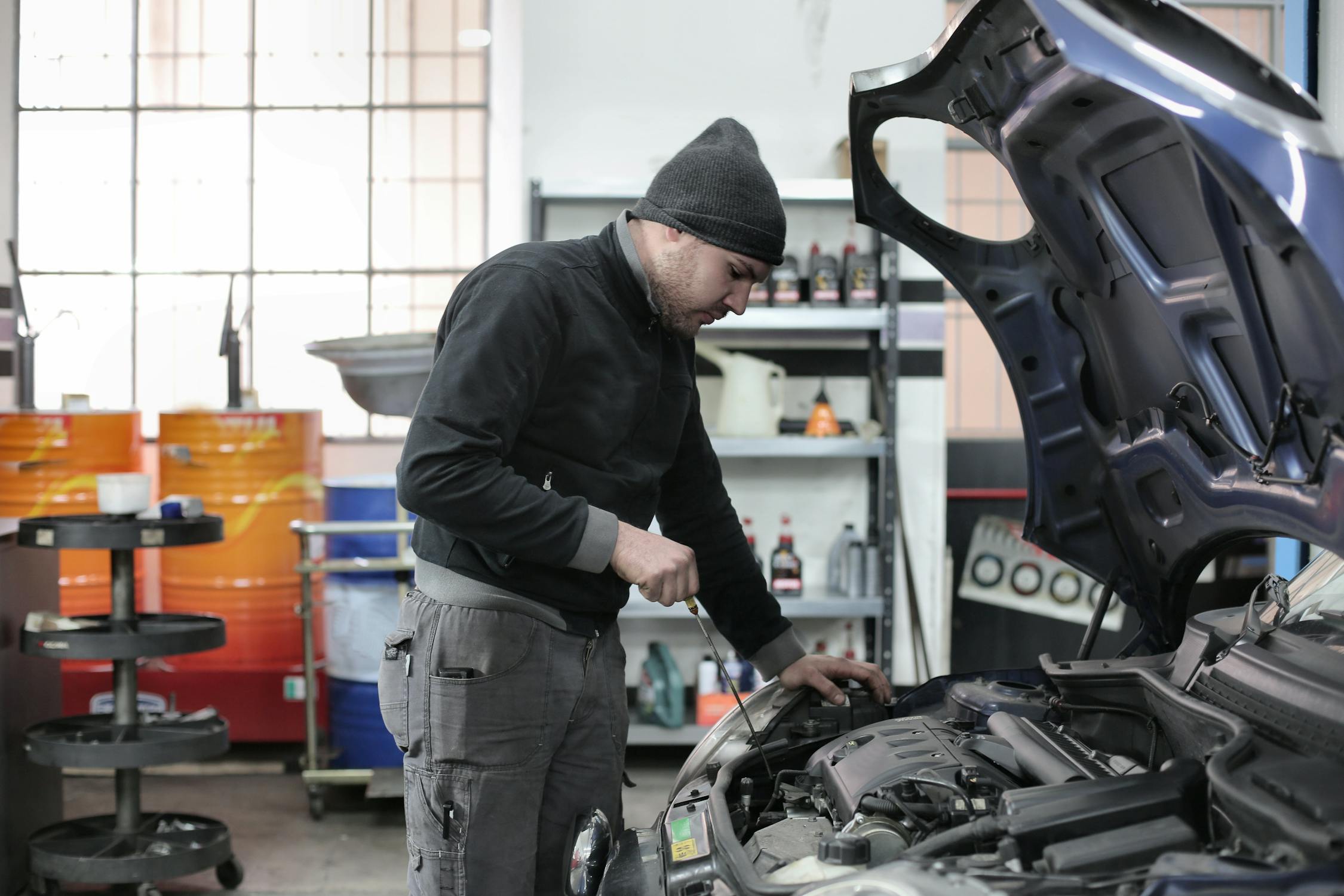
Photo by Andrea Piacquadio / Pexels
Key Takeaway: Petaluma's unique combination of Highway 101 commuting, rural road driving, river humidity, and Sonoma Mountain terrain creates specific wear patterns on your vehicle. Understanding these local factors helps you maintain your car better and catch problems before they become expensive repairs.
Petaluma is not just any Sonoma County city. It is a river town with a growing downtown, a gateway to the coast, and a bedroom community for commuters heading north and south on 101. Each of these roles puts different demands on your vehicle.
This guide covers car maintenance specific to Petaluma driving conditions. Not generic advice you can find anywhere -- actual local factors that affect how your car wears and when it needs service.
How Petaluma Driving Conditions Affect Your Car
Dealing with this issue in Sonoma County?
Our ASE and ATRA certified shop team diagnoses the real problem instead of guessing.
Serving the North Bay:
Highway 101: The Petaluma Commuter Corridor
If you commute on Highway 101, your car experiences what manufacturers call "severe driving conditions" -- and it has nothing to do with speed. It is the constant acceleration and deceleration through traffic that wears components faster than steady-state highway driving.
The Petaluma stretch of 101 has specific trouble spots that stress your vehicle:
The Lakeville Highway interchange (Exit 472): Merging onto 101 northbound from Lakeville Highway involves a short acceleration lane and immediate traffic negotiation. This quick-accelerate-then-brake pattern is hard on transmissions and brakes.
The Highway 116 junction: Where 101 meets the Sonoma Highway junction, traffic patterns become unpredictable. Drivers merge, exit, and change lanes in a short stretch. Your transmission shifts constantly, and your brakes get a workout.
Petaluma Boulevard exits: Both the Washington Street and Petaluma Boulevard exits involve deceleration from highway speed on relatively short off-ramps. This is brake-intensive driving that accelerates pad and rotor wear.
The Novato-Petaluma corridor: Heading south, the stretch between Petaluma and Novato has grade changes that many drivers do not notice but their transmissions do. The gentle inclines cause automatic transmissions to hunt between gears under load, which accelerates transmission fluid degradation.
What this means for maintenance:
- Have your transmission fluid inspected annually if you commute on 101 daily
- Check brakes every 15,000 miles instead of the typical 20,000-25,000 mile interval
- Monitor tire wear patterns -- highway commuting causes center-tread wear that differs from city driving patterns
Lakeville Highway and the Coast Roads
Lakeville Highway is one of the most-used rural roads in Sonoma County, connecting Petaluma to the Highway 1 coast and the Point Reyes area. It is also one of the hardest roads on vehicles.
Why Lakeville Highway is tough on cars:
- Narrow lanes and tight curves force constant steering corrections that wear steering and suspension components
- Agricultural traffic (tractors, trucks, equipment) means frequent braking and slow-speed following that overheats brakes
- Road surface quality degrades significantly in winter -- potholes, crumbled edges, and uneven patches damage tires and wheels
- No shoulder in many sections means gravel and debris damage to undercarriage and tires
Similar conditions exist on Chileno Valley Road, Red Hill Road, and Bodega Avenue heading toward Sebastopol. If you regularly drive any of these routes, add an extra alignment check to your annual maintenance.
The Petaluma River Effect
Petaluma's river location creates higher humidity levels than inland Sonoma County cities like Santa Rosa or Rohnert Park. This moisture affects your vehicle in ways you might not expect:
- Brake rotor rust: Even overnight, moisture causes surface rust on brake rotors. You might hear a light grinding sound on the first few stops in the morning -- this is normal. But persistent moisture accelerates rotor wear over time.
- Exhaust system corrosion: The underside of your vehicle, especially the exhaust system and muffler, corrodes faster in humid environments.
- Electrical connections: Moisture can cause intermittent electrical issues -- flickering lights, slow power windows, or erratic sensor readings. Annual electrical system inspections catch these before they strand you.
- Battery degradation: Humidity accelerates battery terminal corrosion. Clean your battery terminals during every oil change.
Sonoma Mountain Driving
Drivers who cross Sonoma Mountain via Roberts Road, Arnold Drive, or Bennett Valley Road deal with steep grades that stress three critical systems:
1. [Brakes](/services/brakes): Downhill sections cause brake fade if you ride the brakes instead of engine braking. Use a lower gear on descents.
2. [Cooling system](/services/heating-cooling): Climbing under load in warm weather pushes engine temperatures up. If your temperature gauge creeps above normal on mountain grades, get your cooling system inspected.
3. [Transmission](/services/transmission): Uphill climbing under load is the hardest work an automatic transmission does. If your transmission slips, shudders, or hesitates on hills, do not ignore it.
Seasonal Maintenance Calendar for Petaluma
Petaluma's climate is mild compared to most of the country, but it has distinct seasonal patterns that affect vehicle maintenance.
Spring (March - May)
- Post-winter inspection: Check tires for winter pothole damage, inspect brakes after wet-weather driving, look for rust formation on undercarriage components
- AC system test: Run your AC before the first hot day. Refrigerant leaks and compressor issues are easier to fix before you desperately need cold air
- Allergy season tip: Replace your cabin air filter. Petaluma's spring pollen levels are significant, and a clogged cabin filter reduces AC efficiency and air quality
- [Tire](/services/tires) rotation: Spring is a good time for rotation and alignment check after winter road conditions
Get an accurate repair quote — not an internet estimate.
Every vehicle is different. Call for transparent, honest pricing.
Serving the North Bay:
Summer (June - August)
- [Cooling system](/services/heating-cooling) check: Petaluma can hit 90-100 degrees in summer. Have your coolant level, hoses, and radiator cap inspected before the heat arrives
- [Battery](/services/electrical) test: Heat kills car batteries faster than cold. A battery that barely survived winter may fail in summer heat. Test it now
- Tire pressure: Check monthly. Summer heat increases tire pressure -- overinflated tires wear faster in the center and have less grip
- Road trip prep: Many Petaluma families head to the coast in summer. Before any road trip, check oil level, coolant, tire condition, and brakes
Fall (September - November)
- Rain preparation: First rains after dry summer create dangerously slick roads. Check tire tread depth -- worn tires on wet roads are the number one safety risk
- Wiper blades: Replace before the rainy season, not during it. Petaluma gets heavy winter rain and effective wipers are critical for 101 commuting
- Headlight check: Days get shorter. Make sure all exterior lights work -- headlights, taillights, brake lights, and turn signals. Foggy mornings on the Petaluma flats demand good lighting
- Heater test: Run your heater before you need it. A failed heater core or blend door actuator is a cold, miserable surprise in December
Winter (December - February)
- Wet weather driving awareness: Petaluma gets most of its rain November through March. Brakes, tires, and wipers are your safety trifecta
- Pothole season: Winter rain deteriorates roads. Lakeville Highway, Old Redwood Highway, and Petaluma Boulevard develop potholes that damage tires, wheels, and suspension
- Flood zone awareness: Low-lying areas near the Petaluma River can flood during heavy rain events. Never drive through standing water -- it can hydro-lock your engine and destroy your transmission
- Defog system: Make sure your defroster works before foggy season. Tule fog on the Petaluma flats can drop visibility to near zero
DIY vs. Professional: What Petaluma Drivers Can Handle
Some maintenance you can do yourself. Some you should not. Here is a practical guide:
Safe DIY Tasks
- Check tire pressure: Monthly. Use a $10 gauge. Petaluma gas stations on Petaluma Boulevard and Lakeville Highway have air pumps
- Check oil level: Monthly between oil changes. Pull the dipstick, wipe, reinsert, read
- Replace wiper blades: Simple clip-on replacement at any auto parts store
- Replace cabin air filter: Usually behind the glove box. YouTube your specific car model
- Check and top off coolant: When the engine is COLD. Never open a hot radiator cap
- Clean battery terminals: Disconnect, brush with baking soda and water, reconnect
- Check brake fluid level: Under the hood, look for the small clear reservoir. Fluid should be between MIN and MAX lines
Leave to the Professionals
- [Brake pad and rotor replacement](/services/brakes): Requires proper torque specifications and bleeding if caliper work is involved
- [Transmission service](/services/transmission): Wrong fluid type or improper procedure can cause expensive damage
- [Check engine light diagnosis](/blog/check-engine-light-flashing): Reading the code is easy; correctly interpreting it requires experience and context
- [Timing belt replacement](/services/auto-repair): A mistake here can destroy your engine
- [Suspension and alignment](/services/steering-suspension): Requires specialized equipment and calibration
Get an accurate repair quote — not an internet estimate.
Every vehicle is different. Call for transparent, honest pricing.
Serving the North Bay:
- [AC repair](/services/heating-cooling): Refrigerant handling requires EPA certification and specialized equipment
- Any repair involving safety systems: Brakes, steering, airbags -- do not guess on safety
Warning Signs Petaluma Drivers Should Never Ignore
Catching problems early saves money. Here are the warning signs that mean "get to a shop this week, not next month":
- [Transmission](/services/transmission) issues: Delayed shifting, slipping between gears, shuddering when accelerating, transmission warning light, or check engine light with a P0700-series code
- [Brake](/services/brakes) problems: Grinding or metal-on-metal sounds, vibration when braking, brake pedal going to the floor, car pulling to one side under braking
- [Engine](/services/engine) overheating: Temperature gauge above normal, steam from under the hood, sweet smell of coolant. Pull over immediately and do not drive further
- [Steering](/services/steering-suspension) changes: Car pulling to one side, vibration in the steering wheel at highway speed, clunking sounds when turning
- Fluid leaks: Red fluid (transmission), green or orange fluid (coolant), dark brown fluid (oil), clear fluid with a slippery feel (brake fluid)
- Unusual smells: Burning rubber, hot oil, sweet coolant smell, or sulfur/rotten eggs (catalytic converter issue -- see P0420 guide)
Where to Get Service in the Petaluma Area
Petaluma has several good auto repair options in town, plus additional specialists just 15 minutes north in Rohnert Park. For a detailed comparison of local shops, see our Best Auto Repair Shops Near Petaluma 2026 guide.
For routine maintenance -- oil changes, brake inspections, tire rotations -- convenience matters most. Pick a quality shop close to your home or office in Petaluma.
For specialty work -- transmission repair, complex diagnostics, drivetrain issues -- consider the 15-minute drive to an ATRA-certified specialist. Getting the diagnosis right the first time saves money on parts and labor.
Frequently Asked Questions
How often should Petaluma drivers change their oil?
Every 5,000-7,500 miles with synthetic oil, or 3,000-5,000 miles with conventional oil. If you commute on Highway 101 daily, use the shorter interval -- stop-and-go traffic counts as severe driving conditions according to most manufacturers.
What car maintenance is most important for 101 commuters?
Brake inspection and transmission service are the two most critical items. The constant speed changes between Petaluma and Santa Rosa accelerate brake pad wear and stress automatic transmissions. Check brakes every 15,000 miles and have transmission fluid inspected annually.
Does driving on Lakeville Highway damage your car?
The road's narrow lanes, tight curves, and rough patches accelerate wear on tires, suspension, and alignment. Winter conditions make it worse. If you drive Lakeville Highway regularly, check alignment every 6 months instead of annually.
When should I get my brakes checked?
Every 15,000 miles for Petaluma commuters, or immediately if you hear squealing, grinding, or feel vibration when braking. The brake pedal feeling soft or the car pulling to one side are also immediate-inspection signals.
Is it worth driving to Rohnert Park for auto repair?
For routine maintenance, staying in Petaluma makes sense. For specialty work like transmission repair or complex check engine light diagnosis, the 15-minute drive to an ATRA-certified specialist in Rohnert Park can save money by getting it right the first time. Call (707) 584-7727 for a free estimate.
Keep Your Car Running Right in Petaluma
Petaluma driving is not extreme, but it is not gentle either. The 101 commute, rural roads, river humidity, and mountain grades all leave their mark on your vehicle. The good news is that consistent maintenance prevents most problems.
Follow the seasonal calendar above, pay attention to warning signs, and choose the right shop for the right repair. A 15-minute drive to a specialist is always better than a second trip to a generalist who guessed wrong.
If you have questions about your vehicle's maintenance schedule, need a transmission inspection, or want honest advice about a check engine light, we are here to help. Twenty-eight years of experience serving Petaluma and Sonoma County.
Call (707) 584-7727 or stop by 305 Laguna Dr, Rohnert Park. We are open Monday through Thursday 7:30AM-5PM and Friday 7AM-3PM.
Tags:
Written by
Fernando Gomez
Owner, Rohnert Park Transmission & Auto Repair
Fernando brings over 28 years of automotive repair experience to every diagnosis and repair. As the owner of Rohnert Park Transmission & Auto Repair, he leads a team of ASE-certified, ATRA-member technicians specializing in transmission diagnostics, complex drivability issues, and preventive maintenance — with a focus on getting it right the first time.
Need Professional Auto Service?
Trust your vehicle to Rohnert Park's transmission and auto repair experts. We offer comprehensive diagnostics and repairs with a commitment to quality and transparency.
Related Articles
Best Auto Repair Shops Near Petaluma 2026
Compare the top auto repair shops near Petaluma by certifications, reviews, specialties, and pricing.
Auto Repair Services for Petaluma
Full-service auto repair for Petaluma drivers. ASE and ATRA certified technicians just 15 minutes from downtown.
Find a Mechanic in Sonoma County
Serving all of Sonoma County from Rohnert Park -- transmission repair, auto repair, and complete car care.