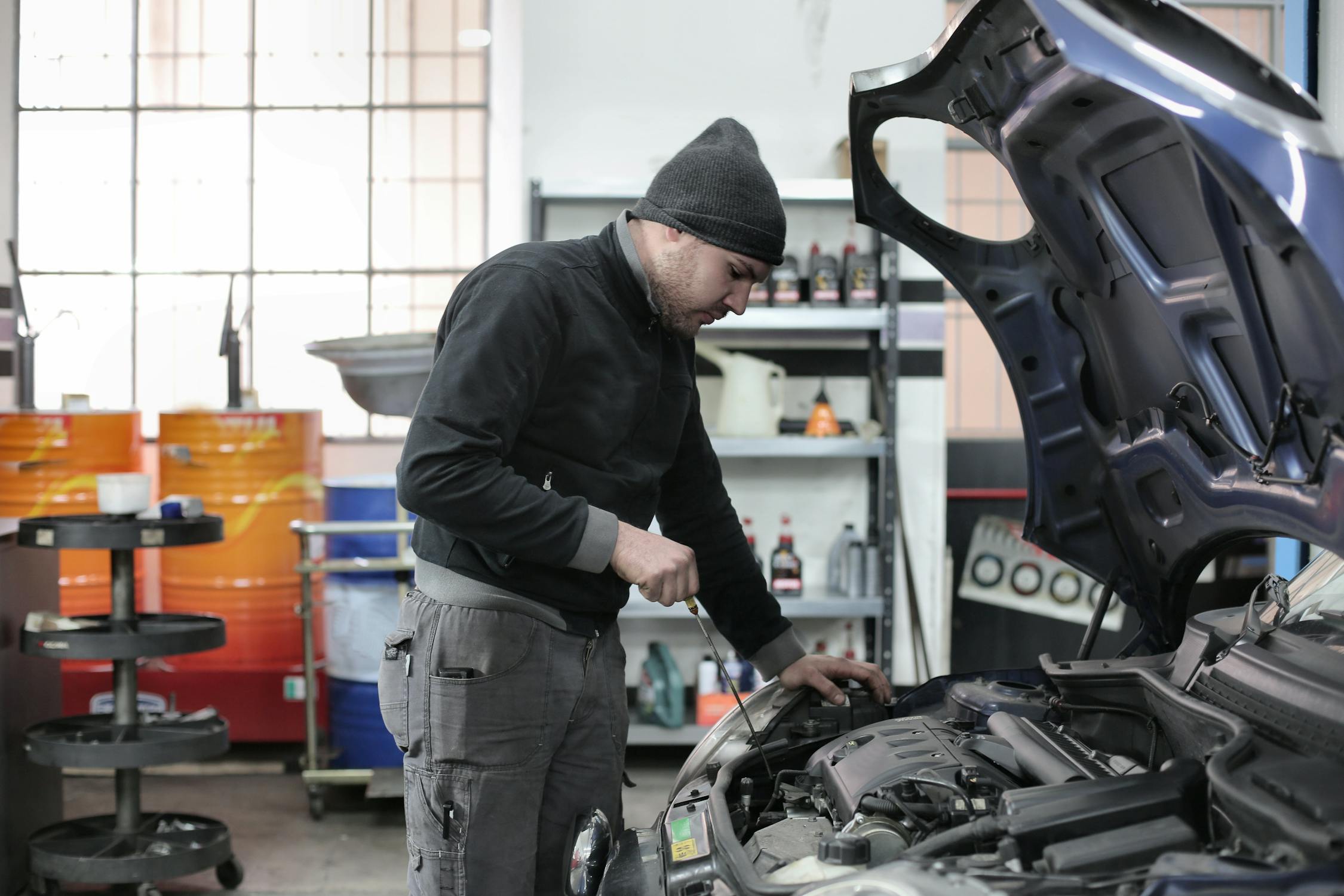
Photo by Andrea Piacquadio / Pexels
Novato sits at the northern edge of Marin County -- the gateway between the Bay Area and Sonoma County wine country. It is Marin's largest city, with over 55,000 residents, and most of them drive. A lot.
Whether you are commuting south to San Francisco on Highway 101, running errands on Novato Boulevard, heading to the coast on Highway 37, or navigating the San Marin Drive and Atherton Avenue corridors, your car works harder than you might think. The Bay Area commuter lifestyle puts serious mileage on vehicles, and Marin County's unique mix of coastal fog, summer heat, and winter rain creates conditions that accelerate wear on key systems.
This guide covers what Novato drivers actually need to know about keeping their vehicles in top shape: what your local driving conditions do to your car, when to get specific services, and how to avoid the expensive surprises that come from deferred maintenance.
What Novato Driving Conditions Do to Your Car
Dealing with this issue in Sonoma County?
Our ASE and ATRA certified shop team diagnoses the real problem instead of guessing.
Serving the North Bay:
Every area has driving conditions that affect vehicle maintenance differently. Here is what matters for Novato.
The Highway 101 Commute to San Francisco
This is the big one. Thousands of Novato residents make the 35-40 mile drive to San Francisco every workday. That is 70-80 miles per day, 350-400 miles per week, and over 18,000 miles per year -- just from commuting.
But it is not just the distance. The 101 corridor from Novato to SF is one of the hardest commutes on a vehicle in the entire Bay Area:
Transmission stress from constant speed changes. The drive starts as open freeway north of San Rafael, then turns into stop-and-go through Corte Madera, the Robin Williams Tunnel (Waldo Tunnel), and the Golden Gate Bridge approach. Your transmission shifts hundreds of extra times per commute compared to steady highway driving. Over months and years, this accelerates transmission fluid breakdown and internal wear.
Brake wear from the Waldo Grade. The descent from the Waldo Tunnel to the Golden Gate Bridge is steep, and in traffic it requires constant braking. This is exactly the type of driving that overheats brake pads and rotors. If your brakes squeal, pulse, or feel spongy after your commute home, they need attention.
Engine cooling system stress. Stop-and-go traffic on hot days -- especially climbing back over the Waldo Grade heading north in afternoon heat -- pushes your cooling system hard. Overheating is the number one cause of serious engine damage, and it starts with neglected coolant.
High-mileage wear on everything. At 18,000+ commute miles per year, you hit maintenance intervals roughly twice as fast as a driver who only does local trips. Oil changes, transmission service, brake pads, tires -- everything comes due sooner.
Novato Boulevard and Local Traffic
Novato Boulevard is the city's main commercial corridor, and it gets congested -- especially around the Vintage Oaks, Rowland Plaza, and downtown areas. The frequent stops, starts, turns, and parking lot maneuvers are classic city driving that is harder on your car than highway cruising:
- More [brake](/services/brake-repair) wear from frequent stopping
- More [transmission](/services/transmission) cycling from constant acceleration and deceleration
- More [steering and suspension](/services/steering-suspension-repair) wear from turns, speed bumps, and parking lot maneuvers
If most of your driving is local Novato errands rather than highway commuting, your car accumulates fewer miles but more wear per mile.
Atherton Avenue and San Marin Drive Corridors
These two corridors connect Novato's residential neighborhoods to Highway 101 and are the daily routes for thousands of residents. Atherton Avenue, especially the section between San Marin Drive and Highway 101, has traffic that backs up during commute hours. San Marin Drive through the San Marin and Indian Valley neighborhoods handles steady residential traffic with speed bumps and school zones.
The constant acceleration-braking pattern of these commuter corridors wears brakes and transmission components faster than steady driving. If you notice your brakes feeling different or your transmission shifting harder than usual, the daily Atherton-to-101 or San Marin-to-101 commute may be a contributing factor.
Novato to Hamilton Area
The Hamilton neighborhood -- built on the former Hamilton Air Force Base -- is connected to the rest of Novato via Highway 101 and Hamilton Parkway. Drivers going between Hamilton and central Novato often take the Nave Drive corridor or Highway 101 for just one exit.
These short highway trips are actually harder on your car than longer ones. Short trips do not give the engine and transmission time to reach full operating temperature, which means moisture does not fully burn off from the oil and fluids. Over time, this leads to sludge buildup and accelerated wear. If you make a lot of short Hamilton-to-Novato trips, consider slightly more frequent oil changes.
Marin County Humidity and Coastal Moisture
Novato is close enough to the coast that salt-laden moisture is a real factor. The fog that rolls in -- especially through the Highway 37 corridor and from the Petaluma River marshlands -- brings moisture that affects your vehicle in ways inland drivers do not experience:
- Brake rotor corrosion. You may notice a light rust coating on your brake rotors after a foggy night. This is normal and wears off quickly when you drive. But persistent exposure accelerates rotor wear and can cause a pulsation or grinding noise if rotors get too thin.
- Electrical connection corrosion. Moisture and salt air corrode electrical connectors, especially under the hood and at the battery terminals. If you experience intermittent electrical issues -- random warning lights, slow starts, flickering lights -- corrosion at a connector is a common culprit.
- Undercarriage rust. Vehicles parked outside in Novato's foggy conditions develop undercarriage corrosion faster than garaged vehicles. An annual undercarriage wash and inspection is good preventive care, especially for exhaust components and suspension hardware.
The Essential Maintenance Schedule for Novato Drivers
Here is what to stay on top of, adjusted for Novato and Marin County driving conditions:
Every 5,000-7,500 Miles (or Every 6 Months)
- [Oil change](/services/oil-change). Most modern vehicles use full synthetic oil and can go 7,500 miles between changes. If you commute to San Francisco daily, you will hit this interval every 4-5 months instead of 6. Do not go by time alone -- go by mileage. Highway commuters rack up miles fast.
- Tire rotation and pressure check. The 101 commute wears front tires faster due to steering loads. Rotating every oil change evens out wear and extends tire life. Check pressure monthly -- Marin's temperature swings from foggy mornings to warm afternoons can cause 3-5 PSI fluctuations.
- Multi-point inspection. A good shop checks fluids, belts, hoses, brakes, and suspension components during your oil change. For a high-mileage commuter vehicle, this inspection is your early warning system.
Every 15,000-30,000 Miles (or Annually)
- [Brake inspection](/services/brake-repair). Novato's combination of Highway 101 commuting, the Waldo Grade descent, and local stop-and-go means brakes wear faster than national averages. Annual inspection is minimum -- if you commute to SF daily, consider every 15,000 miles.
- [Transmission fluid](/blog/transmission-fluid-change-cost) check. The 101 commute with its constant speed changes degrades transmission fluid faster than steady driving. Have the fluid color and condition checked annually. Dark, burnt-smelling fluid needs to be changed regardless of what the mileage schedule says.
- Alignment check. Annually for most Novato drivers. More frequently if you hit a pothole or notice the car pulling to one side.
- Cabin air filter and engine air filter. Marin County's mix of pollen, seasonal dust, and occasional wildfire smoke means filters work harder. Replace annually or when inspection shows they are dirty.
Every 30,000-60,000 Miles
- Coolant flush. Critical for handling the temperature demands of 101 commuting -- especially stop-and-go traffic on hot days. Old coolant loses its protective properties and corrosion inhibitors.
Get an accurate repair quote — not an internet estimate.
Every vehicle is different. Call for transparent, honest pricing.
Serving the North Bay:
- [Spark plug](/services/tune-up) replacement. Modern iridium plugs last 60,000-100,000 miles. Worn plugs cause rough running, poor fuel economy, and can trigger a check engine light.
- [Transmission service](/services/transmission). Full fluid exchange with filter replacement. For 101 commuters with 50,000+ miles, this is not optional -- it is essential.
- Brake fluid flush. Brake fluid absorbs moisture over time -- and Marin County's foggy conditions accelerate this. Moisture-contaminated brake fluid has a lower boiling point, which can cause spongy or fading brakes during heavy use on the Waldo Grade.
The Bay Area Commuter Factor
Novato is fundamentally a commuter city. Most working residents drive to jobs in San Rafael, San Francisco, or other Bay Area locations. This commuter lifestyle creates a specific maintenance profile that differs from the average American driver:
Higher annual mileage. The average American drives about 13,500 miles per year. A Novato-to-SF commuter puts on 18,000-20,000+ miles per year from commuting alone, plus weekend and errand driving. At this rate, a vehicle that should last 200,000 miles hits that mark in 10 years instead of 15.
More severe-condition driving. Most manufacturer maintenance schedules have a "normal" and "severe" interval. Stop-and-go highway commuting, hilly terrain (the Waldo Grade), and temperature extremes all qualify as severe conditions. If you commute on 101, follow the severe-condition schedule in your owner's manual -- shorter intervals for oil, transmission fluid, and coolant.
Faster depreciation of wear items. Brakes, tires, transmission components, and suspension parts all wear faster with high-mileage commuting. Budget for replacing these items roughly every 3-4 years instead of every 5-6.
Seasonal Maintenance Calendar for Novato
Spring (March-May)
- Inspect tires for damage from winter rain potholes
- Check alignment if the car pulls or steering feels off
- Replace wiper blades if they streak or skip
- Test AC system before summer -- appointments are easier to get now than in July
- Check undercarriage for winter moisture corrosion
Summer (June-August)
- Check coolant level and condition -- overheating is the biggest summer risk, especially for 101 commuters stuck in traffic
- Inspect belts and hoses -- heat accelerates rubber deterioration
- Check AC performance -- a weak system may just need a recharge, or it could indicate a compressor issue
- Monitor tire pressure carefully -- heat increases pressure, and overinflated tires have less traction
- Check battery -- extreme heat shortens battery life more than cold does
Fall (September-November)
- Test battery -- a battery weakened by summer heat will fail when the first cold snap hits
- Check heater and defroster -- Novato fog and cold mornings start in October
- Inspect brake condition before the wet season -- good brakes are critical on wet roads and the Waldo Grade
- Check tire tread depth -- minimum 4/32" for wet weather safety (2/32" is the legal minimum but not enough for Marin County rain)
Winter (December-February)
- Verify tire tread and consider all-season tires if yours are worn
- Check all fluid levels -- cold weather thickens fluids and reveals weak spots in seals
- Test all lights -- shorter days and foggy mornings mean headlights are essential
- Keep wiper fluid full -- rain plus 101 road spray means heavy washer fluid use
- Watch for the fog-then-sun pattern -- rapid temperature changes stress cooling systems and tires
Get an accurate repair quote — not an internet estimate.
Every vehicle is different. Call for transparent, honest pricing.
Serving the North Bay:
When to Get Help vs. DIY
Some maintenance you can handle yourself. Some you should leave to a professional.
DIY-friendly:
- Checking and topping off tire pressure
- Checking oil level
- Replacing wiper blades
- Replacing cabin air filter (usually accessible behind the glove box)
- Replacing engine air filter
- Topping off washer fluid
Leave to a professional:
- Oil changes (unless you have the tools, space, and a way to dispose of oil properly)
- Brake work (safety-critical -- not worth the risk of doing wrong)
- Transmission service (requires specialized equipment and knowledge)
- Anything involving the cooling system under pressure
- Electrical diagnostics (modern vehicles are too complex for guesswork)
Frequently Asked Questions
How often should Novato drivers get an oil change?
Every 5,000 to 7,500 miles or every 6 months. If you commute to San Francisco on 101 daily, you will hit mileage intervals faster than time intervals -- go by mileage. Vehicles using full synthetic oil can often go 7,500-10,000 miles. Check your owner's manual, and follow the severe-condition schedule if you commute in stop-and-go traffic.
Does the Highway 101 commute from Novato to SF hurt my car?
Yes, it is one of the harder commutes on a vehicle in the Bay Area. The 70-80 mile round trip, combined with stop-and-go through Corte Madera and the Waldo Grade, accelerates wear on your transmission, brakes, and cooling system. Follow the severe-condition maintenance schedule in your owner's manual and pay extra attention to transmission fluid condition.
Does Marin County salt air affect my car?
Yes. Novato is close enough to the coast that salt-laden fog and moisture reach vehicles regularly. This accelerates corrosion on brake rotors, undercarriage components, exhaust systems, and electrical connections. If you park outside, an annual undercarriage wash and inspection for corrosion is worthwhile preventive maintenance.
Where is the closest transmission specialist to Novato?
Rohnert Park Transmission at 305 Laguna Dr is the nearest ATRA-certified transmission specialist to Novato -- about 25 minutes north via Highway 101. Call (707) 584-7727.
What seasonal car maintenance do Novato drivers need?
Spring: check for pothole damage, test AC. Summer: check coolant, inspect belts and hoses, monitor tire pressure. Fall: test battery, check brakes before wet season, verify tire tread. Winter: check all fluids, test lights, keep wiper fluid full. Marin County's variable climate -- fog, heat, rain, and coastal moisture -- tests every vehicle system throughout the year.
Keep Your Car Running Right in Novato
Novato drivers put serious miles on their vehicles. The 101 commute, local errands on Novato Boulevard, coast trips on Highway 37, and weekend drives through Marin's hills all add up. Your car works harder here than in a lot of places, and staying on top of maintenance is the difference between a reliable vehicle and an expensive breakdown.
The good news is that predictable maintenance is always cheaper than emergency repair. Stay on schedule, address warning signs promptly, and find a shop you trust for the routine stuff and a specialist for the complex stuff.
If you need help with anything from a routine oil change to a complex transmission diagnosis, we are about 25 minutes north of Novato on Highway 101 and we have been doing this since 1997.
Call (707) 584-7727 or stop by 305 Laguna Dr, Rohnert Park. Monday through Thursday 7:30AM-5PM, Friday 7AM-3PM.
Tags:
Written by
Fernando Gomez
Owner, Rohnert Park Transmission & Auto Repair
Fernando brings over 28 years of automotive repair experience to every diagnosis and repair. As the owner of Rohnert Park Transmission & Auto Repair, he leads a team of ASE-certified, ATRA-member technicians specializing in transmission diagnostics, complex drivability issues, and preventive maintenance — with a focus on getting it right the first time.
Need Professional Auto Service?
Trust your vehicle to Rohnert Park's transmission and auto repair experts. We offer comprehensive diagnostics and repairs with a commitment to quality and transparency.
Related Articles
Best Auto Repair Shops Near Novato CA: 2026 Guide
Compare the best auto repair shops in and near Novato. Honest reviews of local mechanics by specialty.
Auto Repair Services for Novato Drivers
Full-service auto repair for Novato drivers. ASE and ATRA certified technicians 25 minutes north via Highway 101.
Check Engine Light Flashing: What It Means
A flashing check engine light means stop driving. Here is what is happening and what to do next.