Pricing Note
Prices shown are national averages for general reference. Costs in California and at specialty shops are typically higher due to regional labor rates and parts availability. Every vehicle is different.
Call (707) 584-7727 for an accurate estimate for your vehicle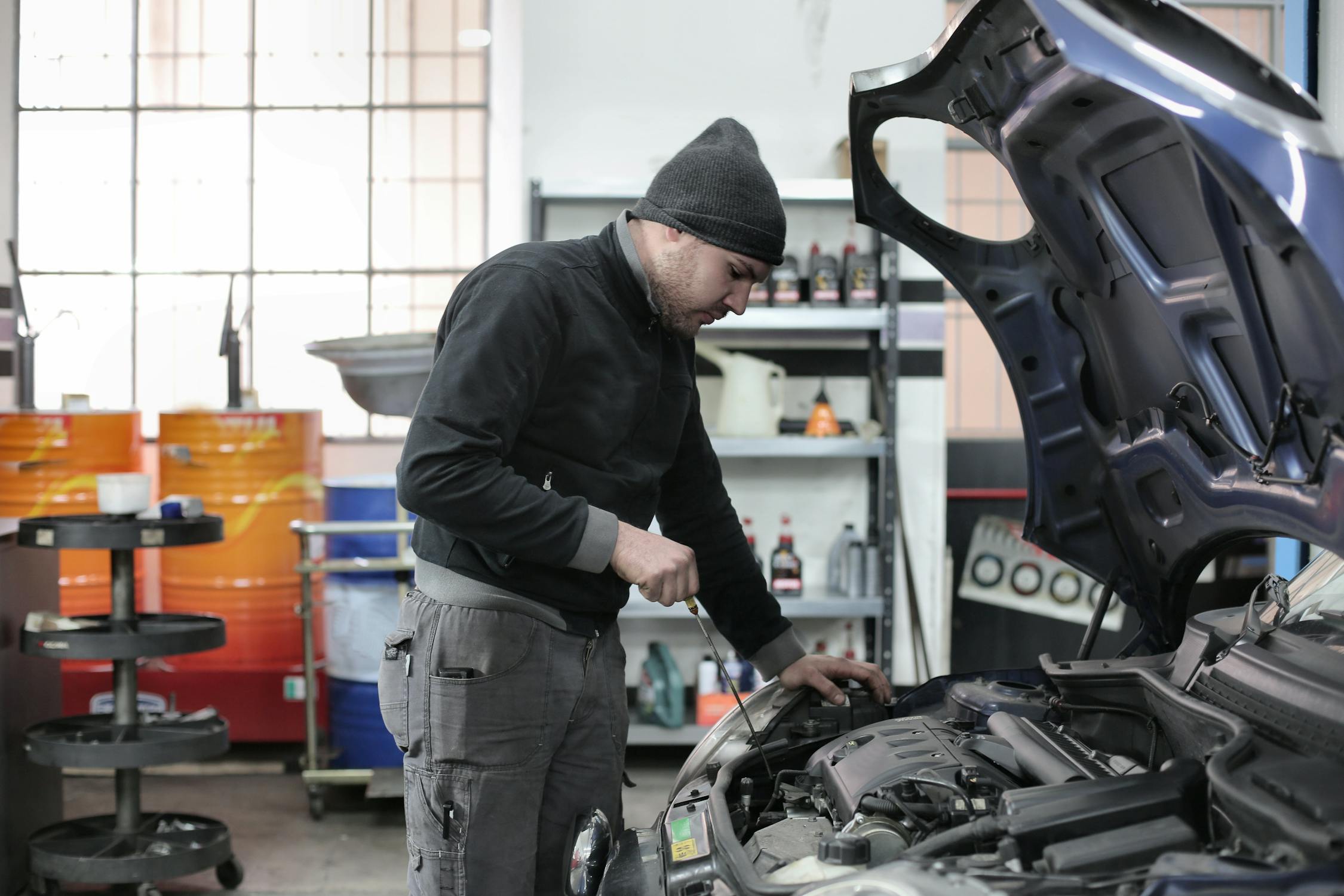
Photo by Andrea Piacquadio / Pexels
Cotati is one of the smallest cities in Sonoma County, but its drivers face the same wear and tear as everyone else on Highway 101 -- plus a few challenges that are uniquely Cotati. From Petaluma Hill Road potholes to the fog that rolls through on Highway 116, your car deals with a lot living here.
This guide covers what Cotati drivers actually need to know about vehicle maintenance: what your local driving conditions do to your car, when to get specific services, and how to avoid expensive surprises. Whether you are a longtime Cotati resident, an SSU student with your first car, or someone who just moved to the area, this is the practical information that keeps your vehicle running and your repair bills manageable.
What Cotati Driving Conditions Do to Your Car
Every area has its own driving conditions that affect vehicle maintenance. Here is what matters for Cotati.
Dealing with this issue in Sonoma County?
Our ASE and ATRA certified shop team diagnoses the real problem instead of guessing.
Serving the North Bay:
Highway 101: The Daily Grind
If you live in Cotati, you probably use Highway 101 almost every day. North to Santa Rosa for work, south to Petaluma for shopping, or further in either direction for everything else. That daily 101 commute creates specific maintenance needs:
Transmission stress from stop-and-go zones. The Rohnert Park Expressway interchange, the Petaluma merge, and the construction zones that seem to be a permanent fixture on 101 all create stop-and-go conditions. Your transmission works hardest during acceleration and deceleration cycles -- not steady highway cruising. If you are in stop-and-go traffic daily, your transmission fluid degrades faster and should be changed more frequently than the manufacturer's recommended interval.
Brake wear from traffic variation. Pure highway driving is actually easy on brakes. But 101 through Sonoma County is not pure highway driving -- it is a mix of 70 mph cruise, sudden slowdowns, construction zone stops, and merge-lane acceleration. This variation wears brake pads faster than either city driving or true highway driving alone.
Steering and suspension fatigue. Lane changes, highway expansion joints, and the slight road surface variations on 101 create constant small inputs to your steering and suspension system. Over tens of thousands of miles, this accelerates wear on tie rod ends, ball joints, and strut mounts.
Petaluma Hill Road: Sonoma County's Roughest Commute
If you drive Petaluma Hill Road regularly -- whether to reach east Petaluma, Penngrove, or the rural areas east of Cotati -- your car takes a beating that city drivers simply do not experience.
Petaluma Hill Road has some of the worst road surfaces in Sonoma County. Sections of crumbling pavement, patched potholes, uneven surfaces, and narrow shoulders create conditions that stress several vehicle systems:
- [Tire](/services/tires) damage and uneven wear. Potholes can cause immediate damage -- sidewall bulges, bent rims, or slow leaks. Even without obvious damage, the constant jolting causes uneven tire wear that shortens tire life.
- Alignment problems. One good pothole hit can knock your wheels out of alignment. If your car pulls to one side or your steering wheel is not centered, get an alignment check. Driving on misaligned wheels accelerates tire wear and can damage suspension components.
- Shock and strut wear. Shocks and struts are designed to absorb road imperfections. On a road like Petaluma Hill, they absorb more abuse in a month than they would in six months of normal driving. If your car feels bouncy, bottoms out on dips, or the nose dives when you brake, your shocks or struts may need replacement.
If Petaluma Hill Road is part of your regular route, have your alignment checked every six months and inspect your tires monthly for uneven wear patterns.
Old Redwood Highway and East Cotati Avenue
Old Redwood Highway between Cotati and Rohnert Park has improved sections but still has rough patches. East Cotati Avenue, especially the sections near the 101 interchange, collects water during rains and develops seasonal potholes.
These are not as rough as Petaluma Hill Road, but they contribute to the cumulative wear that affects suspension, tires, and alignment over time.
Fog, Heat, and Temperature Swings
Cotati sits in a transitional zone. Morning fog from the coast comes through on Highway 116. Summer temperatures regularly exceed 100 degrees. Winter nights can drop near freezing. This range affects your car:
- Cooling system stress. The jump from cool mornings to hot afternoons -- especially in summer -- works your cooling system hard. Coolant should be flushed and replaced every 30,000 miles or per your manufacturer's schedule.
- Battery life. Extreme heat actually shortens battery life more than cold does. A battery that survived Cotati's summer heat may die when the first cold snap hits in November. Get your battery tested before summer and again before winter.
- Tire pressure fluctuations. Tire pressure changes about 1 PSI for every 10-degree temperature change. A Cotati day that goes from 45 degrees at dawn to 95 degrees in the afternoon can mean a 5 PSI swing. Check tire pressure monthly -- when tires are cold, before driving.
The Essential Maintenance Schedule for Cotati Drivers
Here is what to stay on top of, adjusted for Cotati-area driving conditions:
Every 5,000-7,500 Miles (or Every 6 Months)
- [Oil change](/locations/cotati/oil-change). Most modern vehicles use full synthetic oil and can go 7,500 miles. If you do a lot of short trips around Cotati or sit in 101 traffic daily, lean toward 5,000 miles. This is the single most important maintenance item for engine longevity.
- Tire rotation and pressure check. Rotating tires every oil change evens out wear patterns. Especially important for Cotati drivers dealing with Petaluma Hill Road or other rough routes.
- Multi-point inspection. A good shop will check fluids, belts, hoses, brakes, and suspension components during your oil change. This catches small problems before they become expensive ones.
Every 15,000-30,000 Miles (or Annually)
- [Brake inspection](/locations/cotati/brake-repair). Cotati drivers on 101 wear brakes faster than the national average. An annual brake inspection catches pad wear, rotor thickness issues, and caliper problems early.
- [Transmission fluid](/blog/transmission-fluid-change-cost) check. If you commute on 101 with stop-and-go traffic, have the fluid condition checked annually. Dark, burnt-smelling fluid needs to be changed regardless of mileage.
- Alignment check. Twice a year if you drive Petaluma Hill Road regularly. Annually for everyone else.
- Cabin air filter and engine air filter. Cotati's mix of agricultural dust, pollen, and seasonal wildfire smoke means filters clog faster. Replace annually or when inspection shows they are dirty.
Every 30,000-60,000 Miles
- Coolant flush. Essential for handling Cotati's temperature extremes. Old coolant loses its protective properties and can lead to overheating.
- [Spark plug](/locations/cotati/tune-up) replacement. Modern iridium plugs last 60,000-100,000 miles, but check your owner's manual. Worn plugs cause rough running, poor fuel economy, and can trigger a check engine light.
- [Transmission service](/services/transmission). Full fluid exchange with filter replacement. Critical for vehicles with 50,000+ miles, especially with 101 commuting.
- Brake fluid flush. Brake fluid absorbs moisture over time, which lowers its boiling point and can cause spongy brakes -- especially dangerous during Cotati's rainy season.
Car Care Tips for SSU Students
Sonoma State University brings about 9,000 students to the Cotati-Rohnert Park area. If you are a student with a car on campus, here is what you need to know.
The Essentials (Do Not Skip These)
Oil changes on schedule. This is the cheapest insurance against engine damage. If you are driving an older car, this matters even more. Set a phone reminder based on your mileage interval.
Tire pressure. Buy a $5 tire pressure gauge and check monthly. Underinflated tires waste gas, wear faster, and handle worse -- three things a student budget does not need. The correct pressure is on the sticker inside your driver's door jamb, not on the tire sidewall.
Listen to your car. New noises, vibrations, warning lights, or changes in how the car drives are your car telling you something is wrong. Catching issues early almost always costs less than ignoring them.
Before Long Drives Home
If you drive home for breaks -- whether that is an hour to the East Bay or four hours to Southern California -- do a quick check before you leave:
Get an accurate repair quote — not an internet estimate.
Every vehicle is different. Call for transparent, honest pricing.
Serving the North Bay:
- Check tire pressure and tread depth (use the penny test: if you can see the top of Lincoln's head, your tread is too low)
- Check oil level with the dipstick
- Check coolant level in the overflow reservoir (never open the radiator cap when hot)
- Test all lights -- headlights, brake lights, turn signals
- Make sure wiper blades work and washer fluid is full
Five minutes of checking can prevent a breakdown on I-80 or Highway 5.
When Your Car Sits for Extended Periods
During winter break, spring break, or summer, your car may sit in the SSU lots for weeks. Cars that sit develop specific problems:
- Dead batteries. Even with everything off, your car's computer systems draw a small amount of power. After 2-3 weeks, this can drain the battery -- especially an older one. If you are leaving for more than two weeks, consider disconnecting the negative battery terminal or asking someone to start the car weekly.
- Flat-spotted tires. Tires develop temporary flat spots from sitting in one position. They usually round out after a few miles of driving, but it can feel alarming. If the vibration does not go away after 10-15 minutes of driving, have the tires checked.
- Critter problems. Rodents love to nest in engine bays during breaks. Before starting a car that has been sitting, pop the hood and check for nesting material, chewed wires, or debris. This is especially common in the areas near the SSU nature preserve.
Budget-Friendly Maintenance Strategy
You do not need to spend a fortune on car care as a student. Here is the priority order:
1. Oil changes on time -- the highest-ROI maintenance item
2. Tire pressure monthly -- free to check, saves money on gas and tire replacement
3. Annual brake inspection -- catching brake problems early saves hundreds
4. Annual fluid check -- have a shop check all fluids during your oil change
5. Address warning lights promptly -- a check engine light does not always mean an expensive repair, but ignoring it often turns a cheap fix into an expensive one
Seasonal Maintenance Calendar for Cotati
Spring (March-May)
- Inspect tires for pothole damage from winter rains
- Check alignment if the car pulls or steering feels off
- Replace wiper blades if they streak or skip
- Test AC system before the heat hits -- much easier to get an appointment in April than in July
Summer (June-August)
- Check coolant level and condition -- overheating is the biggest summer risk
- Inspect belts and hoses -- heat accelerates rubber deterioration
- Check AC performance -- weak cooling could be a simple recharge or a compressor issue
- Keep an eye on tire pressure -- heat increases pressure, and overinflated tires wear unevenly and have less traction
Fall (September-November)
- Test battery -- summer heat weakens batteries, and the first cold snap reveals it
- Check heater and defroster -- you will need both by late October
- Inspect brake condition before the wet season -- good brakes are critical on wet roads
- Check tire tread depth -- minimum 4/32" for wet weather safety (2/32" is the legal minimum but not enough for rain)
Winter (December-February)
- Verify tire tread and consider all-season tires if yours are worn
Get an accurate repair quote — not an internet estimate.
Every vehicle is different. Call for transparent, honest pricing.
Serving the North Bay:
- Check all fluid levels -- cold weather thickens fluids and reveals weak spots in seals and gaskets
- Test all lights -- shorter days mean you use headlights more
- Keep wiper fluid full -- Cotati's winter rain plus 101 spray means you use a lot
When to Get Help vs. DIY
Some maintenance you can handle yourself. Some you should leave to a professional.
DIY-friendly:
- Checking and topping off tire pressure
- Checking oil level
- Replacing wiper blades
- Checking and replacing cabin air filter (usually accessible behind the glove box)
- Replacing engine air filter
- Topping off washer fluid
Leave to a professional:
- Oil changes (unless you have the tools, space, and a way to dispose of oil properly)
- Brake work (safety-critical -- not worth the risk of doing wrong)
- Transmission service (requires specialized equipment and fluid)
- Anything involving the cooling system under pressure
- Electrical diagnostics (modern vehicles are too complex for guesswork)
Frequently Asked Questions
How often should Cotati drivers get an oil change?
Every 5,000 to 7,500 miles or every 6 months. If you commute on 101 with regular stop-and-go traffic or do mostly short trips around town, lean toward 5,000 miles. Vehicles using full synthetic oil can often go 7,500-10,000 miles. Check your owner's manual for your specific vehicle.
What car maintenance do SSU students need to stay on top of?
The essentials: oil changes every 5,000-7,500 miles, tire pressure checks monthly, brake inspections annually, and battery checks before breaks. If your car sits in SSU lots for extended periods, check the battery and tire pressure before driving. Students with older vehicles should also have cooling system and transmission fluid checked annually.
Does driving on Petaluma Hill Road damage my car?
Regular driving on Petaluma Hill Road does accelerate wear on tires, alignment, shocks, struts, and other suspension components. If it is part of your regular route, get alignment checked every six months and inspect tires monthly for uneven wear. Budget for suspension maintenance more frequently than the average driver.
Where is the closest transmission specialist to Cotati?
Rohnert Park Transmission at 305 Laguna Dr is the nearest ATRA-certified transmission specialist to Cotati -- about 4 minutes via Highway 101 or Old Redwood Highway. Call (707) 584-7727.
What seasonal car maintenance do Cotati drivers need?
Spring: check for pothole damage, get alignment checked, test AC. Summer: check coolant, inspect belts and hoses, monitor tire pressure. Fall: test battery, check brakes before wet season, verify tire tread. Winter: check all fluids, test lights, keep wiper fluid full. Cotati's wide temperature range means every system gets tested throughout the year.
Keep Your Car Running Right in Cotati
Vehicle maintenance is not exciting, but it is a lot cheaper than vehicle repair. The difference between a $75 oil change and a $4,000 engine rebuild is usually just paying attention and staying on schedule.
Cotati's combination of highway commuting, rough local roads, temperature extremes, and coastal fog means your car works harder than you might think. Stay on top of the basics, address warning signs promptly, and find a shop you trust -- whether that is in Cotati or a few minutes down the road.
If you need help with anything from a routine oil change to a complex transmission diagnosis, we are 4 minutes from downtown Cotati and we have been doing this since 1997.
Call (707) 584-7727 or stop by 305 Laguna Dr, Rohnert Park. Monday through Thursday 7:30AM-5PM, Friday 7AM-3PM.
Tags:
Written by
Fernando Gomez
Owner, Rohnert Park Transmission & Auto Repair
Fernando brings over 28 years of automotive repair experience to every diagnosis and repair. As the owner of Rohnert Park Transmission & Auto Repair, he leads a team of ASE-certified, ATRA-member technicians specializing in transmission diagnostics, complex drivability issues, and preventive maintenance — with a focus on getting it right the first time.
Need Professional Auto Service?
Trust your vehicle to Rohnert Park's transmission and auto repair experts. We offer comprehensive diagnostics and repairs with a commitment to quality and transparency.
Related Articles
Best Auto Repair Shops Near Cotati CA: 2026 Guide
Compare the best auto repair shops in and near Cotati. Honest reviews of local mechanics by specialty.
Pothole Damage Repair Cost Guide (2026)
What pothole damage costs to repair and how to prevent it. Relevant for Cotati drivers on Petaluma Hill Road.
Check Engine Light Flashing: What It Means
A flashing check engine light means stop driving. Here is what is happening and what to do next.