Pricing Note
Prices shown are national averages for general reference. Costs in California and at specialty shops are typically higher due to regional labor rates and parts availability. Every vehicle is different.
Call (707) 584-7727 for an accurate estimate for your vehicle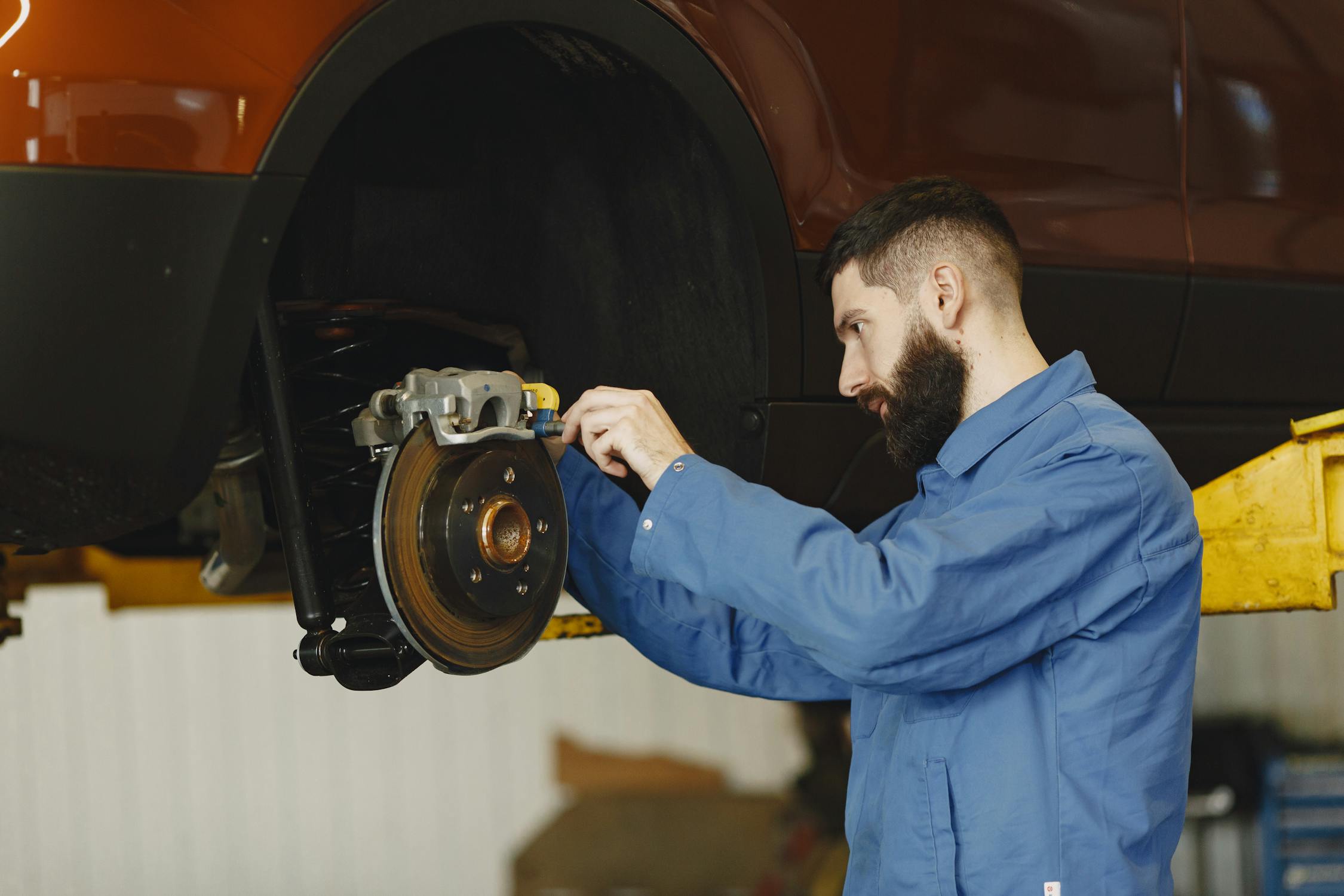
Photo by Gustavo Fring / Pexels
Your brakes are squealing, your pedal feels soft, or your mechanic just told you it's time for new brake pads. The first question on your mind: how much is this going to cost me?
Brake pad replacement is one of the most common auto repairs -- and one where prices vary wildly depending on where you go, what vehicle you drive, and what type of pads you choose. We have seen customers come in after being quoted $800 at one shop and $200 at another for the same job.
This guide breaks down exactly what brake pad replacement costs in 2026, what brake pad and rotor replacement costs, what factors change the price, and how to make sure you are not overpaying.
How Much Does Brake Pad Replacement Cost in 2026?
Dealing with this issue in Sonoma County?
Our ASE and ATRA certified shop team diagnoses the real problem instead of guessing.
Serving the North Bay:
The short answer: $150 to $400 per axle for most vehicles.
Important: Brake prices vary by location.
The prices below are general 2026 estimates. What you actually pay can change based on where you live, local labor rates, parts availability, your vehicle, and the condition of your brake system. A shop needs to inspect the vehicle before giving a final quote for pads, rotors, hardware, fluid, sensors, calipers, or other brake repairs.
Here is what that looks like in practice:
| Service | Average Cost Range | What's Included |
|---|---|---|
| Front brake pads only | $150--$300 | New pads, labor, brake inspection |
| Rear brake pads only | $150--$300 | New pads, labor, brake inspection |
| Front pads + rotors | $300--$600 | New pads, new rotors, labor |
| Rear pads + rotors | $300--$600 | New pads, new rotors, labor |
| All four wheels (pads only) | $300--$600 | Pads on both axles, labor |
| All four wheels (pads + rotors) | $600--$1,200 | Complete brake job, all components |
These ranges cover the vast majority of passenger cars, trucks, and SUVs. Luxury vehicles, performance cars, and heavy-duty trucks will typically land at the higher end or above these ranges.
Brake Pad and Rotor Replacement Cost: Pads Only vs. Complete Brake Job
Most brake quotes fall into one of two buckets: pads only or pads and rotors. This distinction matters because pads are the wear material, while rotors are the metal discs the pads clamp against. A pads-only job is cheaper. A pads-and-rotors job costs more but may be necessary if the rotor surface is worn, warped, grooved, or below the legal/service minimum thickness.
| Brake Job Type | Typical 2026 Cost | Best Fit | What to Ask the Shop |
|---|---|---|---|
| Pads only, one axle | $150-$400 | Pads are worn but rotors are smooth and within spec | What is the measured rotor thickness? |
| Pads + rotors, one axle | $300-$600 | Rotors are warped, grooved, thin, or noisy | Are the rotors being replaced because of thickness, runout, or surface damage? |
| Pads only, all four wheels | $300-$600 | Both axles need pads, rotors still pass inspection | Are front and rear pads wearing evenly? |
| Pads + rotors, all four wheels | $600-$1,200 | Complete brake refresh on most cars and SUVs | Does the quote include hardware, brake cleaning, and a road test? |
| Luxury/truck pads + rotors | $800-$1,800+ | Heavy-duty, European, performance, or tow vehicles | Are OEM or premium aftermarket parts being used? |
If you are comparing quotes, do not compare a pads-only quote to a pads-and-rotors quote. They are different jobs. A $250 pads-only quote may be fair, and a $550 pads-and-rotors quote may also be fair. The question is whether the rotors truly need replacement.
When Rotors Actually Need Replacement
A shop should be able to explain rotor replacement with measurements or clear symptoms, not just a vague "we always do rotors" answer. Rotors usually need replacement when:
- Rotor thickness is below specification. Every rotor has a minimum safe thickness. Once it is below that number, it cannot dissipate heat properly. - The brake pedal pulses. Pulsation often points to rotor runout or thickness variation. - The rotor has deep grooves. Light scoring is normal; deep grooves reduce pad contact and can cause noise. - There is blueing or heat spotting. Overheated rotors can harden unevenly and create vibration. - The vehicle was driven while grinding. Metal-on-metal contact usually destroys the rotor surface. - The rotor has already been resurfaced too far. Some rotors do not have enough material left for another cut.
Rotors do not automatically need replacement just because the pads are worn. If the rotor surface is smooth and still measures within spec, a pads-only job can be the right repair.
Why Brake Pad and Rotor Quotes Vary So Much
The biggest price swings come from five things: vehicle weight, part quality, whether the parking brake is electronic, local labor rate, and whether the shop includes hardware. A $350 pads-and-rotors job on a compact car and a $900 pads-and-rotors job on a heavy truck can both be reasonable if the parts and labor are different.
| Quote Line Item | Fair Question to Ask | Why It Matters |
|---|---|---|
| Pads | Ceramic, semi-metallic, OEM, or economy? | Pad material changes noise, dust, lifespan, and price. |
| Rotors | Standard, coated, heavy-duty, or performance? | Coated and heavy-duty rotors cost more but resist rust and heat better. |
| Hardware | Are clips/shims included? | Old hardware can cause squeaks, uneven pad movement, and premature wear. |
| Brake fluid | Is the fluid clean and at the right moisture level? | Old fluid can reduce braking performance and damage hydraulic parts. |
| Labor | How much time is quoted per axle? | Electronic parking brakes and rusted parts add time. |
For Sonoma County drivers, the most useful quote is not the cheapest number. It is the quote that names the pad quality, rotor decision, hardware, labor, and warranty clearly.
What's Included in the Price?
A standard brake pad replacement should include:
- New brake pads (one set per axle -- that is two pads per wheel, four pads per axle) - Brake hardware (clips, shims, and anti-rattle springs) - Rotor inspection (checking thickness and condition) - Brake fluid check - Test drive to verify proper operation - Labor (typically 1--2 hours per axle)
If a shop quotes you a price that does not include hardware or a rotor inspection, that is a red flag. Those should be standard.
Brake Pad Replacement Cost by Vehicle Type
Your vehicle makes a big difference in what you will pay. Here are realistic 2026 prices by category:
Economy and Compact Cars
Examples: Honda Civic, Toyota Corolla, Hyundai Elantra, Mazda3, Kia Forte
| Service | Cost Range |
|---|---|
| Front pads | $120--$220 |
| Rear pads | $120--$220 |
| Front pads + rotors | $250--$450 |
| Rear pads + rotors | $250--$450 |
Economy cars use smaller brake components and standard pad compounds, which keeps costs down. Parts are widely available, and most shops can complete the job in about an hour per axle.
Midsize Sedans and Crossovers
Examples: Toyota Camry, Honda Accord, Subaru Outback, Ford Escape, Nissan Rogue
| Service | Cost Range |
|---|---|
| Front pads | $150--$280 |
| Rear pads | $150--$280 |
| Front pads + rotors | $300--$550 |
| Rear pads + rotors | $300--$550 |
Midsize vehicles use slightly larger rotors and pads, which increases parts cost by $20--$50 compared to compacts.
Full-Size Trucks and SUVs
Examples: Ford F-150, Chevy Silverado, RAM 1500, Toyota Tundra, GMC Sierra
| Service | Cost Range |
|---|---|
| Front pads | $180--$350 |
| Rear pads | $180--$350 |
| Front pads + rotors | $350--$650 |
| Rear pads + rotors | $350--$650 |
Trucks and full-size SUVs need larger, heavier-duty brake components. If you tow regularly, you may need premium pads designed for higher heat -- add $30--$80 to the pad cost.
Luxury and Performance Vehicles
Examples: BMW 3 Series, Mercedes C-Class, Audi A4, Lexus IS, Tesla Model 3
| Service | Cost Range |
|---|---|
| Front pads | $250--$500 |
| Rear pads | $250--$500 |
| Front pads + rotors | $500--$900 |
| Rear pads + rotors | $500--$900 |
Luxury vehicles use specialized pad compounds, larger rotors, and sometimes require dealer-specific parts or electronic brake sensor replacement. Some European vehicles have brake wear sensors built into the pads -- when the pad wears down, the sensor triggers a dashboard warning and needs to be replaced along with the pads (add $20--$50 per sensor).
Heavy-Duty and Diesel Trucks
Examples: Ford F-250/350, Chevy 2500/3500, RAM 2500/3500
| Service | Cost Range |
|---|---|
| Front pads | $250--$450 |
| Rear pads | $250--$450 |
| Front pads + rotors | $500--$850 |
| Rear pads + rotors | $500--$850 |
Heavy-duty trucks use oversized brake components designed to handle extreme weight and towing loads. The parts cost alone can be 2--3x higher than a standard passenger car.
Brake Pad Replacement Cost by Provider
Where you get the work done also matters:
| Provider | Pads Only (Per Axle) | Pads + Rotors (Per Axle) | Notes |
|---|---|---|---|
| Independent mechanic | $150--$300 | $300--$550 | Best value for most people |
| Dealership | $250--$450 | $450--$800 | OEM parts, higher labor rate |
| National chain (Midas, Meineke, etc.) | $170--$350 | $350--$600 | Advertised specials may not include everything |
| Discount shop (Brake Masters, etc.) | $100--$200 | $250--$450 | Check what is included -- hardware and inspection may cost extra |
| DIY (parts only) | $35--$120 | $100--$300 | Need tools and experience |
A Note About Advertised Brake Specials
You have probably seen ads for "$99 brake pads!" or "$149 complete brake job!" Be careful with these. In our experience, the fine print often reveals:
- The price covers only the cheapest economy pads (which wear out faster) - Rotors, hardware, and brake fluid are extra - The quote is per wheel, not per axle - There is a "shop supply fee" or "environmental fee" tacked on
Get an accurate repair quote — not an internet estimate.
Every vehicle is different. Call for transparent, honest pricing.
Serving the North Bay:
Always ask for a complete, out-the-door price before authorizing work. A good shop will give you a written estimate that includes everything.
What Factors Affect Brake Pad Replacement Cost?
1. Pad Material and Quality
This is the single biggest factor in parts cost:
Organic (Semi-Metallic) Pads -- $20--$50 per set - Made from mixed materials (rubber, glass, resin, metal fibers) - Good all-around performance - Moderate noise and dust - Wear faster than ceramic - Best for: everyday driving, budget-conscious replacement
Ceramic Pads -- $40--$100 per set - Made from ceramic fibers and bonding agents - Quieter operation, less brake dust - Last longer than organic pads - Better performance in a wider temperature range - Best for: daily drivers who want quality and longevity
Performance/Carbon-Metallic Pads -- $60--$150+ per set - High metal content for maximum stopping power - Handle extreme heat better - More noise and brake dust - Harder on rotors - Best for: towing, performance driving, heavy-duty use
OEM (Original Equipment) Pads -- $50--$150+ per set - Exact match to what came on the vehicle from the factory - Typically required or recommended for warranty compliance - Balanced performance characteristics - Best for: newer vehicles, warranty preservation, luxury cars
For most drivers, ceramic pads are the sweet spot. They cost $20--$50 more per set than organic pads but last significantly longer, produce less dust, and run quieter.
2. Rotor Condition
Your rotors (the metal discs the pads clamp against) do not need to be replaced every time you get new pads -- but they often do. Here is how your mechanic decides:
Rotors can be resurfaced ($25--$50 per rotor) if: - They have minor scoring or grooves - They meet minimum thickness specifications - They are not warped - This is their first or second resurfacing
Rotors need replacement ($50--$200 per rotor) if: - They are below minimum thickness - They are warped (you feel pulsing when braking) - They have deep grooves or cracks - They have already been resurfaced before
Many shops now skip resurfacing entirely and go straight to new rotors. New rotors are relatively inexpensive, and pairing new pads with new rotors gives you the best braking performance and longest pad life.
3. Labor Rates
Labor is typically 50--60% of the total bill. Rates vary by:
- Geographic location: Labor rates in San Francisco are $150--$180/hour. In a mid-size city, you might pay $100--$140/hour. Rural areas can be $80--$110/hour. - Shop type: Dealerships charge the highest labor rates. Independent shops are typically 20--40% less. - Complexity: Some vehicles have more complicated brake systems. Vehicles with electronic parking brakes, brake wear sensors, or integrated parking brake calipers require extra steps and time.
A straightforward brake pad swap takes about 1 hour per axle. If rotors are also being replaced, budget 1.5--2 hours per axle.
4. Additional Services That May Be Needed
During a brake job, your mechanic may find other components that need attention:
| Component | Cost Range | When It's Needed |
|---|---|---|
| Brake caliper replacement | $150--$400 per caliper | Seized, leaking, or damaged caliper |
| Brake caliper rebuild | $80--$200 per caliper | Sticking caliper, minor issues |
| Brake hose replacement | $80--$200 per hose | Cracked, swollen, or leaking hose |
| Brake fluid flush | $80--$150 | Contaminated or old fluid (every 2--3 years) |
| Brake line repair | $100--$300 | Corroded or leaking lines |
| Wheel bearing (while apart) | $150--$400 | Noise, play in the wheel |
| Brake wear sensor | $20--$50 per sensor | European vehicles, luxury cars |
A reputable shop will call you before performing any work beyond what was quoted. If they find additional issues, they should explain what is wrong, why it matters, and let you decide before proceeding.
When Do Brake Pads Need to Be Replaced?
Mileage Guidelines
There is no universal answer because it depends on driving habits, but here are general guidelines:
- City driving (lots of stop-and-go): 25,000--40,000 miles - Mixed driving (city and highway): 40,000--60,000 miles - Highway driving (minimal braking): 60,000--80,000 miles - Performance/ceramic pads: Can last 50,000--70,000+ miles
Some drivers burn through pads in 20,000 miles. Others get 80,000+. The difference comes down to driving style, traffic conditions, vehicle weight, and pad quality.
Warning Signs Your Brake Pads Are Worn
Squealing or squeaking when braking -- Most brake pads have a built-in wear indicator -- a small metal tab that contacts the rotor when the pad is nearly worn out. That high-pitched squeal is the indicator doing its job. Do not ignore it.
Grinding noise when braking -- If you hear metal-on-metal grinding, you have gone past the wear indicator. The pad material is completely gone, and the metal backing plate is grinding against the rotor. This damages the rotor and can compromise your ability to stop. Get to a shop immediately.
Brake pedal feels soft or goes lower than usual -- A soft or spongy pedal can indicate worn pads, but it can also signal a brake fluid leak or air in the brake lines. Either way, it needs immediate attention.
Vehicle pulls to one side when braking -- Uneven pad wear or a sticking caliper can cause the car to pull left or right when you brake. This means one side is doing more work than the other, which is both a safety issue and an efficiency problem.
Vibration or pulsing in the brake pedal -- Pedal pulsation usually means warped rotors, not worn pads. But warped rotors also cause uneven pad wear, so the two problems often go together.
Dashboard brake warning light -- On vehicles with brake wear sensors (common on European cars), a dashboard light will illuminate when the pads reach minimum thickness. Some vehicles display a specific message like "Brake Pad Wear -- Service Required."
Visual inspection shows less than 3mm of pad material -- If you can see your brake pads through the wheel spokes (or remove the wheel to look), the pad material should be at least 3mm thick. Below that, replacement is due soon. Below 2mm, it is urgent.
Front Brakes vs. Rear Brakes: What's the Difference?
Why Front Brakes Wear Faster
On most vehicles, front brakes do 60--70% of the braking work. When you press the brake pedal, the vehicle's weight shifts forward, putting more force on the front wheels. This means:
- Front pads wear 2--3x faster than rear pads - Front rotors are typically larger and more expensive - You will almost always need front brakes first
Do You Need to Replace All Four at Once?
Get an accurate repair quote — not an internet estimate.
Every vehicle is different. Call for transparent, honest pricing.
Serving the North Bay:
No. It is completely normal and acceptable to replace only one axle (front or rear) at a time. In fact, most brake jobs only involve one axle.
What you should always do: - Replace pads in pairs (both sides of the same axle). Never replace just one side -- this creates uneven braking. - Replace rotors in pairs if needed (both sides of the same axle), for the same reason.
Should You Replace Front and Rear at the Same Time?
Only if both need it. If your front pads are worn but the rears still have plenty of life, there is no reason to replace the rears. A good shop will not try to sell you unnecessary work.
That said, if your rear pads are also getting thin (say, 4--5mm remaining), it can make sense to do everything at once. You save on labor by avoiding a second visit, and you start fresh on all four corners.
How to Save Money on Brake Pad Replacement
1. Do Not Wait Until It Is an Emergency
Waiting until your brakes are grinding metal-on-metal means you will need new rotors too -- and possibly calipers if they are damaged. Replacing pads before they are completely worn can save you $200--$400 per axle in additional parts.
2. Choose Ceramic Pads Over Cheap Organics
This sounds counterintuitive, but spending $30--$50 more on ceramic pads can save you money long-term. They last significantly longer and are gentler on rotors, meaning your rotors may survive an additional pad change.
3. Get Multiple Quotes
Brake job pricing varies significantly between shops. Get at least 2--3 quotes, and make sure each quote includes: - Pad type and brand - Whether rotors are included or extra - Hardware included or extra - Brake fluid check/flush - Total out-the-door price
If one quote is far cheaper than the others, ask whether it includes rotors, brake hardware, shop fees, and a road test. Many low advertised prices only cover economy pads on one axle. They look cheaper in search results, but the final invoice can climb once the vehicle is on the lift.
4. Ask About the Parts Warranty
Most quality brake pads come with a manufacturer warranty (often lifetime on premium brands). Your shop may also offer a labor warranty. Ask about both before authorizing work.
5. Consider an Independent Shop Over the Dealership
Dealerships charge a premium for brake work because of higher labor rates and OEM-only parts pricing. An independent shop using quality aftermarket parts can save you 20--40% with no difference in quality or safety.
6. Do Not Ignore Brake Maintenance
Simple maintenance extends brake life: - Do not ride the brakes downhill -- use a lower gear to engine brake - Leave following distance so you can brake gradually instead of hard stops - Flush brake fluid every 2--3 years (contaminated fluid reduces brake performance and causes corrosion) - Address pulling or vibration immediately -- these symptoms cause accelerated, uneven wear
Can You Replace Brake Pads Yourself?
Brake pad replacement is one of the more accessible DIY auto repairs, but it is not for everyone.
What You Will Need
- Floor jack and jack stands (never work under a car supported only by a jack) - Lug wrench or impact wrench - Socket set (typically 14mm--19mm for caliper bolts) - C-clamp or brake piston compression tool - Brake cleaner spray - New brake pads (and rotors if replacing) - New brake hardware (clips and shims) - Anti-squeal compound (optional) - Torque wrench for reinstallation
DIY Cost
- Pads only: $35--$120 per axle (parts) - Pads + rotors: $100--$300 per axle (parts) - Tools (if you do not already own them): $50--$150 one-time investment
When DIY Makes Sense
- You are mechanically comfortable and have done it before - The vehicle has a straightforward brake system (no electronic parking brake, no wear sensors) - You have the right tools and a safe workspace - You are replacing pads on one axle with standard components
When to Leave It to a Professional
- You have never done it before (brakes are not the place to learn by trial and error) - The vehicle has electronic parking brakes, integrated calipers, or adaptive brake systems - You suspect caliper or brake line issues - The vehicle needs brake bleeding (introducing air into the brake system is dangerous) - You do not have jack stands (this is non-negotiable for safety)
Safety note: Your brakes are the single most important safety system on your vehicle. If you have any doubt about doing this correctly, take it to a professional. The cost difference between a professional brake job and a DIY job is a few hundred dollars. The cost of brake failure is immeasurably higher.
How Long Does Brake Pad Replacement Take?
| Service | Time at a Shop | Notes |
|---|---|---|
| Pads only (one axle) | 45 min--1.5 hours | Straightforward job |
| Pads + rotors (one axle) | 1--2 hours | Slightly more involved |
| Pads only (both axles) | 1.5--2.5 hours | Can often be done same day |
| Pads + rotors (both axles) | 2--3.5 hours | Full brake job |
| Complete brake job + caliper work | 3--5 hours | More involved, may need overnight |
Most shops can complete a standard brake pad replacement while you wait. If you drop the car off in the morning, you will typically have it back by lunch.
The Bottom Line
Brake pad replacement is a routine maintenance item that every vehicle needs periodically. For most cars and SUVs, expect to pay $150--$300 per axle for pads or $300--$600 per axle if rotors are included.
The biggest mistake people make is waiting too long. New brake pads are a $150--$300 job. Once you have ground through the pads and damaged the rotors and calipers, you are looking at $600--$1,200+. Regular inspections and replacing pads at the first sign of wear saves both money and stress.
If you are in the Rohnert Park or Sonoma County area and need brake service, Rohnert Park Transmission and Auto Repair provides honest brake inspections and fair pricing. We will show you exactly what your brakes look like, explain what needs to be done, and give you an upfront price before we start any work.
Call us at (707) 584-8488 or schedule a brake inspection to get started. We will have you safely back on the road -- usually the same day.
*Rohnert Park Transmission and Auto Repair is a full-service auto repair shop in Rohnert Park, California, serving Sonoma County including Cotati, Petaluma, Santa Rosa, and Sebastopol. Our ASE-certified technicians handle everything from brake service to complete transmission rebuilds.*
Tags:
Written by
Fernando Gomez
Owner, Rohnert Park Transmission & Auto Repair
Fernando brings over 28 years of automotive repair experience to every diagnosis and repair. As the owner of Rohnert Park Transmission & Auto Repair, he leads a team of ASE-certified, ATRA-member technicians specializing in transmission diagnostics, complex drivability issues, and preventive maintenance — with a focus on getting it right the first time.
Need Professional Auto Service?
Trust your vehicle to Rohnert Park's transmission and auto repair experts. We offer comprehensive diagnostics and repairs with a commitment to quality and transparency.
Related Articles
Brake Warning Signs: Complete Safety Guide
Know the warning signs that your brakes need attention before they become a safety issue.
Brake Pads vs Rotors: Replacement Guide
Understand the difference between brake pads and rotors, and when each needs to be replaced.
DIY vs Professional Brake Repair Guide
Should you tackle brake repair yourself or leave it to a professional? Here's how to decide.
Brake Repair Services
Full-service brake repair from ASE certified technicians in Rohnert Park, CA.